

Embodiment
Interactions between Body, Mind, and Machine
“Embodiment” refers to the realization that our perception, emotions, abstract thinking, memory, and intentionality cannot be understood as disembodied operations, but rather as essentially physical processes to which the brain and body—embedded in the environment—contribute reciprocally. The central question, therefore, is how actions and physical experiences influence thinking, learning, and problem-solving—for example, how avatar representations in virtual worlds affect self-perception and behavior. In computer science, the concept of embodiment plays a role in fields dealing with human-computer interaction, artificial intelligence (AI), and robotics. How can the physical aspects of machines or the interaction between humans and technology be designed to be more intuitive and effective? Questions in the natural sciences include the biological and biochemical basis of perception, movement, and cognitive processes, as well as the physical and biomechanical aspects of bodily movement and interaction with the environment. Social science questions would include the social and cultural implications and historical transformations of mimetic and habitual learning processes, or of embodied technologies and their effects on identity and interaction. This extends to the role of body-oriented approaches in rehabilitation, psychotherapy, or prosthetics (Therapy & Health). In the realm of rituals and performative art, embodiment describes how the body is used as a medium for expression and interaction.
 HAdW
HAdW
WIN Project
IDEA
 Created by us
WIN Project
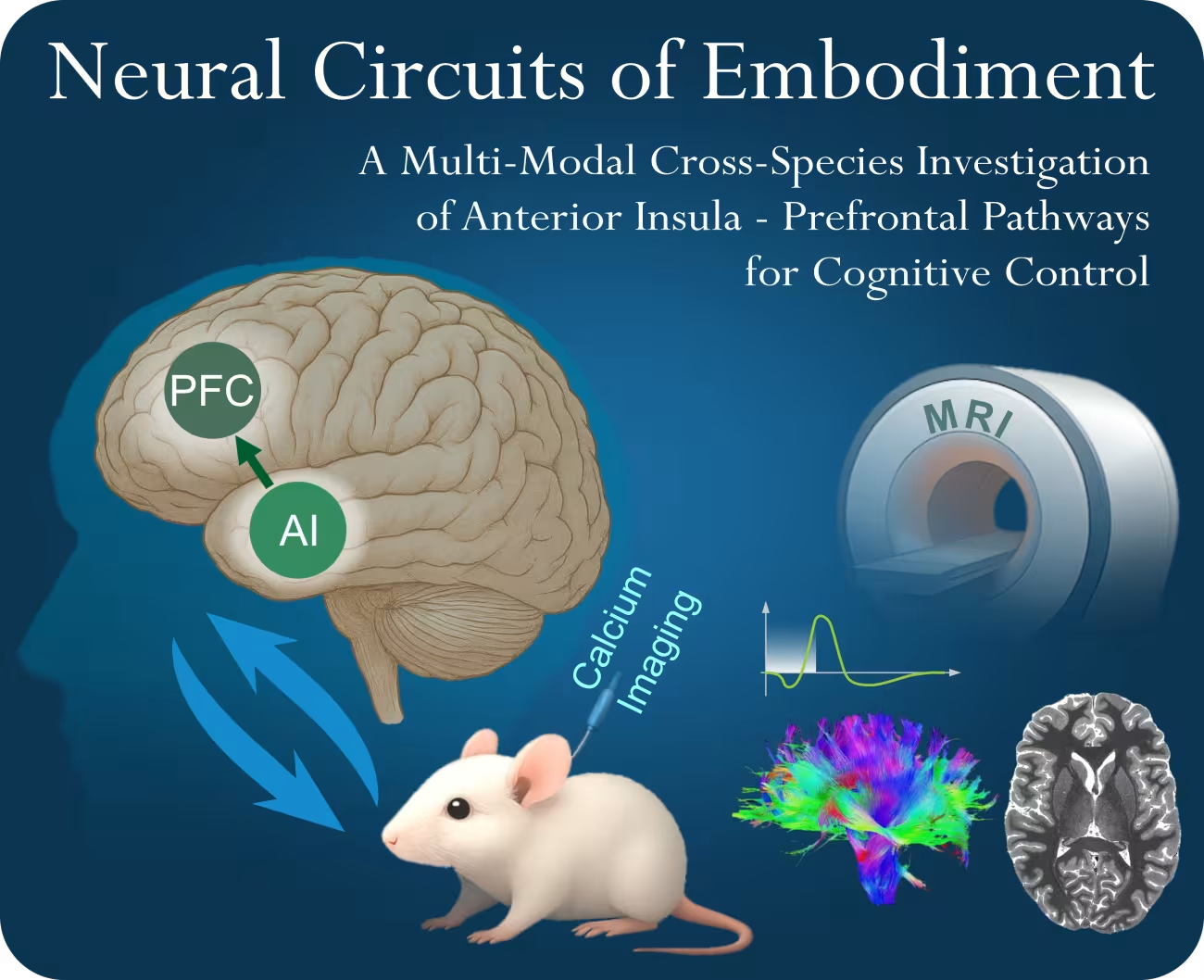
Neural Circuits of Embodiment
HAdW
WIN Project
Tails in Motion
HAdW
WIN Project