Embodiment

Interactions between Body, Mind, and Machine

“Embodiment” refers to the realization that our perception, emotions, abstract thinking, memory, and intentionality cannot be understood as disembodied operations, but rather as essentially physical processes to which the brain and body—embedded in the environment—contribute reciprocally. The central question, therefore, is how actions and physical experiences influence thinking, learning, and problem-solving—for example, how avatar representations in virtual worlds affect self-perception and behavior. In computer science, the concept of embodiment plays a role in fields dealing with human-computer interaction, artificial intelligence (AI), and robotics. How can the physical aspects of machines or the interaction between humans and technology be designed to be more intuitive and effective? Questions in the natural sciences include the biological and biochemical basis of perception, movement, and cognitive processes, as well as the physical and biomechanical aspects of bodily movement and interaction with the environment. Social science questions would include the social and cultural implications and historical transformations of mimetic and habitual learning processes, or of embodied technologies and their effects on identity and interaction. This extends to the role of body-oriented approaches in rehabilitation, psychotherapy, or prosthetics (Therapy & Health). In the realm of rituals and performative art, embodiment describes how the body is used as a medium for expression and interaction.

WIN Project

IDEA


From Pathology to Potential: AnInterdisciplinaryApproach to the Study ofExtreme Experiences of Embodiment

The IDEE project aims to conduct interdisciplinary research on experiences of (dis)embodiment in pathological and salutogenic contexts. Using a synergistic approach that combines neuroscience, linguistics, philosophy, and psychosomatics, these experiences are systematically recorded, analyzed, and theoretically categorized.

WIN Project

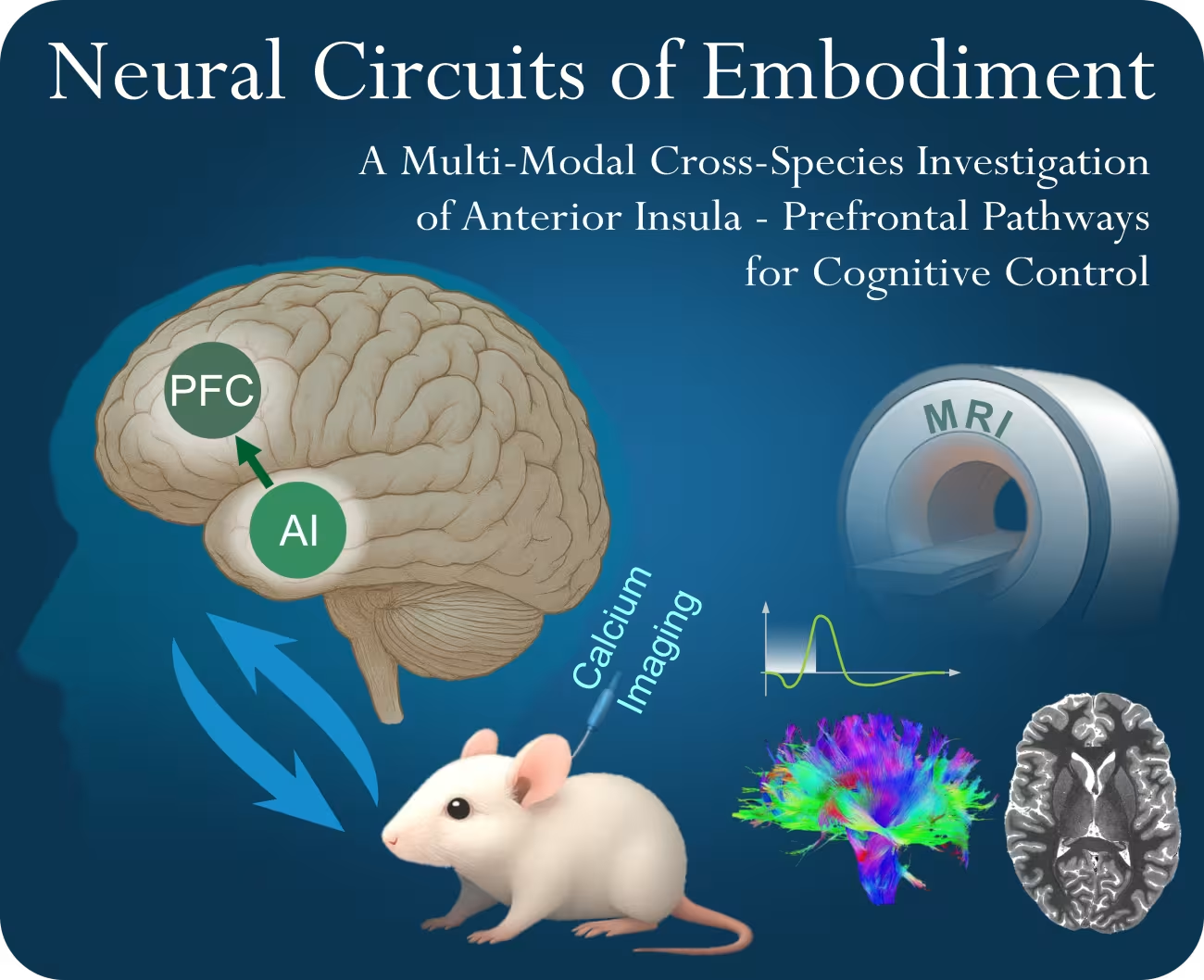
Neural Circuits of Embodiment


A Multi-Modal Cross-Species Investigation of Anterior Insula–Prefrontal Pathways Linking Internal States to Cognitive Control

While theories of embodiment emphasize the importance of interoception, the underlying neural mechanisms remain largely unclear. This project investigates how the anterior insula (AI) integrates interoceptive signals and modulates cognitive control processes via its connections to the prefrontal cortex (PFC).

WIN Project

Tails in Motion


Decoding the Dynamics of Aerial Body Control by Bridging Biology and Robotics

The diversity of tail shapes and functions in the animal kingdom offers a wealth of inspiration for robotics. However, for most animals, our understanding of how tail shape embodies function is limited, as experimental observations alone cannot provide the necessary insights. The goal of this project is to decipher the fundamental form-function principles of tails that underpin body control in flight for both animals and robots.

WIN Project

ENDOCRINO-SELF


Endocrinological Foundations of Self-Concept and Identity

The project investigates how hormonal processes—particularly oxytocin and cortisol—influence conscious experience, affect regulation, and inner speech. The central question is how hormonal dynamics, as embodied processes, help shape our self-perception, our thinking, and our emotional experience. The project combines philosophical theory-building, phenomenological analysis, and empirical research.