Correspondence between theologians in the southwestern part of the empire in the early modern period (1550-1620)
Correspondence between theologians in the southwestern part of the empire in the early modern period (1550-1620)
Our Database: https://thbw.hadw-bw.de
Video about our project
The task and purpose of this research project is to compile, analyze and partially edit the letters of all leading theologians and churchmen of the Electoral Palatinate, the Duchy of Württemberg and the Imperial City of Strasbourg in the years 1550 to 1620. An evaluation of the letters of this period is particularly well suited to shed light on the process of confessionalization and its consequences in the early modern period. Correspondence corpora are extremely useful sources if one not only examines the letters of individuals, but rather focuses as completely as possible on the entire correspondence of specific groups of persons in selected regions in discrete periods of time.
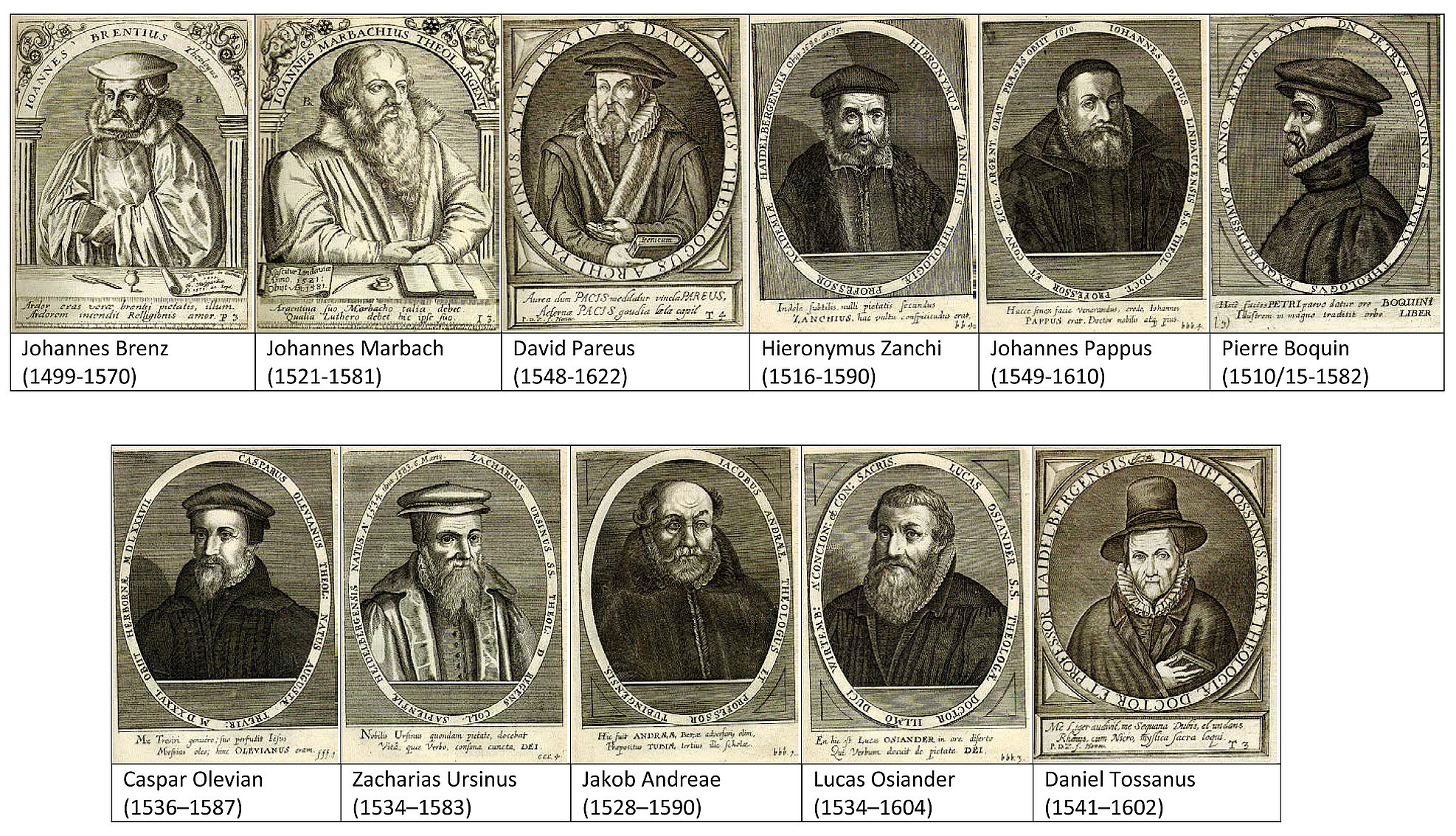
Portraits from: Boissard, Bibliotheca chalcographica, Heidelberg/Frankfurt a. M. 1652-1669 (Quelle: Universität Mannheim, MARABU)
Given the fact that the group of relevant theologians and churchmen is over 200 strong, a corpus of about 35,000 letters is expected. This large number of documents will be compiled in its entirety in a database (https://thbw.hadw-bw.de/) by recording essential information for each of the letters (sender, addressee, date, incipit, key words etc.) and summarizing its content in an abstract (Regest); a portion of the letters will also be reproduced as a digital copy of the handwritten original; an even more limited selection will be transcribed and this transcription presented online.
The work of the research unit
The collection, cataloging, and exemplary edition of the correspondence of all leading theologians in the Electoral Palatinate, Württemberg, and Strasbourg from 1550 to 1620 is intended to shed light on the connections outlined above. The project will include theology professors from the universities of Heidelberg and Tübingen as well as the Strasbourg Academy, and will also cover superintendents and court chaplains who were significant in terms of territorial or church history during the period in question.
Database: https://thbw.hadw-bw.de/
The Significance of Theologians’ Letters
An analysis of the letters from this period is particularly well-suited to elucidating the process of confessionalization and its consequences in the Early Modern period. Correspondence is a particularly rich source when one examines not only the exchanges of individual persons but also, as comprehensively as possible, the letters of specific groups of people in selected regions during clearly defined time periods. This allows for the identification of networks and makes patterns of general validity more readily apparent. Since theologians played a key role in the formation of the denominations, their letters provide particularly valuable insight into the motives and mechanisms of confessionalization.
Why the Southwest?
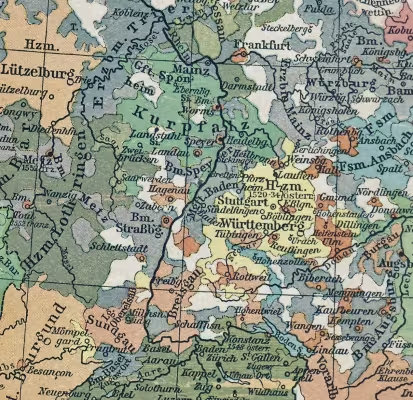
Between 1550 and 1620, three competing models of the Reformation developed in the southwest of the Empire: the Lutheran (Württemberg, University of Tübingen), the Reformed (Electorate of the Palatinate, University of Heidelberg), and the “Upper German” model (Strasbourg).
These various denominational forms of Protestantism in the Southwest influenced one another intensely, particularly as they increasingly distinguished themselves from one another. However, they also had a supraregional, even international influence. For example, the Strasbourg model of the Reformation shaped Calvin’s Reformation; the Tübingen theologian Jacob Andreae played a leading role in the formulation of Lutheran confessions throughout the German-speaking world; and the Reformed movement in the Electoral Palatinate, together with the University of Heidelberg, developed into a political stronghold and an intellectual center of Calvinism in Europe until 1620. Thus, this region has made a significant—and still insufficiently recognized—contribution to the history of the European Reformation.
The period between the Peace of Augsburg and the Thirty Years’ War has received particular attention in historical scholarship in recent decades. For since the 1980s, the previously dominant interpretation—that the path to modernity could essentially be described as secularization, that is, as a decline in the relevance and normative power of religion for the state and society—has been fundamentally called into question. Rather, the confessionalization that began as a result of the Reformation was also an eminently modernizing process. A more precise definition of the relationship between secularization and confessionalization is currently a central question in the historiography of the early modern period. It also has significant implications for the interpretation of the origins of Western civilization as a whole, extending to the contemporary question of the role of religion in public life.
Head of the Research Project
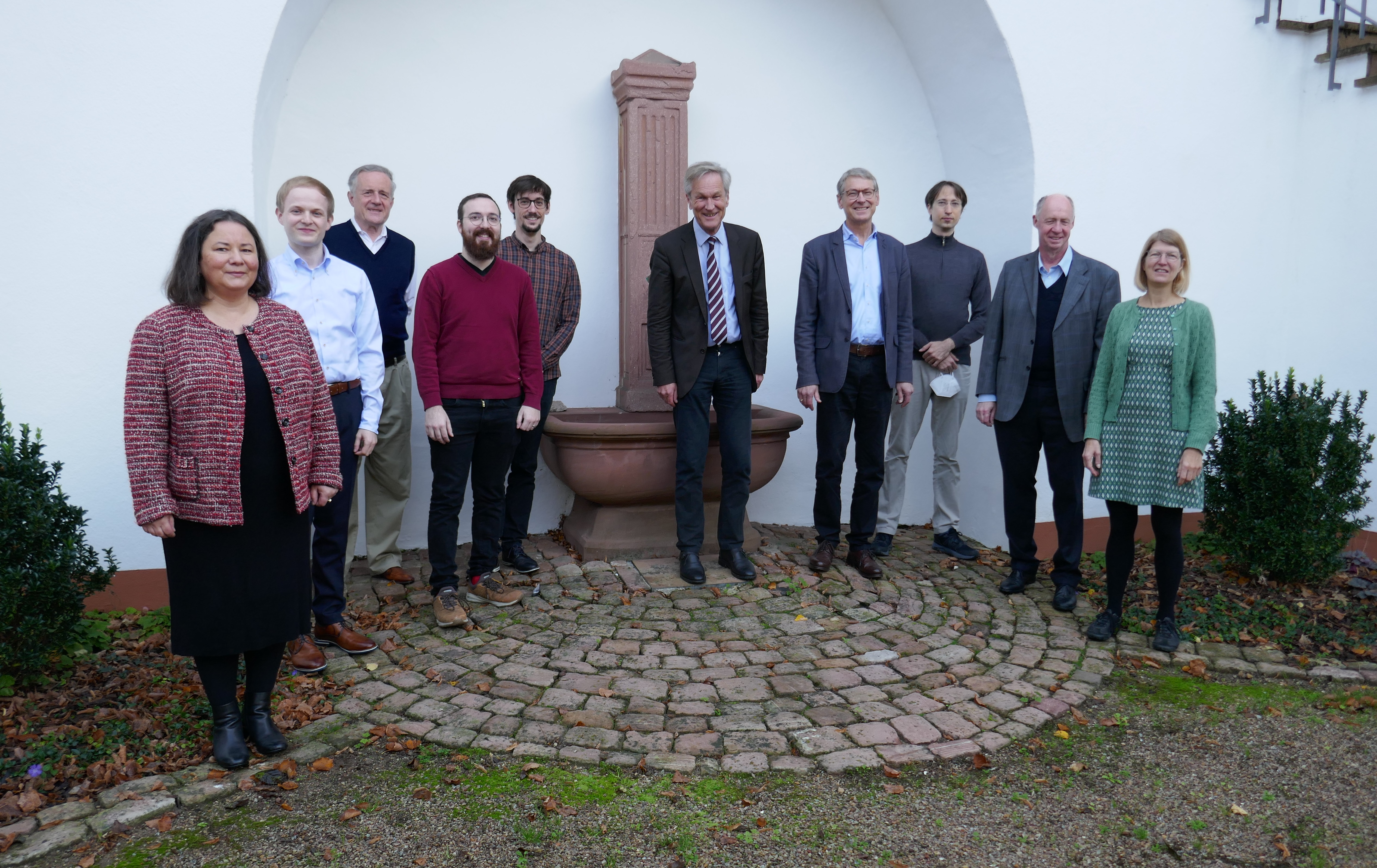
Research Assistants
- Simon Manuel Ammann
- Aaron Lee Dietrich
- Hanna Katharina Eberhardt
- Madlena Felsinger
- Celia Charlotte Ganz
- Leo Sebastian Groll
- Vincent Hecker
- Simon Heyne
- Zonghan Jia
- Isabella Saime Kaya
- Jennifer Phuong
- Isabella Ridzewski
- Katharina Schnetzer
- Nicolas Vernola
- Michael Woodard
- Robin Wußler
- Qingyuan Xu
Members of the Project Oversight Committee
- Prof. Dr. Matthieu Arnold (Strasbourg)
- Dr. habil. Reinhard Bodenmann (Zürich)
- Prof. Dr. Tobias Bulang (Heidelberg)
- Prof. Dr. Amy Nelson Burnett (Nebraska-Lincoln)
- Prof. Dr. Michael Gertz (Heidelberg)
- Prof. Dr. Sabine Holtz (Stuttgart)
- Prof. Dr. Andreas Holzem (Tübingen)
- Prof. Dr. Armin Kohnle (Leipzig)
- Prof. Dr. Thomas Maissen (Heidelberg)
- Prof. Dr. Torsten Schrade (Akademie Mainz)
- Prof. Dr. Albrecht Winnacker (Erlangen)
- Prof. Dr. Eike Wolgast, Vorsitzender (Heidelberg)