
March 25, 2026
Späte Neandertaler Europas stammten aus einer einzigen Population
Eine aktuelle Studie unter Leitung von Prof. Dr. Cosimo Posth vom Senckenberg-Zentrum für Menschliche Evolution und Paläoumwelt der Universität Tübingen zeigt: Die letzten Neandertaler Europas erlebten vor ihrem Verschwinden vor rund 40.000 Jahren einen drastischen Bevölkerungsumbruch. Neue DNA-Analysen und archäologische Daten belegen, dass ihr Genpool am Ende nur noch eine geringe Vielfalt aufwies. Die Ergebnisse wurden in der Fachzeitschrift Proceedings of the National Academy of Sciences (PNAS) veröffentlicht.
Bereits zuvor gab es Hinweise darauf, dass die einst weit verbreiteten Neandertaler-Populationen in Europa stark zurückgegangen waren. Die aktuelle Untersuchung legt nun nahe, dass während einer Kältephase vor etwa 80.000 Jahren nur eine lokal begrenzte Gruppe in einem Klimarefugium im heutigen Südwesten Frankreichs überlebte. Vor rund 65.000 Jahren breitete sich diese Population erneut über Europa aus. Genetisch stammen nahezu alle späten Neandertaler von dieser einen Linie ab.
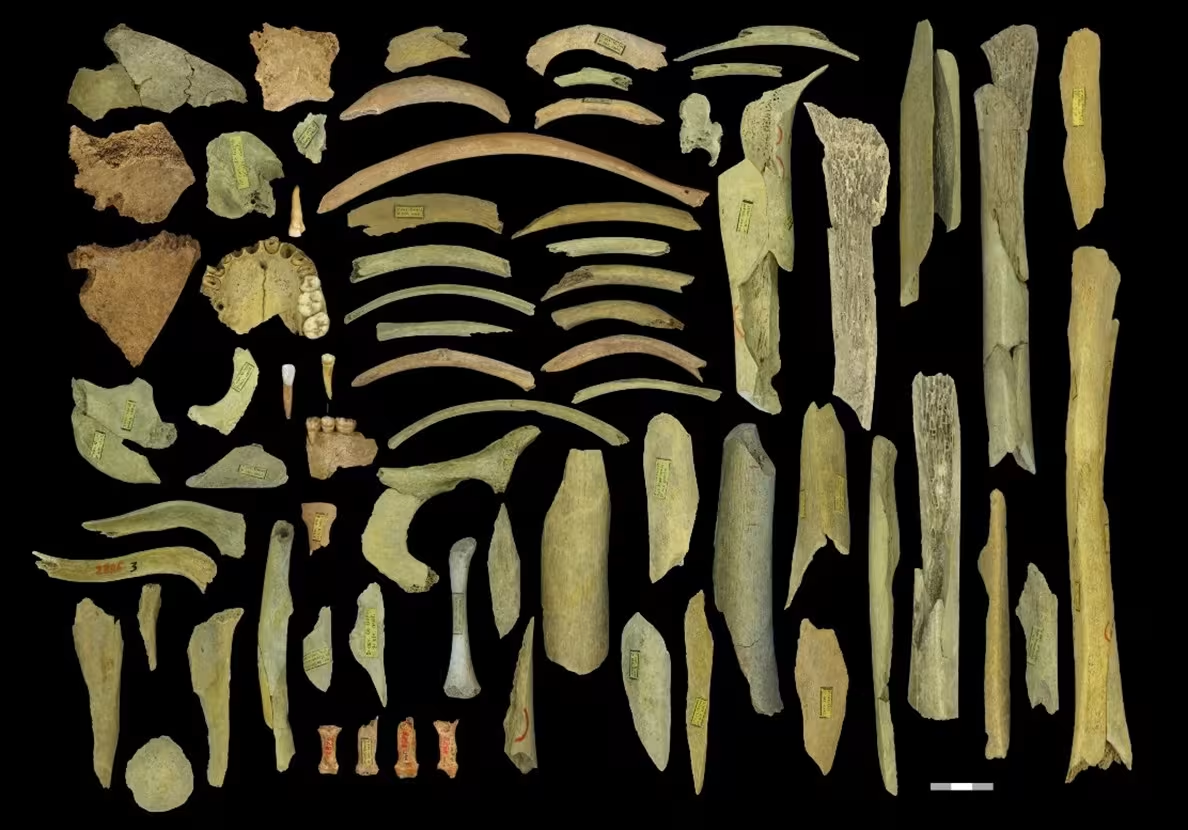
Für die Studie analysierte das Forschungsteam mitochondriale DNA aus Zähnen und Knochenfunden. Diese DNA-Form ist robuster als Kern-DNA und lässt sich daher auch aus sehr alten Proben gewinnen. Zehn neu sequenzierte Individuen aus Belgien, Frankreich, Deutschland und Serbien wurden mit 49 bereits veröffentlichten Datensätzen verglichen. Ergänzend nutzten die Forschenden archäologische Daten aus der ROAD-Datenbank des ROCEEH-Projekts der Heidelberger Akademie der Wissenschaften, um genetische und archäologische Befunde räumlich wie zeitlich zusammenzuführen.
Die Ergebnisse zeigen, dass die klimatischen Bedingungen der Eiszeit die Neandertaler-Population stark dezimierten. Zeitgleich nahm die Zahl archäologischer Fundstätten ab und konzentrierte sich auf Südwesteuropa. Aus dieser Region ging später jene Population hervor, die sich erneut über den Kontinent ausbreitete. Die genetische Homogenität der späten Neandertaler – von der Iberischen Halbinsel bis zum Kaukasus – belegt diesen massiven Bevölkerungswechsel.
Darüber hinaus rekonstruierte das Forschungsteam die demografische Entwicklung mithilfe statistischer Modelle. Demnach kam es zwischen 45.000 und 42.000 Jahren vor heute zu einem rasanten und drastischen Bevölkerungsrückgang. Kurz darauf verschwanden die Neandertaler vollständig aus dem Fossilbericht.
„Genetisch gesehen waren die späten Neandertaler eine sehr homogene Gruppe“, erklärt Posth. Die geringe genetische Vielfalt und die Isolation kleiner Restpopulationen könnten demnach zum Aussterben beigetragen haben. Der moderne Mensch, Homo sapiens, breitete sich zu dieser Zeit in Europa aus und verdrängte die Neandertaler.
Die Studie liefert neue Einblicke in die komplexe Populationsgeschichte der Neandertaler und zeigt, wie eng klimatische Veränderungen, demografische Prozesse und genetische Vielfalt miteinander verknüpft sind.
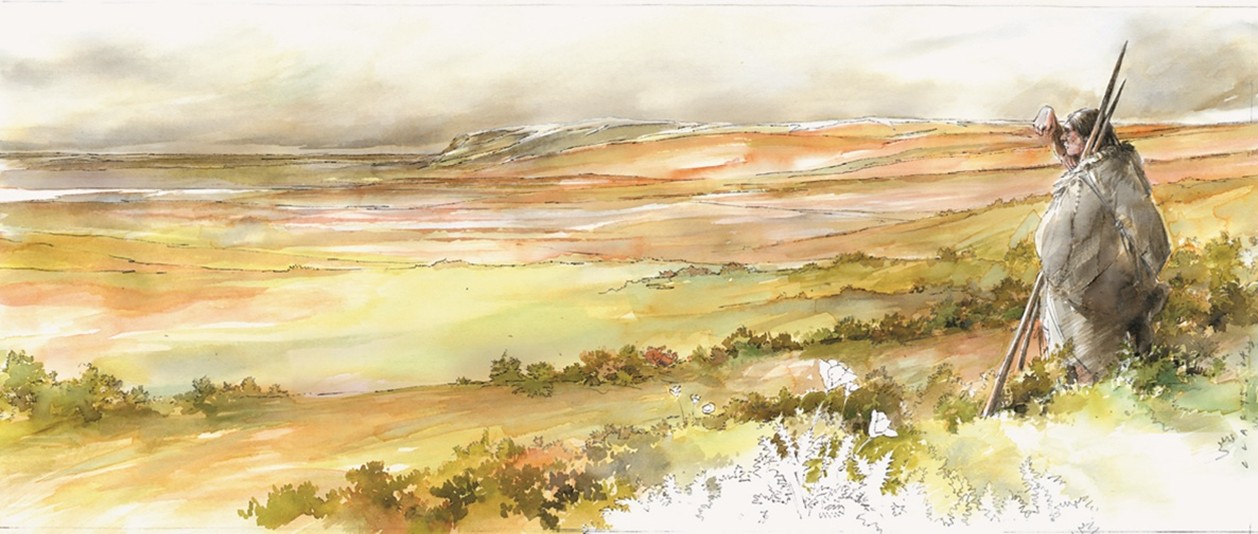
Künstlerische Darstellung der Gletscherlandschaft, wie sie die Neandertaler während der Eiszeit vorfanden.
© Direction de l’archéologie du Pas-de-Calais / Benoît Clarys
Veröffentlichung:
Charoula M. Fotiadou, Jesper Borre Pedersen, Hélène Rougier, Mirjana Roksandic, Maria A. Spyrou, Kathrin Nägele, Ella Reiter, Hervé Bocherens, Andrew W. Kandel, Miriam N. Haidle, Timo P. Streicher, Nicholas J. Conard, Flora Schilt, Ricardo Miguel Godinho, Thorsten Uthmeier, Luc Doyon, Patrick Semal, Johannes Krause, Alvise Barbieri, Dušan Mihailović, Isabelle Crevecoeur, Cosimo Posth: Archaeogenetic insights into the demographic history of Late Neanderthals. PNAS, https://doi.org/10.1073/pnas.2520565123
Wissenschaftlicher Kontakt:
Prof. Dr. Cosimo Posth
Universität Tübingen
Archaeo- and Palaeogenetics, Institute for Archaeological Sciences
Senckenberg Centre for Human Evolution and Palaeoenvironment
Telefon 07071 29-74089
PRESSEMITTEILUNG der Universität Tübingen
Weitere Informationen:
Prof. Dr. Cosimo Posth ist Kollegiat der Heidelberger Akademie der Wissenschaften. Er wurde 2024 von der Akademie mit dem Manfred-Fuchs-Preis ausgezeichnet.
An der Studie waren weiterhin Wissenschaftlerinnen und Wissenschaftler des Akademieprojekts "ROCEEH" sowie der ehemalige WIN-Kollegiat der Akademie Prof. Dr. Johannes Krause beteiligt, der dieses Jahr mit dem Gottfried Wilhelm Leibniz-Preis ausgezeichnet wurde.
ROCEEH: Die Aufgabe der Forschungsstelle "The Role of Culture in Early Expansions of Humans" (ROCEEH) der Heidelberger Akademie der Wissenschaften besteht darin, ein systemisches Verständnis der "Menschwerdung" zu entwickeln, das die drei Arten der Expansion, ihre Verbindungen untereinander und die verschiedenen Entwicklungsdimensionen integriert. Das Projekt umfasst den Zeitraum von drei Millionen Jahren bis 20.000 Jahre vor heute und umspannt das Gebiet von Afrika bis Eurasien. Dabei liegt der Fokus primär auf der Entwicklung menschlicher kultureller Fähigkeiten sowie auf deren Hintergrund und Merkmalen.
ROCEEH ist ein multidisziplinäres Forschungsprojekt an der Schnittstelle zwischen Kultur- und Naturwissenschaften. Das Projekt besteht aus einem Team von Wissenschaftlerinnen und Wissenschaftlern aus den Bereichen Kulturwissenschaft, Archäologie, Paläoanthropologie, Paläobiologie, Geografie und einer Datenbankspezialistin, angesiedelt am Forschungsinstitut Senckenberg in Frankfurt und an der Universität Tübingen.
ROAD-Datenbank: ROAD-WEB
Eberhardt Karls Universität Tübingen
 Royal Belgian Institute of Natural Sciences