
Danzi - Son of Schwetzingen
Concert at St. Pankratius (Schwetzingen) in cooperation with the Hof I Music I City Research Center
The New Mannheim Orchestra Quintet
Anders Muskens - Musical Director & Fortepiano
Federico Forla - Oboe
Elia Celegato - Clarinet
Nicolas Roudier - Horn
Jeongguk Lee - Bassoon
W. A. Mozart – Quintet in E-flat Major, K. 452
Franz Danzi and Margarethe Danzi – Piano Sonata in F Major, Op. 3
Franz Danzi – Quintet in D minor, Op. 41
Doors open at 7:00 p.m.
Discount
There are no discounts for this concert; everyone pays what they can afford or what the concert is worth to them. The standard price/suggested amount is €30, but you can also pay €10 or €20, or show your support by paying €40 or €50.
Further information:
- Ticket sales: Danzi – Son of Schwetzingen – St. Pankratius
- Hof I Music I City Research Center: www.hofmusikstadt.de, “Hof | Music | City” Research Center | HAdW
- Concert marking the 200th anniversary of Franz Danzi’s death, discussion with Dr. Rüdiger Thomsen-Fürst, Leony Gräfe, and Katharina Simmert, in: Schwetzinger Woche, Issue 11/26, edited by Nussbaum, March 9, 2026
Concert at St. Pankratius (Schwetzingen) in cooperation with the Hof I Music I City Research Center
Franz Danzi is considered one of Schwetzingen’s most famous “sons.” According to the church records, he was baptized on June 15, 1763, at St. Pankratius. His father, Ludovico—a cello virtuoso from northern Italy who played in the electoral court orchestra—was highly regarded by Wolfgang Amadeus Mozart as an outstanding accompanist. It is possible that the six-year-old Mozart heard the cries of the infant Franz—who was only a few weeks old—during his stay in Schwetzingen in 1763. Franz would later become one of Mozart’s greatest admirers and incorporate numerous themes from his idol into his own compositions. Franz received his training from his father and later worked as a solo cellist in Munich and as court Kapellmeister in Stuttgart and Karlsruhe. His wind quintets are still performed today. Danzi died in Karlsruhe in 1826—this year marks the 200th anniversary of his death.
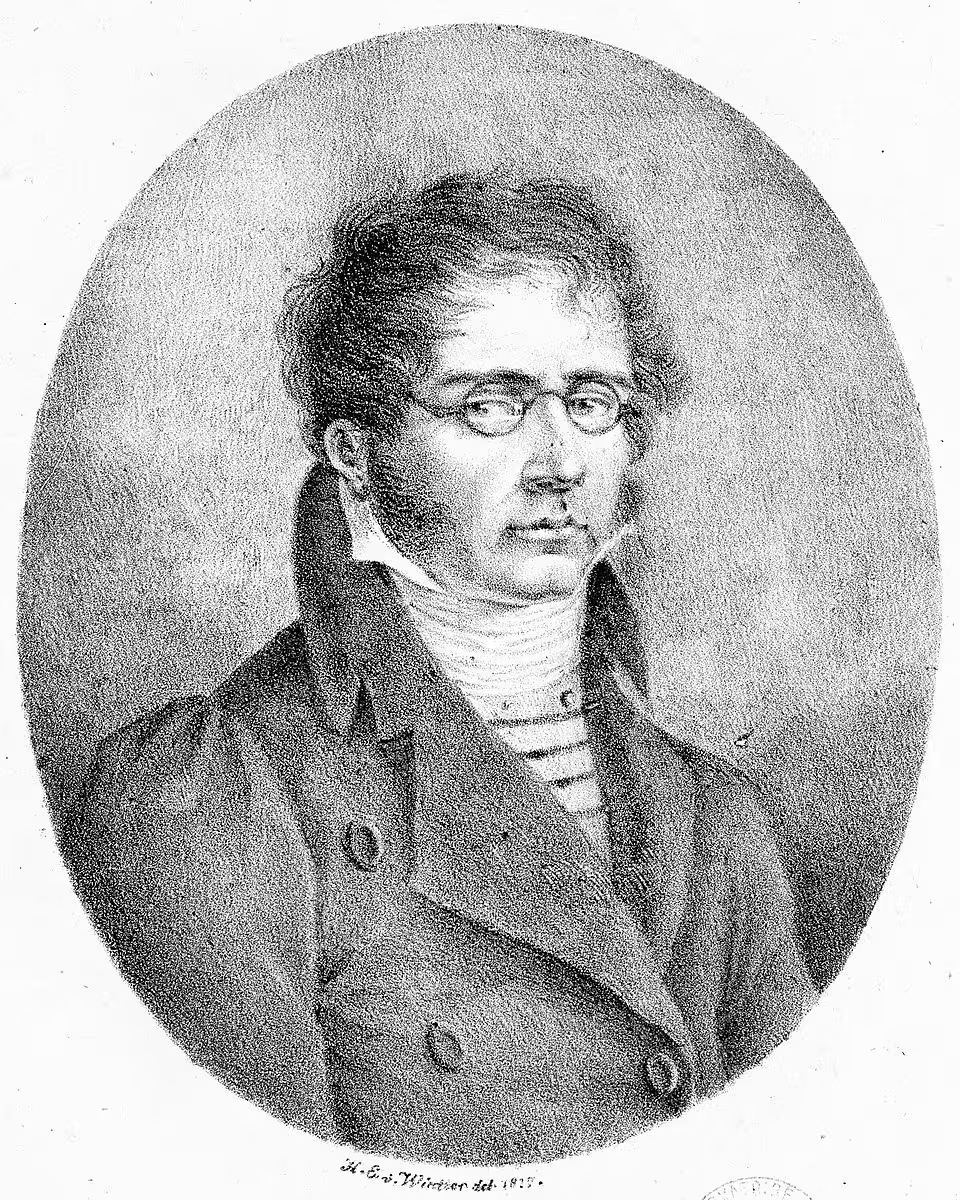
Franz Danzi, engraving by Heinrich Eduard Winter (1817)