
Epigraphic Database of Roman Inscriptions (EDH)
Duration: 1986 to 2021
since , the EDH has been accessible through Heidelberg University. It can be accessed there via the Propylaeum Specialized Information Service for Classical Studies (external link).
The mission of the Heidelberg Epigraphic Database (EDH) is to systematically record ancient Latin and bilingual (mostly Latin-Greek) inscriptions in a comprehensive database. Thanks to its interdisciplinary design and methodology, it ranks among the world’s leading database initiatives for the rapid collection and reliable historical analysis of epigraphic evidence. The distinctive features of the EDH lie in its regional systematics, the flexible combinability of the stored metadata, and the interlinking of the Epigraphic Text Database(external link) with the EDH’s three other sub-databases: the Epigraphic Bibliography(external link), the Epigraphic Photo Library(external link), and the Epigraphic Geography Database(external link).
Its goal is to make the epigraphic documentation of the provinces of the Roman Empire as complete and reliable as possible for online research by 2020 (the project’s completion date). Following a resolution by the AIEGL’s Commissione epigrafia e informatica (external link) in 2003 to establish the international epigraphic database federation EAGLE ( Electronic Archives of Greek and Latin Epigraphy), the EDH has since been responsible for managing the inscriptions of the Roman provinces, while the inscriptions from Italy that had already been recorded via the EDH were transferred to the Epigraphic Database Rome (EDR)(external link) for further processing and completion of the database. The purpose of the EAGLE federation is to make as many Latin and Greek inscriptions from antiquity as possible accessible on the Internet according to uniform criteria. The EDR was founded for this purpose in close cooperation with the EDH and based on its model.
With the completion of the planned database, the project was successfully concluded at the end of 2021.
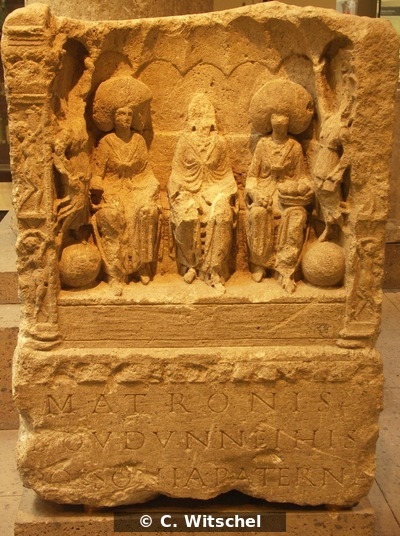
Dedication inscription from Cologne
The Concept
Die Epigraphische Text-Datenbank (externer Link) ist das Herzstück der EDH und umfasst rund 81.000 Inschriften. Es handelt sich fast ausschließlich um bereits publizierte Texte, welche nicht nur in den großen – vielfach noch gültigen, aber modernen textkritischen Standards häufig nicht mehr genügenden – Inschriftencorpora ediert, sondern insbesondere auch in Tausenden von Fachartikeln veröffentlicht, revidiert und diskutiert worden sind. Texte und Metadaten der Inschriften werden somit vor dem Hintergrund des aktuellen Forschungsstandes präsentiert. Zu den Grundprinzipien der Arbeitsweise der EDH zählt es, Lesungen nicht ungeprüft aus Editionen und anderer Sekundärliteratur zu übernehmen. Soweit möglich werden diese vielmehr mindestens anhand von Zeichnungen oder Fotos – letztere weitgehend auch aus den Beständen der Epigraphischen Fotothek –, idealerweise auch per Autopsie verifiziert und dem Nutzer über das Feld Bearbeitungsstand die genaue Verifikationsgrundlage angezeigt.
Die Bearbeitung der Inschriften für die Epigraphische Text-Datenbank stützt sich einerseits auf eine seit den Anfängen des Projekts stetig anwachsende umfangreiche Kartei, in der die in L' Année Épigraphique (externer Link) seit 1888 erfassten Publikationen systematisch gesammelt werden, andererseits gemäß dem regionalen Arbeitsprinzip der EDH auf die einschlägigen Corpora und Lokalpublikationen. Daneben unterhält die EDH einen regen Austausch mit in- und ausländischen Forschenden und Forschungseinrichtungen, um gerade deren spezielles, auch regional ausgeprägtes Profil im Rahmen externer Kooperation in die EDH einzubringen.
Zur Geschichte der EDH
Das Vorhaben wurde im Jahr 1986 von Géza Alföldy († 2011) mit einer Laufzeit von fünf Jahren im Rahmen des Gottfried-Wilhelm-Leibniz-Programms initiiert und ab 1991 von der Fritz-Thyssen-Stiftung (externer Link) weiter gefördert. Seit 1993 ist die EDH eine Forschungsstelle der Heidelberger Akademie der Wissenschaften. Aufgabe des Forschungsvorhabens ist die Aufnahme und Bearbeitung lateinischer und bilinguer (lateinisch-griechischer) Inschriften des Imperium Romanum in einer komplexen Datenbank und deren benutzerfreundliche Präsentation im Internet.
Die epigraphischen Dokumente werden in überprüfter Lesung und verbunden mit aktuell ca. 1,4 Mio. forschungsrelevanten Metadaten sowie mit Fotos dargeboten. Die EDH hat sich damit auf internationaler Ebene als Instrumentarium etabliert, das der repräsentativen Sichtung, Ergänzung und interdisziplinären Auswertung epigraphischer Zeugnisse dient.
Seit September 1997 wurde der Öffentlichkeit sukzessive die Inschriftendatenbank mit allen verfügbaren Informationen zu Inschrift und Inschriftträger über das Internet zugänglich gemacht. Seit 2004 kann auch die Epigraphische Bibliographie Heidelberg im Internet abgefragt werden. Seit 2007 steht der vollständige Bestand der Epigraphischen Fotothek Heidelberg mit den wichtigsten Angaben zu den abgebildeten Inschriften online zur Verfügung und ist mit den zugehörigen Datensätzen der Inschriftendatenbank verknüpft. Die exakte Lokalisierung der Fundorte wird über die Einträge der 2012 eingerichteten und mit der Inschriftendatenbank verlinkten Geographie-Datenbank gesteuert.
Unter der Obhut der Commissione epigrafia e informatica der AIEGL (Association Internationale d'Epigraphie Grecque et Latine) wurde 2003 der Beschluss zur Errichtung der internationalen epigraphischen Datenbankföderation EAGLE-europeana-Network erreicht. Derzeit wird neben der regulären Erweiterung des epigraphischen Datenbestandes zu den römischen Provinzen in der EDH an einem Konzept gearbeitet, die Nachnutzbarkeit der Daten und Infrastruktur durch den Einsatz offener Standards und Methoden der Digital Humanities zu gewährleisten.

Grabstele aus Heidelberg (http://edh-www.adw.uni-heidelberg.de/edh/inschrift/HD031872)