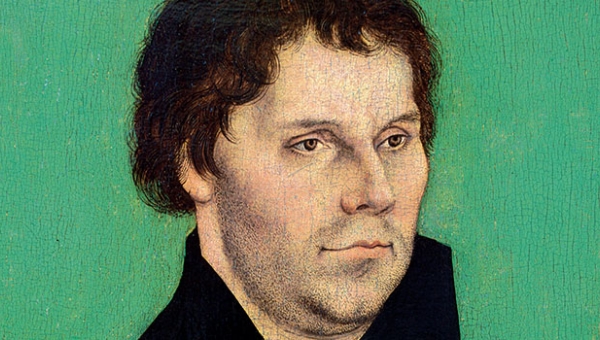
Luther Register
Laufzeit: 1990-2009
Martin Luther's writings, collected in 70 volumes of the "Weimar Edition," represent the most significant work by a German author after Goethe in terms of scope and importance. Their national and international impact extends far beyond church and theological history into general cultural and intellectual history. No writer before or after Luther has had a comparable influence on the development of the German language. However, due to its scope and diversity, his work is difficult to grasp. The indexes make the wealth of available texts accessible to theologians as well as philologists, philosophers, historians, art historians, legal historians, social historians, literary historians, and science historians of all disciplines, not least to those interested in the church, politics, culture, and other areas of public life.
Following the place index (1986) and the people index (1987), the Latin (1990–1999) and German subject indexes (2001–2009) were published in five volumes each.
With the delivery of the last volume in 2009, the Weimar Luther Edition (external link), which began in 1883, was finally completed. 126 years after the publication of the first volume, the most comprehensive written legacy of a German author is now available in a critical complete edition.
Chairman of the Commission
Prof. Dr. Dr. h. c. Martin Heckel
head of research
Prof. Dr. Ulrich Köpf
Employees
- Astrid Breith
- Dr. Beatrice Frank
- Dr. Pamela Kalning
- Ole Kazich
- Tobias Mandel
- Ingela Riechers
- Christine Thumm