Hagrid Web Services
HAdW GND-basierte Webservices – Beaconizer & Discoverer (Hagrid)
Laufzeit: 01.03.2025–31.12.2025
Die an der Heidelberger Akademie angesiedelten Forschungsstellen produzieren in immer größerem Umfang digitale Daten: Im Rahmen dieser digitalen Arbeiten erhalten zunehmend Entitäten wie beispielsweise Personen- und Ortsnamen zwecks Disambiguierung und zur Registererstellung persistente Identifikatoren, typischerweise GNDs für Personen und Geonames für Toponyme.
Aus Nutzersicht stellen sich hierbei zwei Herausforderungen: Zum einen existieren bei der Recherche nach Dokumenten und Informationen beispielsweise über eine Person oder einen Ort viele Einstiegspunkte, da jede Forschungsstelle über eine eigene Internetplattform verfügt. Zum anderen erlauben diese Projekt-Webseiten typischerweise nur eine einfache textbasierte Recherche nach Personen und Orten, entsprechende Indices existieren nur rudimentär, eine Vernetzung der bereits durch Normdaten eindeutig identifizierten Entitäten über Forschungsstellengrenzen hinweg oder mit weiteren Datenbeständen weltweit und eine Integration in größere Recherche-Netzwerke erfolgt dagegen bisher nicht.
Eine aktive Nachnutzung der über viele Jahre erstellen Datenbestände soll durch den Aufbau passgenauer Schnittstellen im Rahmen des Hagrid-Projekts ermöglicht werden, um die Daten aus den jeweiligen Datensilos zu holen und über Verlinkungen und Linked Open Data-Modellierungen der Scientific Community zuzuführen. Hagrid dient insofern also wie die gleichnamige Figur aus der Harry-Potter-Buchreihe, die dort als eine Art freundlich-hilfsbereiter “Keeper of Keys and Grounds of Hogwarts” beschrieben wird, als zentraler Einstieg in und Hilfe bei Recherchen zu Normdaten in den Forschungsstellen der HAdW.
Hagrid extrahiert Normdaten aus den forschungsstellenspezifischen Datenbanken und aggregiert sie in einer zentralen Normdaten-Datenbank. In der Pilotphase wird auf Normdaten aus zwei thematisch eng verwandten Forschungsstellen der HAdW rekurriert:
1) „Melanchthon-Briefwechsel“ und 2) „Theologenbriefwechsel im Südwesten des Reichs in der Frühen Neuzeit (1550-1620)“, die beide Briefeditionen aus der Zeit der Reformation erstellen. Diese Daten werden als CSV exportiert, hierfür wird ein generisches Austauschformat (Normdata Interchange Format, NDIF) entwickelt, das Spalteninformationen und Datentypen definiert.
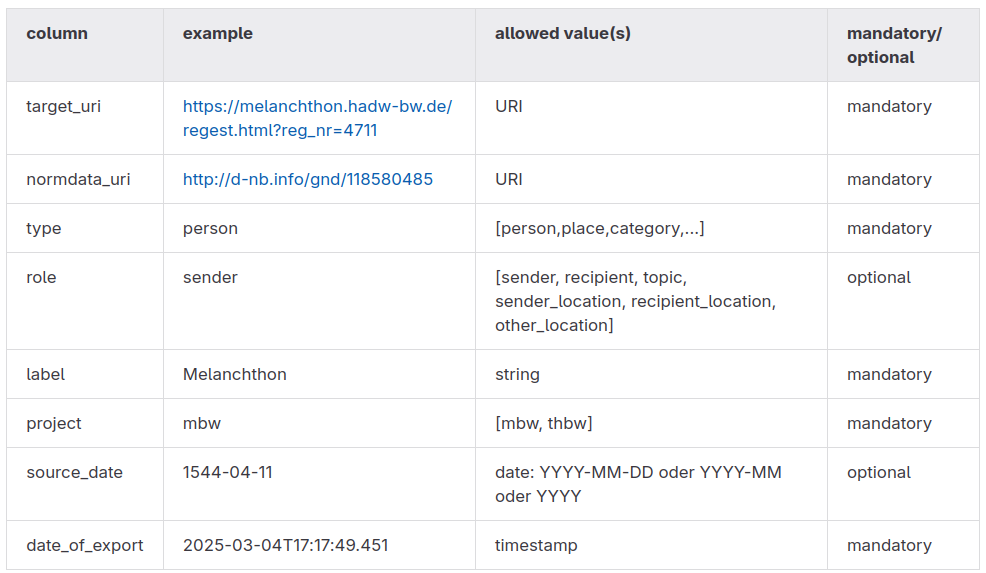
Definition des Normdata Interchange Format (NDIF)
Diese Daten werden von den Forschungsstellen periodisch aktualisiert und durch Hagrid abgerufen sowie in den zentralen Hagrid-Normdaten-Aggregator überführt. Diverse Schnittstellen erlauben einen (teil-)automatischen Informationsaustausch zwischen Computersystemen, während die Hagrid-Webseite eine benutzerfreundliche Interaktion mit dem Hagrid-Datenbestand im Webbrowser ermöglicht.
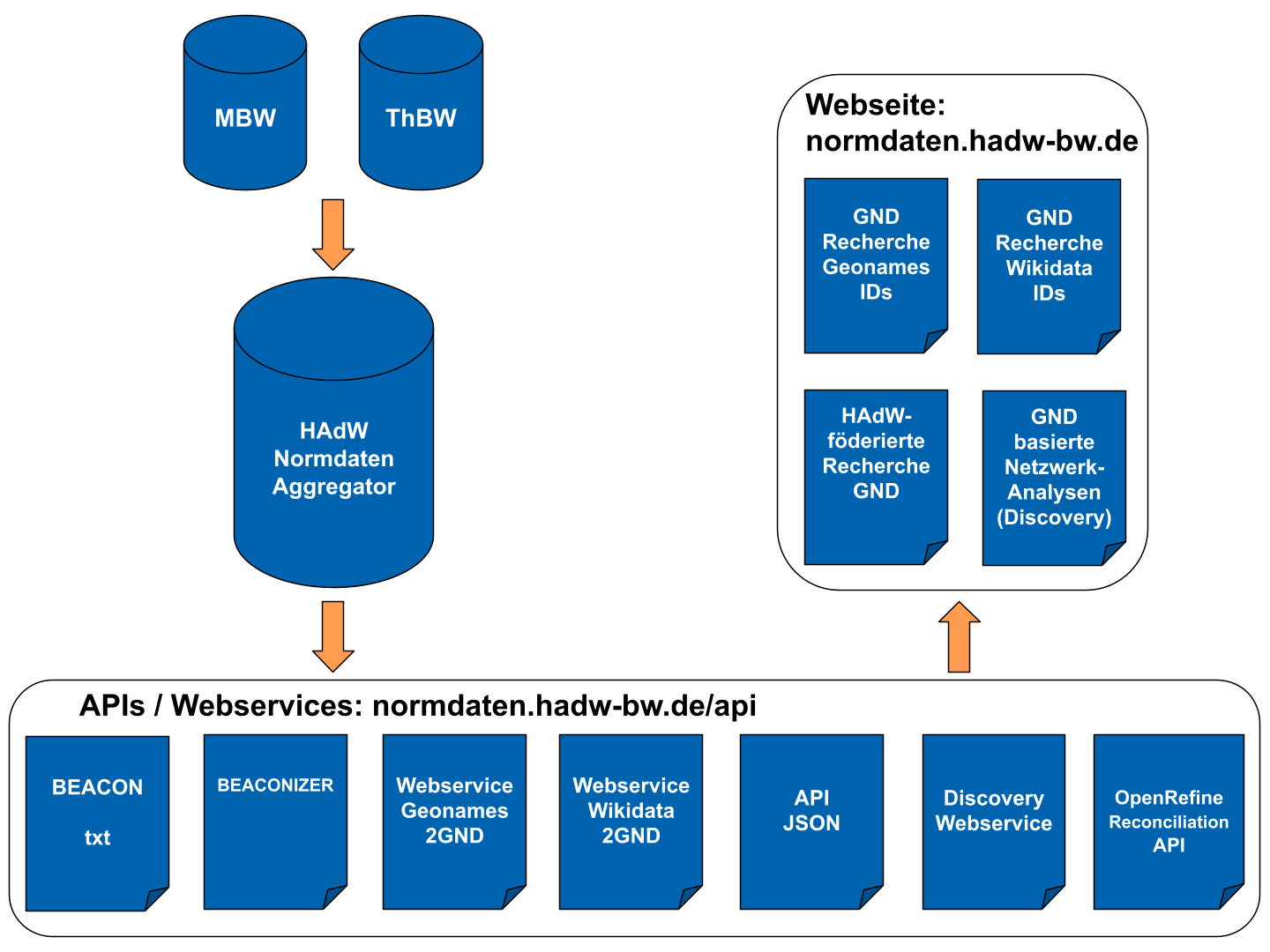
Hagrid-Infrastruktur
Im Rahmen des Hagrid-Projekts werden, dem API-first-Ansatz folgend, zuerst die Schnittstellen entwickelt und danach, darauf aufbauend, die Hagrid-Webseite. Die Hagrid-Schnittstellen sind kompatibel zum OpenAPI-Standard (externer Link), eine Dokumentation der verfügbaren Schnittstellen wird durch Einsatz des Python Frameworks FastAPI (externer Link) automatisch generiert.
Exemplarisch sei hier die Discovery-Schnittstelle vorgestellt: Diese ermittelt auf Basis einer GND, zu welchen Personen eine wie auch immer geartete Beziehung im Briefnetzwerk bestand, sei es als Schreiber oder Empfänger eines Briefs, oder als im Brieftext genannte Person. Die Schnittstelle liefert die Daten entweder im JSON- oder GraphML-Format zurück, letzteres kann anschließend nahtlos beispielsweise in das Netzwerk-Visualisierungsprogramm Gephi importiert und dort weiteren Analysen unterzogen werden. Somit werden föderierte Personen-Suchen über Forschungsstellengrenzen hinweg ermöglicht.
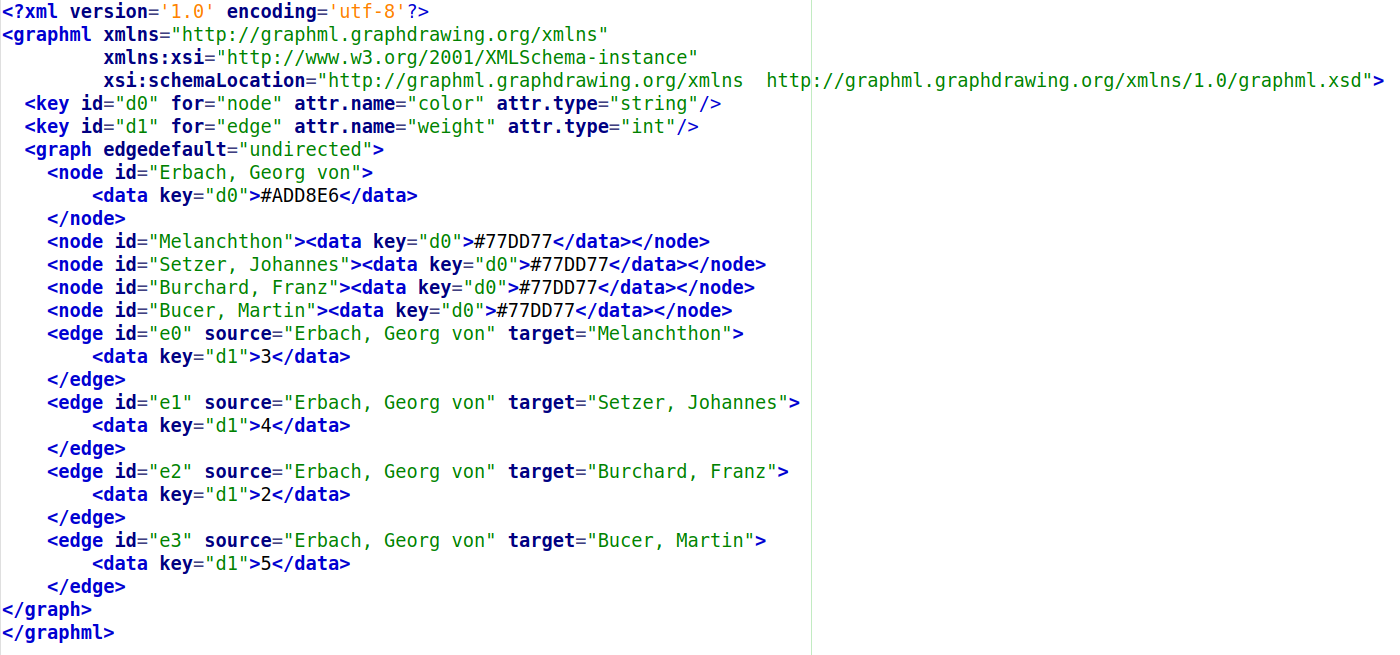
GraphML-Response des Discovery-Webservices (/api/discovery/100089003)
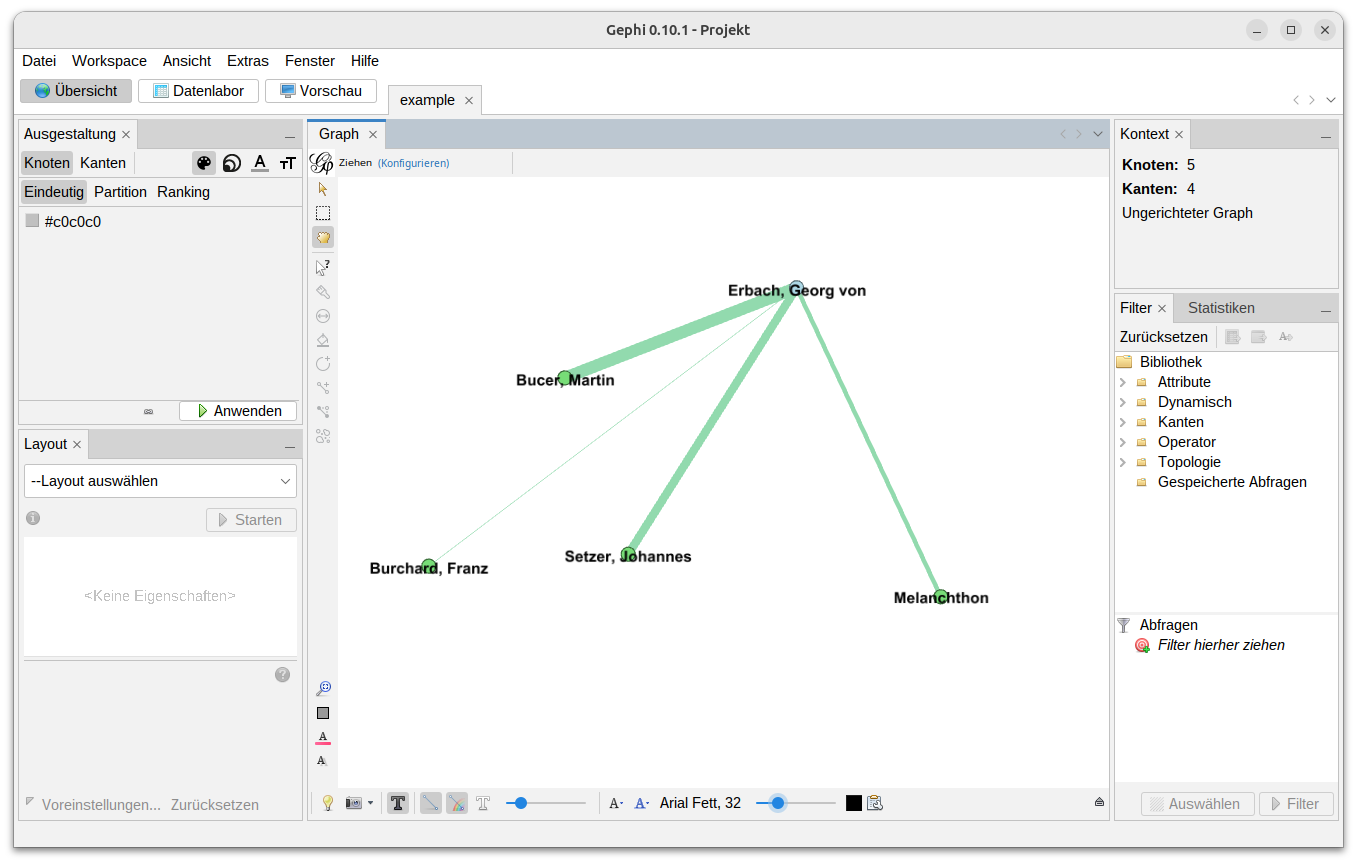
Visualisierung des gewichteten Grafen des Briefnetzwerks von Georg von Erbach in Gephi
Die weiteren Schnittstellen unterstützen Forschende beim Matchen von bereits genutzten Identifikatoren wie Geonames, Wikidata und Pleiades auf entsprechende GND Identifikatoren, durch die Publikation von Beacon-Dateien wird die Verwendung von Normdaten in den Datenbeständen der Forschungsstellen öffentlich gemacht, was die Sichtbarkeit der Forschungsergnisse erhöht; darüber hinaus werden durch den Beaconizer Altdaten in offenen Daten-Repositories in Form von dynamisch erzeugten Beacon-Dateien erschlossen.
Insgesamt entsteht mit Hagrid ein zentraler Einstiegspunkt für passgenaue Recherchen nach und die Arbeit mit Normdaten in Forschungsprojekten an der Heidelberger Akademie der Wissenschaften.
Publikation
Grieshaber, F. (2023). GND-basierte Normdaten-Webservice-Suite. Text+ Plenary 2023:
Connecting People and Data, SUB Göttingen. Zenodo. https://doi.org/10.5281/zenodo.10033934.
(Posterpräsentation im Rahmen des 2. Text+ Plenarys: Connecting People and Data am 28./29. September an der SUB Göttingen.)