

Brain and mind. Physical and psychological functions of the brain
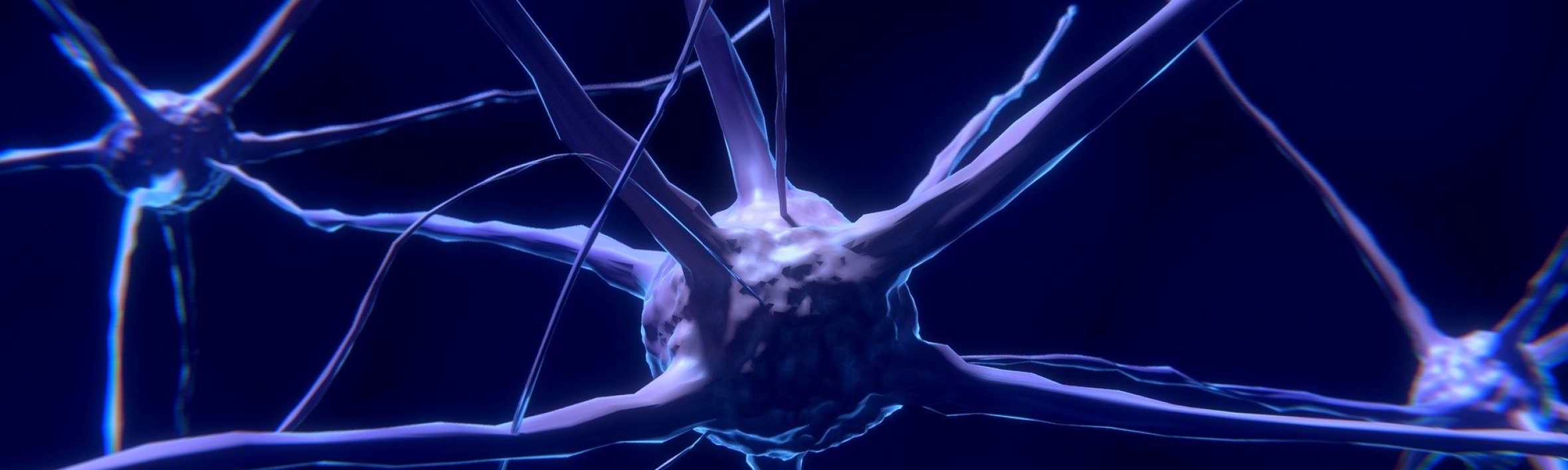
The first research focus, "Brain and Mind: Physical and Mental Functions of the Brain," addressed the most complex question facing neuroscience: How does the brain generate perceptions, behavior, and ultimately consciousness?
The interdisciplinary research approach closely integrated methods from physiology, experimental psychology, biochemistry, and mathematics. After a five-year run, the project was successfully completed in June 2007 (Closing Symposium “Molecules – Neurons – Mind,” July 3–4, 2007 (PDF))
Supported by

Processing and Learning of Sensory Stimuli in the Olfactory System
How does the brain generate mental abilities? How does it perceive its environment? How does behavior emerge in response to influences from the external and internal worlds? These questions are among the most fascinating and, at the same time, the most challenging in modern neuroscience. Despite an immense wealth of new findings, we are still far from achieving the goal of explaining the mind through the brain’s function. To find possible answers to these questions, it is necessary to understand how simple building blocks generate complex systems with new properties that go beyond the sum of the properties of the individual building blocks.
The research approach of this project was to investigate the interaction between levels of varying complexity in neural information processing using a simple model system: the mouse olfactory system. The discrimination of odors in the olfactory system was investigated at the levels of behavior, population properties, and in vivo and in vitro electrophysiology , and the results were combined with parameter studies and mathematical modeling to create and validate models of neural networks based on the experimental data.
Publications resulting from the project:
- Reidl, J., Starke, J., Omer, D.B., Grinvald, A., Spors, H., and . (2007). Independent Component Analysis of high-resolution imaging data identifies distinct functional domains. NeuroImage 34(1): 94–108.
- Abraham, N.M., Shimshek, D.R., Seeburg, P.H., Klugmann, M., Schaefer, A.T., Kuner, T. (2006). Spatio-temporally defined deletion of ionotropic glutamate receptors in the olfactory bulb affects odor discrimination time via reciprocal synapses. Victor Rothschild Memorial Symposia, 14th Jerusalem Spring School in Life Sciences, Jerusalem, Israel, April 2006.
- Reidl, J.; Borowski, P.; Sensse, A.;Starke, J.; Zapotocky, M.; Eiswirth, M. (2006). Model of intracellular Ca²⁺ oscillations due to negative feedback. Biophysical Journal 90(4): 1147–1155.
- Schaefer, A.T., Angelo, K., Spors, H., Margrie, T.W. (2006). Neuronal Oscillations Enhance Stimulus Discrimination by Ensuring Action Potential Precision. PLoS Biology 16.
- Spors, H., Wachowiak, M., Cohen, L.B., Friedrich, R.F. (2006). Temporal Dynamics and Latency Patterns of Receptor Neuron Input to the Olfactory Bulb. J. Neurosci., 26(4): 1247–1259.
- Shimshek, D.R., Bus, T., Kim, J., Mihaljevic, A., Mack, V., Seeburg, P.H., Sprengel, R., Schaefer, A.T. (2005). Enhanced Odor Discrimination and Impaired Olfactory Memory through Spatially Controlled Switching of AMPA Receptors. PLoS Biology 3.
- Abraham, N.M., Spors, H., Carleton, A., Margrie, T., Kuner, T., Schaefer, A.T., and . (2004). Maintaining accuracy at the expense of speed: stimulus similarity defines odor discrimination time in mice. *Neuron* 44: 865–876.
Event held as part of the project:
Workshop: “Neural Network Models of the Olfactory Bulb” (December 18–19, 2003)
Fellow students:
- Prof. Dr. Thomas Kuner
- Dr. Andreas Schaefer
- Dr. Hartwig Spors
- Prof. Dr. Jens Starke
Neural Encoding of Movement in Monkeys and Humans: From Single Cells and Cell Ensembles to Brain-Computer Interfaces
This project aimed to advance our understanding of neural motor control and to optimize brain-computer interfacing by combining basic neurophysiological research with application-oriented and clinically relevant questions. The goal was, on the one hand, to conduct a comparative study of the encoding of voluntary movement parameters in monkeys and humans across multiple levels of neural organization. Building on this, the aim was, on the other hand, to investigate the promising potential of a brain-computer interface (BCI) based on the electrocorticogram (ECoG) derived directly from the human cortex.
Publications resulting from the project:
- Ball T., Schulze-Bonhage A., Aertsen A., Mehring C. ( 2009). Differential representation of arm movement direction in relation to cortical anatomy and function. J. Neural. Eng. 6(1): 016006.
- Pistohl T., Ball T., Schulze-Bonhage A., Aertsen A., Mehring C. ( 2008). Prediction of arm movement trajectories from ECoG recordings in humans. J Neurosci Methods 67(1): 105–114.
- Ball T., Demandt E., Mutschler I., Neitzel E., Mehring C., Vogt K., Aertsen A., Schulz-Bonhage A. (2008). Movement-related activity in the high-gamma range of the human EEG. Neuroimage 41(2008): 302–310.
- Rickert J., de Oliveira S.C., Vaadia E., Aertsen A., Rotter S., Mehring C. ( 2005). Encoding of movement direction in different frequency ranges of motor cortical local field potentials. J. Neurosci. 25(2005): 8815–8824.
- Mehring C., Nawrot M.P., de Oliveira S.C., Vaadia E., Schulze-Bonhage A., Aertsen A., Ball T. ( 2004). Comparing information about the direction of arm movement in single channels of local and epicortical field potentials from the motor cortex of monkeys and humans. J Physiol Paris 98(4/6): 498–506.
- Weiskopf, N., Klose, U., Birbaumer, N., & Mathiak, K. (2004). Single-shot compensation of image distortions and BOLD contrast optimization using multi-echo EPI for real-time fMRI. Neuroimage.
- Weiskopf N., Mathiak K., Bock S.W., Scharnowski F., Veit R., Grodd W., Goebel R., Birbaumer N. (2004). Principles of a brain-computer interface (BCI) based on real-time functional magnetic resonance imaging (fMRI). IEEE Transactions on Biomedical Engineering 51: 966–970.
- Weiskopf N., Scharnowski F., Veit R., Ball T., Mathiak K., Zopf R., Studer P., Grodd W., Goebel R., Birbaumer N. (2004). Self-regulation of the local BOLD signal and its behavioral consequences: a real-time fMRI study. Abstract presented at the 44th annual meeting of the SPR, Santa Fe, New Mexico.
- Mehring C., Ball T., Rickert J., Nawrot M. ( 2003). Representation of arm movements in different neural signals. 48th Annual Meeting of the German Society for Clinical Neurophysiology and Functional Imaging, October 8–12, Freiburg (Germany).
Fellow students:
- Dr. Tonio Ball
- Dr. Carsten Mehring
- Dr. Martin Nawrot
- Dr. Nikolaus Weiskopf
Neural Representation of Emotional Communication
Despite the great importance of affective expression and emotional content in human communication, the neural basis for the communication of emotions remains largely unclear. With the aim of refining our understanding of the representation of affective aspects of communication in cortical activation patterns and neural networks, the processing and integration of linguistic, prosodic, facial, visual, and acoustic affective stimuli in healthy participants and individuals with affective disorders were investigated using a combination of methods with high temporal (EEG, MEG) and spatial (fMRI) resolution and methods for imaging biochemical processes (MR spectroscopy).
Publications resulting from the project:
- Demirakca T., Herbert C., Kissler J., Ruf M., Wokrina T., Ende G. ( 2009). Overlapping neural correlates of reading emotionally positive and negative adjectives. Open Neuroimaging Journal 09(3): 54–57.
- Herbert C., Ethofer T., Anders S., Junghöfer M., Wildgruber D., Grodd W., Kissler J. (2009). Amygdala activation during the reading of emotional adjectives – an advantage for pleasant content. Social Cognitive and Affective Neuroscience 4(1): 35–49.
- Ethofer T., Anders S., Erb M., Herbert C., Wiethoff S., Kissler J., Grodd W., Wildgruber D. ( 2006). Cerebral pathways in the processing of affective prosody: a dynamic causal modeling study. Neuroimage 30(2): 580–587.
- Anders S., Birbaumer N., Sadowski B., Erb M., Mader I., Grodd W., Lotze M. (2004). The parietal somatosensory association cortex mediates affective blindsight. Nature Neuroscience 7(4): 339–340.
- Herbert C., Kissler J., Junghöfer M., Peyk P. (2004). Reading Rapidly Presented Emotional Words - An ERP Study. Psychophysiology, 41, Suppl.: 46.
- Kissler, J., Herbert, C., Junghöfer, M., Grodd, W., & Wildgruber, D. (2004). Rapid processing of emotional words: converging evidence from EEG and fMRI. 10th International Conference on Functional Mapping of the Human Brain, Budapest, Neuroimage, Supplement and CD-ROM.
- Wildgruber, D., Riecker, A., Hertrich, I., Erb, M., Grodd, W., Ackermann, H., & Anders, S. (2004). Distinct frontal regions underlie the evaluation of linguistic and affective aspects of intonation. Cerebral Cortex 14: 1384–1389.
- Wildgruber D., Lotze M., Birbaumer N., Erb M., Grodd W., Anders S. (2003). Processing of an aversive conditioned face in the left and right visual hemifields: An fMRI study [abstract]. Presented at the 9th International Conference on Functional Mapping of the Human Brain, June 19–22, New York, NY. Available on CD-ROM. Neuroimage 19(2).
Fellow students:
- Dr. Silke Anders
- Dr. Markus Junghöfer
- Dr. Johanna Kissler
- Dr. Dirk Wildgruber
- Dr. Tim Wokrina
Associate Project Partner:
Dr. Gabriele Ende