
Neural Circuits of Embodiment
Problem
How do internal bodily states shape our thoughts, decisions, and sense of self? While frameworks of embodied cognition have emphasized the importance of interoception, the neural circuit-level mechanisms linking visceral states to cognitive control remain unclear.
Project Objectives and Methods
This project addresses this gap by investigating how the anterior insula (AI) integrates interoceptive signals to modulate cognitive control through its interactions with the prefrontal cortex (PFC).
We combine human ultra-high-field laminar functional magnetic resonance imaging (fMRI) at 9.4 Tesla, diffusion-weighted imaging, and machine learning with causal circuit-level tools in rodents—including optogenetics, activity tagging, and fiber photometry—to map the laminar structure, directionality, and functional relevance of AI–PFC pathways under interoceptive demands.
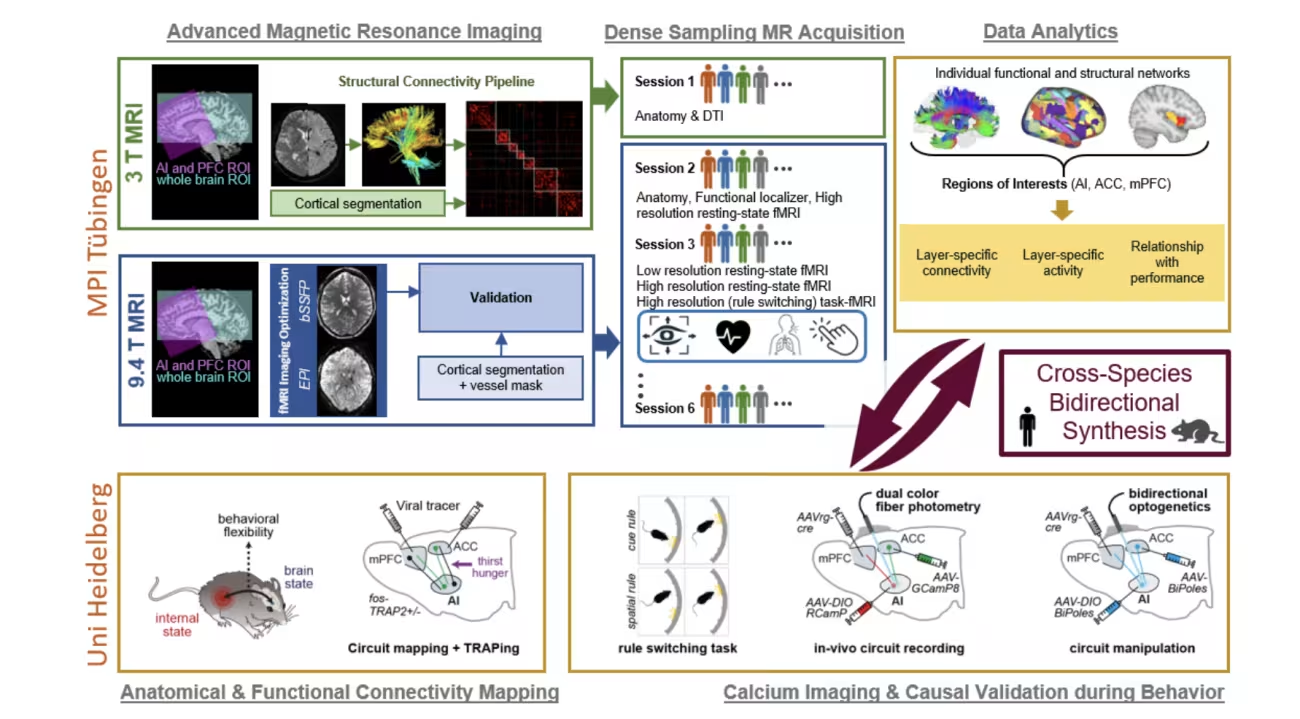
Our cross-species study design is explicitly bidirectional: findings from invasive rodent studies generate mechanistic hypotheses about circuit function and directionality that guide analyses in humans, while results from human studies inform the relevance and generalizability of rodent models.
Interdisciplinarity and Impact
This interdisciplinary integration of systems neuroscience, cognitive psychology, human ultra-high-field imaging, advanced developments in MR physics, and clinical relevance establishes a novel framework for understanding interoceptive-cognitive coupling across species and scales, with implications for anxiety, depression, and somatic symptom disorders.