14. Januar 2026
Digitale Sammlung von Grundwortschätzen für rund 1.500 Sprachen der Welt
Neues Akademieprojekt "Global Basic Lexicon"
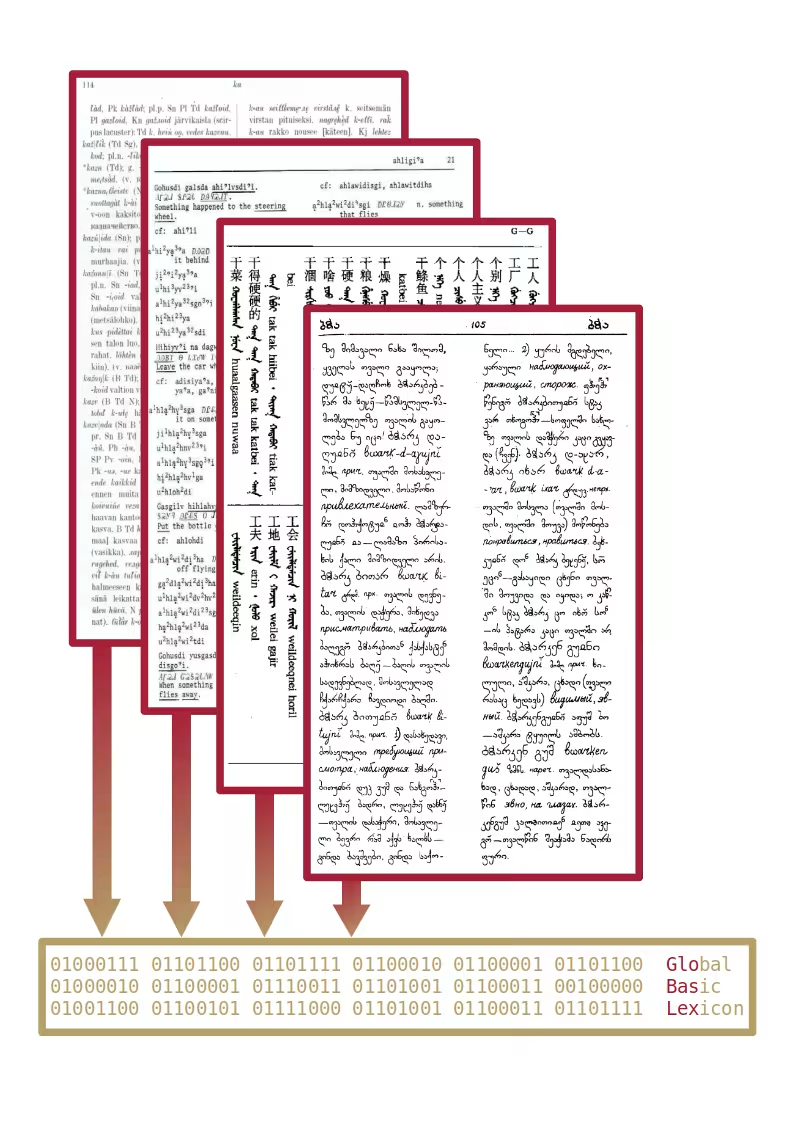
Mit dem Akademieprojekt ›Global Basic Lexicon (GloBasLex)‹ entsteht eine frei zugängliche digitale Datenbank, die für rund 1.500 Sprachen* einen einheitlich erfassten Grundwortschatz bereitstellt. Das auf 15 Jahre angelegte und mit jährlich 520.000 Euro finanzierte Vorhaben wurde von der Gemeinsamen Wissenschaftskonferenz (GWK) des Bundes und der Länder bewilligt und in die Förderung im Akademienprogramm aufgenommen.
Das Projekt hat ein klares Ziel: Es soll eine frei zugängliche, digitale Sammlung von Grundwortschätzen für rund 1.500 Sprachen der Welt erstellt werden. Für jede dieser Sprachen werden 1.000 grundlegende Begriffe erfasst. Neben einer einheitlichen Lautschrift wird die Datenbank auch Informationen darüber enthalten, wie die Wörter aufgebaut sind. Dadurch können Wörter leichter nachgeschlagen und statistisch ausgewertet werden.
Die Daten sollen nicht nur eine verlässlichere Grundlage für sprachtypologische Forschung bieten, sondern auch eine wichtige Basis für datengetriebene historische Sprachwissenschaft schaffen. Damit können neue Erkenntnisse über viele bisher wenig erforschte Sprachfamilien und Regionen gewonnen werden.
Darüber hinaus ist die Datenbank GloBasLex auch für andere Wissenschaftsdisziplinen wertvoll, etwa für Kognitionswissenschaft, Archäologie oder Genetik, die eigene Forschungsergebnisse mit sprachlichen Mustern vergleichen.
Für die Öffentlichkeit wird GloBasLex als online zugänglicher Sprachatlas verfügbar sein. Er soll die Faszination für die sprachliche Vielfalt der Welt wecken – eine Vielfalt, die zunehmend bedroht ist – und das Bewusstsein für kleinere Sprachen stärken, sodass ein wichtiger Teil des kulturellen Erbes bewahrt wird.
Das Vorhaben der Heidelberger Akademie der Wissenschaften startet 2026, hat eine Laufzeit von 15 Jahren und wird unter der Leitung von Prof. Dr. Gerhard Jäger in Tübingen umgesetzt.
Das gemeinsame Forschungsprogramm der deutschen Wissenschaftsakademien – das Akademienprogramm – dient der Erschließung, Sicherung und Vergegenwärtigung unseres kulturellen Erbes. Es ist derzeit das größte geistes- und sozialwissenschaftliche Forschungsprogramm Deutschlands und ist inter-national einzigartig. Seit 1979/80 wird es von Bund und Ländern gemeinsam finanziert. Mit den in den Forschungsstellen erarbeiteten Editionen, Wörterbüchern und Textkorpora schaffen die Akademien zentrale Wissensspeicher für die Zukunft, die der Wissenschaft und der Öffentlichkeit – zunehmend auch digital – zur Verfügung stehen.
* Bei der Zahl der Weltsprachen hatte sich ein Fehler eingeschlichen, der oben korrigiert wurde.