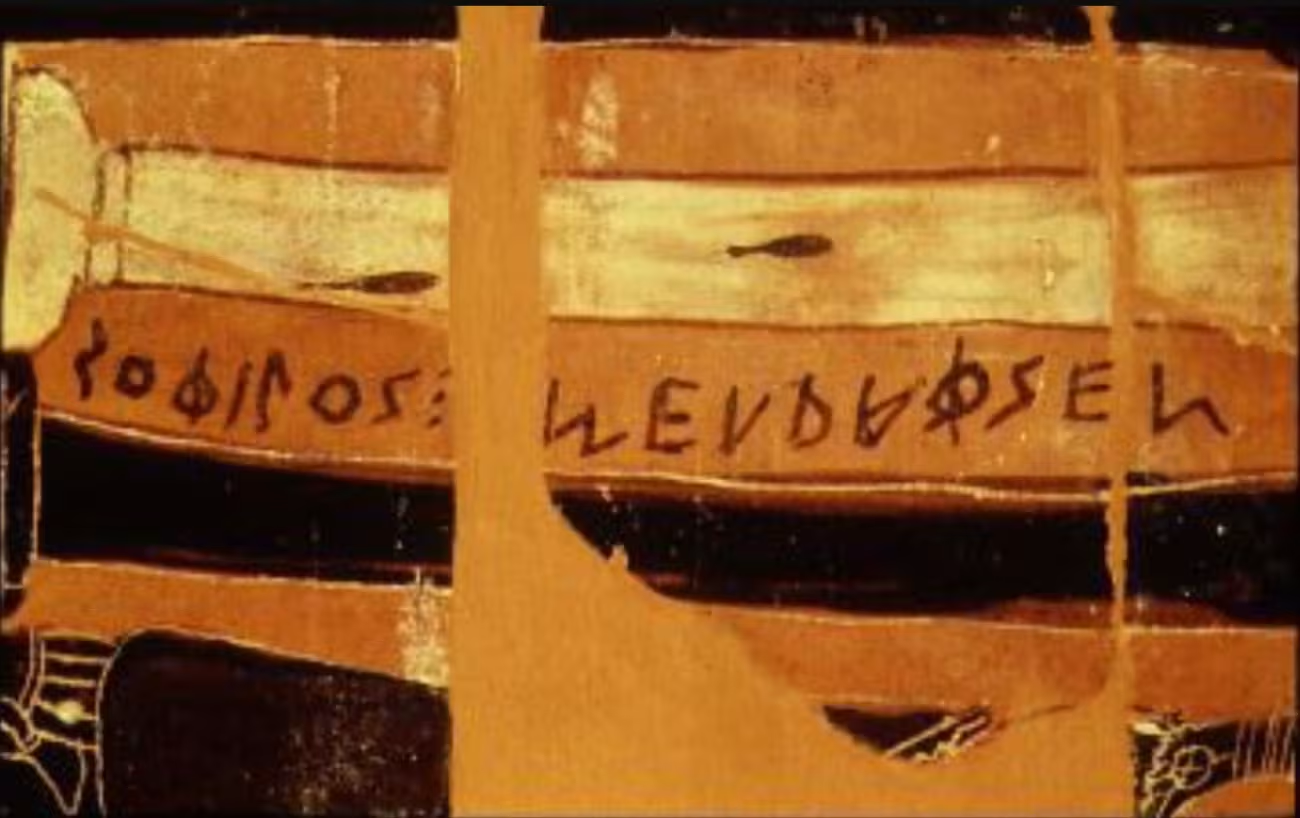
"We research. For you." II: Brand name or no name? Strategies of an Attic pottery workshop at the end of the 6th century BC.
On marketing strategies in ancient times: potters and painters from Athens who signed their works.
Potters and painters determine the appearance of a workshop; they specify sizes and shapes, painting techniques, and types of decoration. Potters have far more influence than we generally assume today: in their daily work, they determine not only size and shape, but also the framework for figurative painting, while the painter is responsible for implementing these specifications and, of course, for his own image design. As the workshop owner, the potter had to keep economic success in mind alongside all aesthetic considerations, which gave rise to his special responsibility for the vessel.
The workshop that will be the focus of the lecture was active in Athens between approximately 520 and 490 BC and was best known for its perfectly crafted, large, elaborately decorated vessels, which were painted using two techniques, one traditional and one new. In addition, the workshop also produced mass-produced goods, smaller vessels in standardized shapes and sizes. This allowed them to appeal to and serve different customer groups. All vessels sold equally well in Etruria, where they were brought by networks of merchants who worked with the painters. Some of the protagonists signed their work, many others did not. What does this tell us about marketing strategies?
About the author: Prof. Dr. Bettina Kreuzer studied classical archaeology, prehistory, and ancient history in Würzburg and Freiburg. She received her doctorate in 1991 with a thesis on Attic black-figure pottery from the Heraion of Samos and habilitated in 2003 with a study on the role of the heroes Heracles and Theseus in archaic Athens. Since 2010, she has been a member of the Corpus Vasorum Antiquorum and works on Attic pottery from the antiquities collections in Munich.
About the lecture series: For over 20 years now, this public lecture series has been taking place, featuring presentations by scholars from the Heidelberg Academy of Sciences and Humanities well Academy of Sciences and Humanities from its seven sister academies. The lectures are aimed at a broad audience and are designed to provide insights into the research being conducted. Afterward, there will be an opportunity to chat with the scholars over pretzels and wine in the Academy’s courtyard garden.
The series is held in cooperation with vhs Heidelberg.
Date: July 1 , 2026
Location: Lecture Hall of the Heidelberg Academy of Sciences and Humanities, Karlstr. 4, 69117 Heidelberg
Start: 6:15 p.m.
Lecture: Prof. Dr. Bettina Kreuzer (Freiburg/Munich)