
Hindu Temple Legends in South India
The South Indian temple town of Kanchipuram has for centuries been considered one of the most sacred sites in Hinduism. Its significance for Hindu religiosity is substantiated by a large number of mythological narratives, which have been handed down as written text since the medieval period. They are, however, also reflected in temple architectures, in iconography, in inscriptions, in material culture, in rituals, and in the oral traditions of the city. These narratives are also of central importance for the Hindu traditions as practiced today.
The project ‘Hindu Temple Legends in South India’ explores these different forms of transmission and makes them accessible in a digital environment. The project produces digital editions of the Sanskrit and Tamil text and brings them together with a documentation of the respective temple architecture and iconography as well as the related rituals and oral traditions. This allows to preserve these important forms of Hindu cultural heritage and, at the same time, to enable new forms of analytical access.
The project ‘Hindu Temple Legends in South India’ explores the temple legends of the South Indian city of Kanchipuram in their different forms of transmission and makes them accessible in a digital environment. At the core of the project is the production of digital editions of the Sanskrit and Tamil texts. In a second step, these editions are linked with the documentation of the respective temple architecture and iconography as well as the related rituals and oral traditions. In this way, textual and non-textual forms of the temple legends are brought together in a consolidated digital corpus, creating a new understanding of this important cultural heritage both in its historical significance and as living practice.
The project was initiated in 2022 and is scheduled to run for sixteen years. Its main base is the Heidelberg Academy of Sciences and Humanities, with a branch office functioning in Pondicherry, India, in cooperation with the École française d’Extrême-Orient (EFEO).
The Material
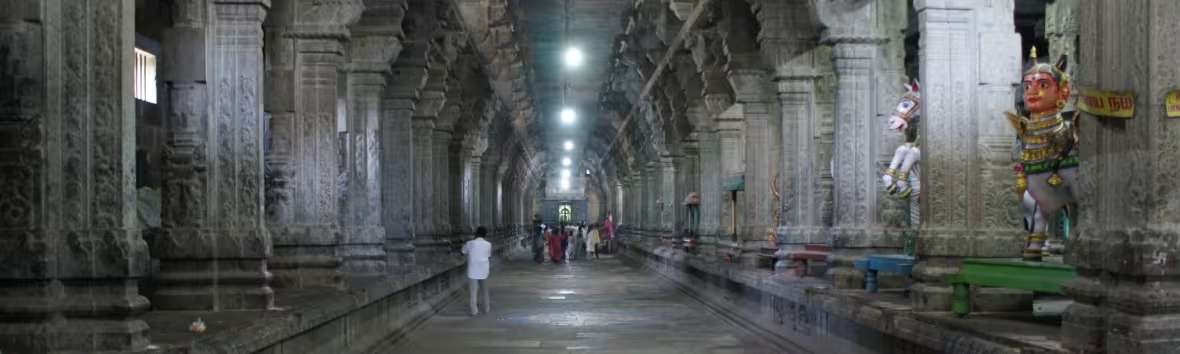
Temple legends (Sanskrit sthalamāhātmya, Tamil talapurāṇam) are Hindu texts that relate the origin stories of temples and other holy places through mythological narratives. A large number of such texts was composed during the medieval and early modern periods in the transregional language of Sanskrit, but also in regional Indian languages. Temple legends provide the link between pan-Indian and local traditions and between historical and contemporary Hinduism, making them extremely valuable sources for the study of Indian religiosity.
At the same time, temple legends do not only exist as texts, but also in oral, performative, and material form. They are told from mouth to mouth, they are ritually enacted, they are painted on temple walls and fashioned into sculptures. Their narratives are also of central importance for today’s lived Hindu traditions. As such, temple legends provide the unique opportunity to investigate the relationship between textual precept and lived practice and between textual and non-textual transmission.
 HAdW / Ute Hüsken
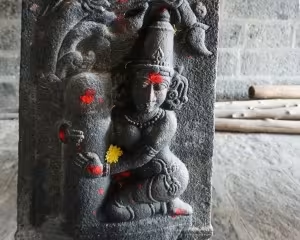
Relief in the Kacchapeśvara temple, Kanchipuram
The Site
The project focuses on the temple legends of the South Indian city of Kanchipuram, located around 70 km west of Chennai (Madras) in the state of Tamil Nadu. Counted among the seven sacred cities in Hinduism, Kanchipuram is a site of great religious importance. At the same time, all three major traditions of Hinduism—Śaivism, Vaiṣṇavism, and Śāktism—are equally strongly represented in the city. With its numerous historical temples and its vibrant living religious traditions, Kanchipuram is a particularly suitable site to study temple legends in their relation to historical and contemporary Hinduism.
 HAdW / Jonas Buchholz
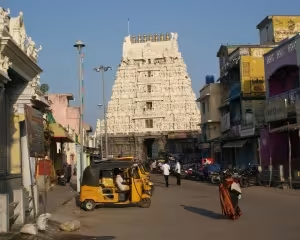
Kāmākṣī Ammaṉ temple, Kanchipuram
The Texts
The goal of the project is the production of digital editions with annotated translations of the entire corpus of Kanchipuram’s temple legends. This corpus comprises eight sizeable texts in Sanskrit and the local language Tamil, which will be studied and made accessible through the project. Including the entire corpus of Kanchipuram’s temple legends allows comparing different sectarian versions as well as parallel versions in Sanskrit and Tamil.
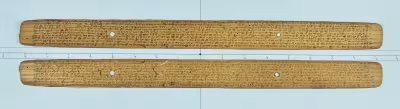
The editorial program involves the digitization of all available textual witnesses (manuscripts and prints), their investigation through philological methods, and the preparation of digital editions and translations. These editions do not aim at reconstructing a putative urtext, but will render the various often widely diverging versions in which the texts have been transmitted visible. The results will be published in the form of digital editions, which will allow a flexible visualization of different versions of the texts as well as the linking of parallel texts. The editions will be complemented by English translations of the texts along with extensive annotation.
 EFEO
EFEO
Palm leaf manuscript of the Hastigirimāhātmya
Material, Oral, and Performative Transmission
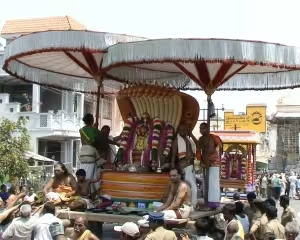
Apart from editing the texts, the project records the temples that are described in the texts as well as material, oral, and performative versions of the temple legends. To this end, the monuments and their iconography will be documented through photographs and oral retellings and ritual enactments of the temple legends will be recorded on video. These data are linked with the text editions, creating a consolidated corpus that allows accessing all versions of Kanchipuram’s temple legends irrespective of their format in a digital environment.
 HAdW / Ute Hüsken
Ritual enactment of Śiva's wedding
KANCHI
The Kanchipuram Archive of Narratives and Cultural Heritage Interface (KANCHI) is the digital interface of the project ‘Hindu Temple Legends in South India’. It provides access to the digital editions and translations produced by the project as well as to the documentation of the relevant sacred sites, ritual performances, and oral traditions.
KANCHI is currently in preparation and will be launched soon.
Digital Facsimiles
The following digital facsimiles (images and diplomatic transcriptions) of historical print editions of sthalamāhātmyas of Kanchipuram were produced by the project ‘Hindu Temple Legends in South India’ and are published online in cooperation with the Heidelberg University Library:
- Śrīkāñcīmāhātmyagranthaḥ: Śrīskāndapurāṇāntargataḥ Śrīrudrakoṭimahimādarśaḥ. Karvetinagaram: Bhāratīlīlāsadanamudrākṣaraśālā, 1889.
https://doi.org/10.11588/diglit.72555 - Śrīkāmākṣīvilāsākhyagranthaḥ: Śrīmārkaṇḍeyapurāṇāntargataḥ Śrīkāmakoṭimahimādarśaḥ. Karvetinagaram: Bhāratīlīlāsadanamudrākṣaraśālā, 1889.
https://doi.org/10.11588/diglit.72557 - Sakalajagadujjīvanaikabheṣajaṃ Śrīhastigirimāhātmyam: Pūrvarkaḷ aruḷicceyta Maṇipravāḷavyākhyānasahitam. Ed. by Mucarppākkam Kiṭāmpi Raṅkācāriyar. Kanchipuram: Śrīkāñcībhūṣaṇamudrākṣaraśālai, 1898.
https://doi.org/10.11588/diglit.72554 - Kāñcīmāhātmyam: Brahmāṇḍapurāṇāntargatam. Ed. by Prativādī Bhayaṅkara Anantācārya. Śrī-Kāñcī: Sudarśana-mudrākṣaraśālāyām, 1907.
https://doi.org/10.11588/diglit.72556
Recorded Lectures
Civañāṉa Muṉivar’s Kāñcippurāṇam and Śaiva Temple Culture in Kanchipuram
Jonas Buchholz
This research project explores the role of Civañāṉa Muṉivar’s Kāñcippurāṇam—the most influential of Kanchipuram’s Tamil talapurāṇams—in shaping the city’s sacred geography. Closely modeled on the Sanskrit Śaiva Kāñcīmāhātmya, the Kāñcippurāṇam portrays Kanchipuram as a city of many temples, recounting the origin stories of nearly one hundred Śiva temples in and around the area. Today, in many of these temples, the Kāñcippurāṇam is cited as an authoritative text that affirms the sanctity of the site. The project investigates how Civañāṉa Muṉivar’s Kāñcippurāṇam has contributed to lived religious culture in Kanchipuram. How has the text shaped the perception of individual temples in Kanchipuram’s religious landscape? Why has the Kāñcippurāṇam, rather than its Sanskrit counterpart, the Śaiva Kāñcīmāhātmya, come to be privileged temple contexts as the primary textual source? Who are the key actors—such as temple priests, local scholars, or devotees—in invoking and transmitting the texts’s authority? By answering these questions, the project offers fresh insights into the function of textual authority in Hinduism and its role in shaping local practices of lived religiosity.
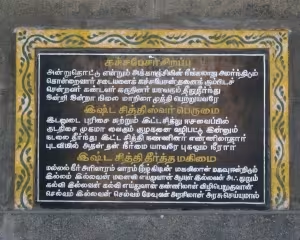
Quotations from the Kāñcippurānam displayed in the Kacchapeśvara temple in Kanchipuram
Relations Between the Corpus of Māhātmyas and Prescriptive Religious Literature
Dominic Goodall
The doctrines of theological traditions, notably those of the Śaivasiddhānta and the Pāñcarātra, figure in the narratives, as do details of liturgy. This raises questions about changes within those religious schools and about their evolving status in the devotional world of pre-modern Kanchipuram. Dominic Goodall participates in all the various reading sessions devoted to the Tamil and the Sanskrit works about the city’s temples, and he reflects on the relations between the corpus of māhātmyas and prescriptive religious literature, both of the Mantramārga and the Śivadharma corpus.
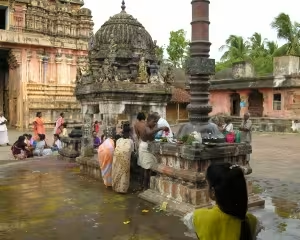
Veneration of the bull during Pradoṣapūjā at the Sākṣinātha temple in Tiruppurambiyam
Māhātmya Narratives in Ritual Performances and as a Site of Contestation
Ute Hüsken
Hüsken studies the contemporary ritual enactments of māhātmya narratives, focusing on the dynamic nature of ritual performances and on ritual's potential not only to re-enact mythological themes but also to negotiate and shape cultural, social, and political realities. Her main foci are Kanchipuram's Viṣṇu temples, their internal dynamics, and their relationship to each other.
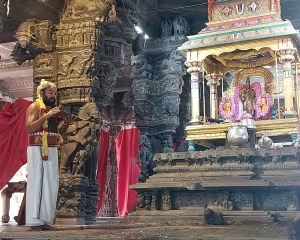
Reading of the Hastigirimāhātmya during the Pallavotsava festival
Influence of the Works of Kālidāsa on the Kāñcīsthānamāhātmya
Paras Mehta
In our observation of the Kāñcīsthānamāhātmya thus far, it is found that it has distinct influences of the great poet Kālidāsa's works, specifically of the Kumārasambhava. Demonstration of such influence in the Kāñcīsthānamāhātmya will establish it as unique among other Sanskrit Māhātmya texts, which are typically not highly poetic. It will also be interesting to investigate whether the influence of the works of other Sanskrit poets such as Bhāravi, Māgha, and Bāṇa is also present in the Kāñcīsthānamāhātmya.
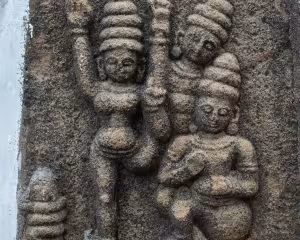
Pārvatī's austerity, relief in the Ekāmranātha temple in Kanchipuram
Rhetorical Parallels Between the Kamparāmāyaṇam and Kacciyappa Muṉivar’s Kāñcippurāṇam
Vigneshwaran Muralidaran
This study investigates the influence of the Kamparāmāyaṇam on Kacciyappa Muṉivar's Kāñcippurāṇam, with particular attention to its adherence to classical Tamil poetic conventions, such as those outlined in the Taṇṭiyalaṅkāram. Beyond following the standard rhetorical prescriptions, Kacciyappa Muṉivar's Kāñcippurāṇam frequently mirrors the content and imagery of the Kamparāmāyaṇam so closely that it invites a deeper investigation. This study aims to analyze select verses from Kacciyappa Muṉivar's Kāñcippurāṇam and highlight their parallels with the Kamparāmāyaṇam. By examining these verses, we will demonstrate how Kacciyappa Muṉivar draws from the Kamparāmāyaṇam in shaping his own narrative and poetic framework, aligning his work with the ideals of a mahākāvya as prescribed by the Tamil literary tradition.
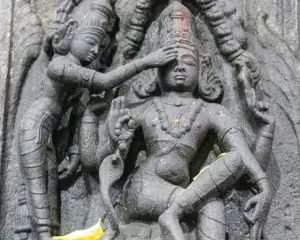
Covering the Sacred Eyes of Śiva, relief in the Ekāmbaranātha temple in Kanchipuram
Kanchi and Kalinga - Textual Connections of Wars and Alliances
Aneesh Raghavan
There are several textual and inscriptional references to the land of Kalinga (present-day Odisha) and the city of Kanchipuram from the late classical age, found in both these ancient Odia and Tamil regions, which are situated more than a thousand miles away from each other. Yet, it is supposedly a fifteenth-century Odia text titled Kāñcikabericarita that sows the seed for a strong cultural association with Kanchipuram, which remains stamped in the cultural ethos of Odisha to this very day. The legend of the alliance and war between the king of Puri and the king of Kanchipuram, the consequent presence of the famous Kāñcī-Gaṇeśa in the Jagannath temple at Puri are part of household cultural heritage in Odisha, that find their origins in the Kāñcikābericarita of Puruśottama Dāsa (1550-1600 CE), who refers to this work as the “Kāñcipurāṇa”. It was also during the same time that several Sanskrit māhātmya texts, such as the Kapilasaṃhitā and Ekāmrapurāṇa, were composed in Odisha. These texts share striking similarities with texts connected to Kanchipuram, as they speak of Ekāmreśvara (Shiva under a mango tree) as the presiding deity, just as in the case of the Kāñcimāhātmya of Śaiva affiliation. This study will, therefore, explore the explicit and implicit connections between these two ancient settlements by reassessing Puranic narratives in the light of historical findings, with a special focus on the stories of wars and alliances that appear in the legend of the Kāñcikābericarita.
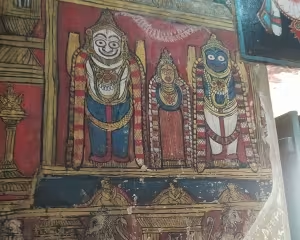
Puri Jagannātha with his siblings painted on the wall at the Varadarāja Perumāḷ temple in Kanchipuram
Tracing the Lineage of Kaccālaiyar, the Author of the Kāñcippurāṇam
T. Rajarethinam
This research explores the origins and lineage of Kaccālaiyar, the author of the Kāñcippurāṇam. The 1983 edition by S.K. Ramarajan lacks information about the author, and sparks interest in the search of his descendants who are supposedly in Pillaiyar Palayam, Kanchipuram, and whose street is called ‘Tēcikar Vīti’ by the locals. Kaccālaiyar’s family maintains a close connection to the Kaccapēsvarar Temple and has published the Kaccapēsvarar Pāmālai, a book of verses by Muthukumārasāmy Tēcikar, Kaccālaiyar’s son. Kāñci. Civa. Catācivam, a descendant of Kaccālaiyar, documented the family’s history in the book's introduction. The Senguntha Mudaliyar community, to which Kaccālaiyar belonged, historically managed the Kaccapēsvarar Temple. Kaccālaiyar’s father, Sachidananda Desikar, held the spiritual title “Desikar,” signifying a householder’s scholarly and spiritual role. Historical evidence, such as a verse referring to the 1877 famine, suggests that Kaccālaiyar lived around 1740. His lineage includes notable descendants, such as Siva. Sadasivam and Mr. Saravana Arumugam, who currently reside in Kanchipuram.
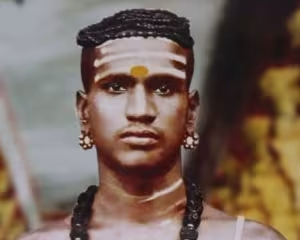
Sivasamy Tesikar (1896-1975), the last Tesikar in the lineage of Kaccālaiyar
The Inscriptions in Kanchipuram’s Viṣṇu Temples
Babu N. Ramaswamy and K. Vijayavenugopal
Within the framework of the ERC-funded Dharma project (ERC n ° 809994), K. Vijayavenugopal and Babu N. Ramaswamy will locate, record, transcribe, and translate into Tamil and English the inscriptions of Kanchipuram’s Vaiṣṇava temples. These have been referred to and some have been recorded, but only a few are given in detail in the existing literature. Importantly, often their precise location within the temple remains unclear. The analysis will provide insights into the relation of these (often donative) inscriptions and the māhātmya literature, thereby giving not only clues as to the relative age of the texts and of the narratives that are contained in them but also insights into the shifting patterns of patronage over time.
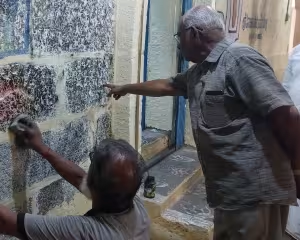
Babu N. Ramaswamy and K. Vijayavenugopal documenting an inscription in the Yathoktakārī temple
Decoding the Legends and Rituals of the Kāmākṣī Temple - A Comprehensive Study of Chapter 14 of the Kāmākṣīvilāsa
Vishnupriya Srinivasan
Chapter 14 of the Kāmākṣīvilāsa describes the primary legends associated with the Kāmākṣī Temple, the origin of the different images (mūrtis) of Kāmākṣī, and the rituals, particularly the worship of the Śrī Cakra within the temple’s sanctum sanctorum. The Kāmākṣīvilāsa assumes that readers are already familiar with the underlying legends and the Śrī Vidyā tradition, offering only partial insights through its verses. Vishnupriya Srinivasan proposes to bridge this gap by offering a complete understanding of the legends, the metaphysical significance of the mūrtis, and the worship practices described in Chapter 14 of the Kāmākṣīvilāsa. This will require integrating insights from the Kāmākṣīvilāsa with the Saubhāgyacintāmaṇi, the current ritual manual of the temple, and the Lalitopākhyāna. By aligning these texts, she will provide a thorough analysis of the rituals and their metaphysical underpinnings. Additionally, she will investigate contemporary temple practices by gathering data from temple priests and other sources. This comparative analysis will help to contextualize the ancient descriptions within the framework of current rituals, offering a richer understanding of the temple’s traditions and their evolution over time.
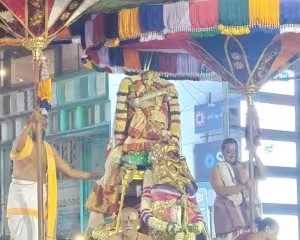
Procession of Goddess Kāmākṣī
Festivals at the Kāmākṣī temple: A Translation and Multimedia Exploration of the Saubhāgyacintāmaṇi
Vishnupriya Srinivasan and SAS Sarma
This study aims to create an accessible and comprehensive resource that links the Saubhāgyacintāmaṇi ritual manual with the ritual practices of the Kāmākṣī temple. By focusing on the chapter dedicated to festivals, the researchers will offer a simplified translation of the text, supplemented with detailed notes to enhance understanding. To enrich the textual content, Vishnupriya Srinivasan and SAS Sarma will incorporate photographs and video clips of the referenced events. For instance, when the text discusses specific rituals like bherītāḍana, corresponding images and video clips from an existing collection will be included. This approach not only facilitates a deeper engagement with the manual's content but also effectively utilizes valuable multimedia resources, bridging traditional textual study with digital tools.
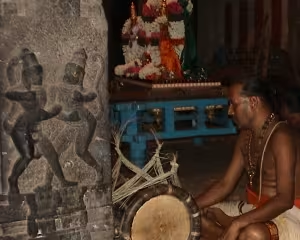
Bheritāḍana at the Kāmākṣī temple
The Ulakaḷanta Perumāḷ Temple through its Inscriptions and its Legends
Yunheng Xu
This research project primarily focuses on the inscriptions of the Ulakaḷanta Perumāḷ Temple in Kanchipuram. These materials, namely the “Madras Museum Plates of Uttama Chola” and more than 20 stone inscriptions, will be re-read and reinterpreted, taking into account new research in Tamil Epigraphy in the context of digital humanities. In addition, the research takes into consideration literary sources on the temple including devotional poetry and the Māhātmyas. The study thus investigates the interplay of donative activities and religious beliefs concerning the temple from the 10th to the 14th century, so as to explore the intertextuality among epigraphical, literary, and mythological narratives.
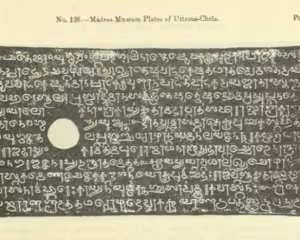
Madras Museum Plates of Uttama-Chola, South Indian Inscriptions vol. 3 part 3 no. 128.
Sacred Sites of South Asia Series
Book publications by the research center are published in the project’s own open-access and print-on-demand series, “Sacred Sites of South Asia Series” (series editors: Ute Hüsken and Dominic Goodall), at Heidelberg University Publishing.
Publications to date:
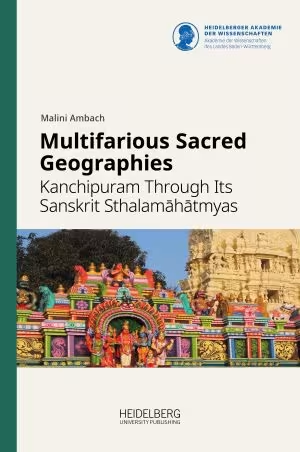
Malini Ambach: Multifarious Sacred Geographies: Kanchipuram Through Its Sanskrit Sthalamāhātmyas.
Sacred Sites of South Asia Series, Volume 2. Heidelberg: Heidelberg University Publishing, 2026. https://doi.org/10.17885/heiup.1444
Multifarious Sacred Geographies takes an in-depth look at the sacred geography of the South Indian temple city Kanchipuram. Kanchipuram's particularly diverse religious landscape, with over four hundred temples, is attested to in numerous Sanskrit and Tamil texts that glorify the city. Malini Ambach investigates for the first time three of these glorifying Sanskrit Sthalamāhātmyas in detail and comparatively with regard to their literary geographies of Kanchipuram. These texts link mythology with the local physical landscape and each coloured by a sectarian perspective, they describe the same sacred space, Kanchipuram, by constructing shared and contradictory notions of the temple city.
Coming soon:
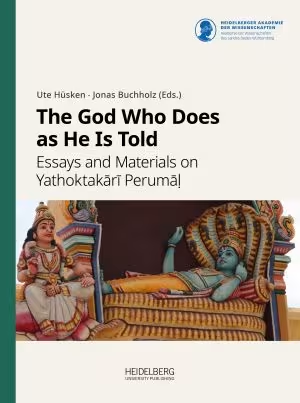
Ute Hüsken, Jonas Buchholz (Hrsg.): The God Who Does as He Is Told. Essays and Materials on Yathoktakārī Perumaḷ.
Sacred Sites of South Asia Series, Volume 1. Heidelberg: Heidelberg University Publishing.
his volume is the first comprehensive study of the Yathoktakārī Perumāḷ temple, one of the oldest Viṣṇu shrines in the South Indian temple town of Kanchipuram. Part one brings together essays that examine the temple from various perspectives, including its architecture, ritual traditions, and mythology. Part two offers editions and translations of key primary sources. Together, they provide an essential resource for understanding this important sacred site. This is the first volume in the publication series of the ‘Hindu Temple Legends in South India’ project, which investigates the textual and living traditions of Kanchipuram’s temples.
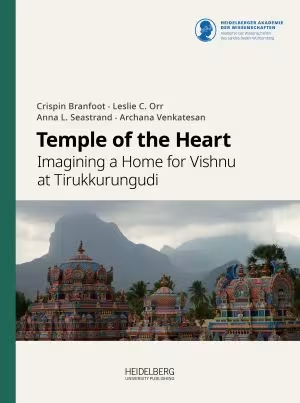
Crispin Branfoot, Leslie C. Orr, Anna L. Seastrand, Archana Venkatesan: Temple of the Heart. Imagining a Home for Vishnu in Tirukkurungudi.
Sacred Sites of South Asia Series, Volume 3. Heidelberg: Heidelberg University Publishing.
Located in the far south of India, the village of Tirukkurungudi is home to an impressive Vishnu temple that is revered as one of the 108 Divya Desas (Divine Places) by Tamil Vaishnavas (Srivaishnavas). Temple of the Heart is an immersive, interdisciplinary study of Tirukkurungudi’s Alakiya Nambi temple, bringing art and architectural history, inscriptions, ritual, poetry, ornamentation and narrative into conversation to demonstrate the many ways a site’s sacrality is constituted, animated and maintained. This richly illustrated and accessible book will appeal both to the general reader interested in the temples of south India and to scholars of Hinduism, Indian art and architecture, rituals and festivals.
Other Publications
2026
- Buchholz, Jonas. 2026. “Digitale Edition der Tempellegenden von Kanchipuram: Das Projekt ‚Hinduistische Tempellegenden in Südindien‘”. In Editionswissenschaft – Textkritik – Digital Humanities: 25 Heidelberger Editionsprojekte, ed. by Isabel Langkabel, Ludger Lieb, Maximiliane Nietzschmann und Lena Sowada, 111–120. Kulturelles Erbe: Materialität – Text – Edition (KEMTE), Volume 7. Heidelberg: Heidelberg University Publishing. https://doi.org/10.17885/heiup.1634.c23592
- Michaels, Axel, and Xu Yunheng. Who Won the Sino-Nepalese War of 1791–1792? A Study in Transcultural Complexity. Documenta Nepalica Book Series 8. Heidelberg: Heidelberg University Publishing, 2026. https://doi.org/10.17885/heiup.1666.
- Vijayavenugopal, G., Vigneshwaran Muralidaran (transl.): Coṉṉa Vaṇṇam Ceyta Perumāḷ Temple Inscriptions, Kāñcipuram. Pathika: Studies of South Asian Texts and Traditions, Volume 1. Heidelberg: Heidelberg Asian Studies Publishing, 2026. https://doi.org/10.11588/hasp.1739.
2025
- Buchholz, Jonas. 2025. “The City of Many Temples: Textual Representations of Kanchipuram’s Śaiva Temple Network”. In Routes, Patterns, Ideologies: Navigating Sacred Sites in India, edited by Ewa Dębicka-Borek, and Ofer Peres, 93–122. Ethno-Indology: Heidelberg Studies in South Asian Rituals, Volume 18. Heidelberg: Heidelberg Asian Studies Publishing. https://doi.org/10.11588/hasp.1561.c22686
- Hüsken, Ute. 2025. “Four Viṣṇus in Kanchipuram: Cooperation and Competition”. In Routes, Patterns, Ideologies: Navigating Sacred Sites in India, edited by Ewa Dębicka-Borek, and Ofer Peres, 221–256. Ethno-Indology: Heidelberg Studies in South Asian Rituals, Volume 18. Heidelberg: Heidelberg Asian Studies Publishing. https://doi.org/10.11588/hasp.1561.c22689
- Hüsken, Ute. 2025. Viṣṇu’s Children. Prenatal Life-Cycle Rituals in South India. Ethno- Indology. Heidelberg Studies in South Asian Rituals 9. Translated from German by Will Sweetman. Delhi: Dev Publishers (republication).
- Hüsken, Ute. 2025. “Embodiment als Zugang zum Verständnis südindischer Tempeltraditionen”. Athene – Magazin der HAdW 1/2025, 23–25. https://www.hadw-bw.de/sites/default/files/documents/Athene_1-25.pdf
- Ramesh, M. 2025. “Two Early Brāhmī Inscriptions Found at Karaikadu (Kāraikkāṭu, Tamil Nadu)”. Bulletin de l’École française d’Extrême-Orient 111.
- Raghavan, Aneesh. 2025 “Kāvyaprakāśasāhityadarpaṇayor lakṣaṇātattvavicārasya tulanātmakaḥ samīkṣātmakaś ca vimarśaḥ”. In Vedavedāṅgadarśanamañjarī, ed. by K.E. Dharaneedharan. Urania Publishing House.
- Rajarethinam, T. 2025. “Kaccālaiyar Kāñcippurāṇam eṉṉum talapurāṇaṃ”. Maṇaṟkēṇi Āyvuveḷi 2(11), 7–21.
2024
- Hüsken, Ute. 2024. „Wie Götter heiraten: Tempelrituale im südindischen Hinduismus“. In Heidelberger Akademie der Wissenschaften: Jahrbuch 2023, 169–76. Heidelberg: Heidelberger Akademie der Wissenschaften. https://doi.org/10.11588/diglit.71221.38
- Hüsken, Ute, and Jonas Buchholz. 2024. „Hinduistische Tempellegenden in Südindien“. In Heidelberger Akademie der Wissenschaften: Jahrbuch 2023, 80–86. Heidelberg: Heidelberger Akademie der Wissenschaften. https://doi.org/10.11588/diglit.71221.18
- Hüsken, Ute, Agi Wittich, and Nanette R. Spina, eds. 2024. Gendered Agency in Transcultural Hinduism and Buddhism. Routledge Critical Studies in Religion, Gender and Sexuality. London & New York: Routledge.
- Hüsken, Ute, Agi Wittich, and Nanette R. Spina. 2024. „Introduction: Remarkable Women and their Mark on Religious Traditions in South Asia“. In Gendered Agency in Transcultural Hinduism and Buddhism, ed. by Ute Hüsken, Agi Wittich, and Nanette R. Spina, 1–16. Routledge Critical Studies in Religion, Gender and Sexuality. London & New York: Routledge.
- Rajarethinam, T. 2024. „Tamiḻc cevvilakkiyac cempatippukaḷ: mūlappāṭattiṟaṉāyvu nōkku [Tamil Classical Literature’s Critical Editions: A Perspective of Textual Analysis]“. Aivanam 1 (1): 70–77.
2023
- Buchholz, Jonas. 2023. “The Country and the City in the Kāñcippurāṇam”. Cracow Indological Studies 25 (1): 41-77. https://doi.org/10.12797/CIS.25.2023.01.02
- Buchholz, Jonas. 2023. “Same Same but Different: The Tamil Kāñcippurāṇam and Its Sanskrit Source”. In Visions and Revisions of Sanskrit Narrative: Studies in the Indian Epics and Purāṇas, ed. by Raj Balkaran & McComas Taylor, 387-416. Canberra: ANU Press. http://doi.org/10.22459/VRSN.2023.16
- Goodall, Dominic. 2023. “Śaiva Tantra: Toward a History”. In Oxford Handbook of Tantric Studies, ed. by Glen Hayes & Richard K. Payne. https://doi.org/10.1093/oxfordhb/9780197549889.013.45
- Goodall, Dominic, and Charlotte Schmid. 2023. “Qui est Aiyanār ? Une brève présentation / Who is Aiyanār? A short essay”. In Aiyanār, dieu protecteur des villages tamouls, Protector God of Tamil Villages, ed. by Jean-Louis Cardin, 141-158, Paris, École française d'Extrême-Orient / Magellan & cie.
- Hüsken, Ute. 2023. Accommodating a Mega-Festival: The Āti Atti Varatar Vaipavam Festival in Kanchipuram. Religion 53(3), 488-507. https://doi.org/10.1080/0048721X.2023.2228111
- Nachimuthu, K. 2023, “The Indian Grammatical Traditions and Modern Linguistics: The Past and the Future”. International Journal of Dravidian Linguistics 53 (1): 1-38.
2022
- Ambach, Malini. 2022. “‘Reading’ a Sacred Space Differently: Sarvatīrtha in Kanchipuram’s Sanskrit Māhātmyas.” In Temples, Texts, and Networks: South Indian Perspectives, ed. by Malini Ambach, Jonas Buchholz, and Ute Hüsken, 215-239. Heidelberg: Heidelberg Asian Studies Publishing. https://doi.org/10.11588/hasp.906.c13940
- Ambach, Malini, Jonas Buchholz, and Ute Hüsken (eds.). 2022. Temples, Texts, and Networks: South Indian Perspectives. Heidelberg: Heidelberg Asian Studies Publishing. https://doi.org/10.11588/hasp.906. [Review: Amol Saghar in IIAS Reviews, 2023.]
- Ambach, Malini, Jonas Buchholz, and Ute Hüsken. 2022. “Introduction.” In Temples, Texts, and Networks: South Indian Perspectives, ed. by Malini Ambach, Jonas Buchholz, and Ute Hüsken, 1-10. Heidelberg: Heidelberg Asian Studies Publishing. https://doi.org/10.11588/hasp.906.c13933
- Buchholz, Jonas. 2022. “Sthalamāhātmyas and Talapurāṇams of Kanchipuram: A Network of Texts.” In Temples, Texts, and Networks: South Indian Perspectives, ed. by Malini Ambach, Jonas Buchholz, and Ute Hüsken, 11-40. Heidelberg: Heidelberg Asian Studies Publishing. https://doi.org/10.11588/hasp.906.c13934
- Hüsken, Ute. 2022. “Two Lizards in Kanchipuram’s Varadarāja Temple.” In Temples, Texts, and Networks: South Indian Perspectives, ed. by Malini Ambach, Jonas Buchholz, and Ute Hüsken, 157-213. Heidelberg: Heidelberg Asian Studies Publishing. https://doi.org/10.11588/hasp.906.c13939
- Nachimuthu, K. 2022. “A Survey of the Sthalapurāṇa Literature in Tamil.” In Temples, Texts, and Networks: South Indian Perspectives, ed. by Malini Ambach, Jonas Buchholz, and Ute Hüsken, 41-76. Heidelberg: Heidelberg Asian Studies Publishing. https://doi.org/10.11588/hasp.906.c13935
- Sarma, S. A. S. 2022. "Glory of the Tiruvanantapuram Padmanābhasvāmi temple as described in the Māhātmyas." In Temples, Texts, and Networks: South Indian Perspectives, ed. by Malini Ambach, Jonas Buchholz, and Ute Hüsken, 95-119. Heidelberg: Heidelberg Asian Studies Publishing. https://doi.org/10.11588/hasp.906.c13937
- Stein, Emma Natalya. 2022. “Grounding the Texts: Kanchi’s Urban Logic and Ambitious Extensions.” In Temples, Texts, and Networks: South Indian Perspectives, ed. by Malini Ambach, Jonas Buchholz, and Ute Hüsken, 41-76. Heidelberg: Heidelberg Asian Studies Publishing. https://doi.org/10.11588/hasp.906.c139431588/hasp.906.c13943
Workshop in Pondicherry with excursion to Kanchipuram
From February 2 to 7, 2026, the project organized a workshop at the École française d'Extrême-Orient in Pondicherry, followed by an excursion to Kanchipuram. This workshop brought together international experts and project members, who presented various research questions arising from their ongoing work. The workshop was complemented by a three-day excursion to Kanchipuram. During this trip, participants visited various sites that had been the subject of presentations at the workshop.
In the week following the workshop and the excursion, the project used the Heidelberg team’s presence to hold an project-internal meeting in Pondicherry, enabling an intensive exchange between the German and Indian project teams.
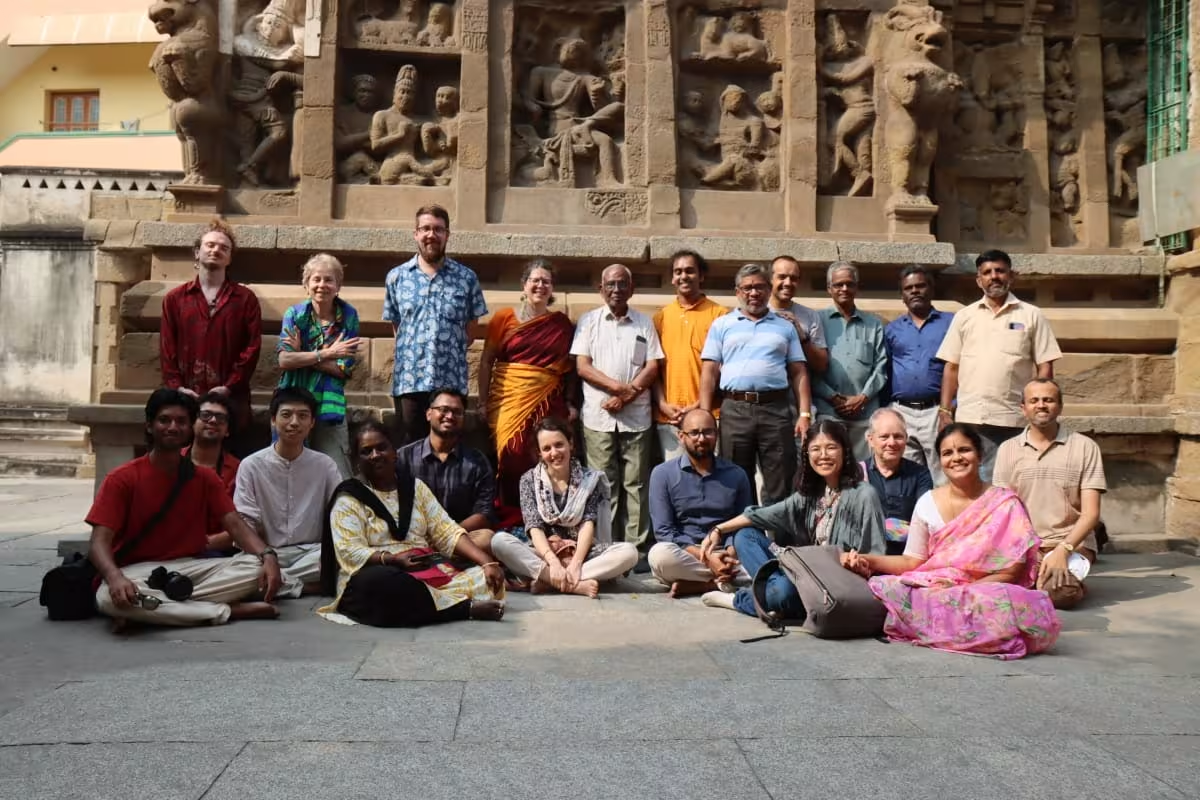 HTL / Ramesh Mohandass
Participants of the workshop in the Iṟavāttāṉēsvarar temple, Kanchipuram
Lecture Series “Sacred Spaces, Living Traditions”
During the winter term 2025/26, Ute Hüsken organized the lecture series “Sacred Spaces, Living Traditions: Visual and Oral Cultures of South Indian Temples” at the South Asia Institute. Held in a hybrid format, the lecture series addressed various aspects of the visual and oral cultures of South Indian temples, thereby offering numerous points of connection to the project’s research programme. In addition to Ute Hüsken and Jonas Buchholz, numerous international scholars presented in the series. On the occasion of his lecture, Crispin Branfoot (SOAS London), a member of the project’s advisory committee, visited Heidelberg and took the opportunity for an intensive academic exchange with the research center’s team.
Recordings of the lectures from the series are available on YouTube.
Performance of the dance drama “Vegavatī”
On October 3, Aneesh Raghavan, together with an ensemble of 36 dancers, performed the dance drama “Vegavatī – A Māhātmya Turned Dance” as part of the ECSAS conference’s cultural program in Heidelberg University's Neue Aula. The performance was conceived and choreographed by Mr. Raghavan—a research associate at the center and an accomplished dancer in the classical Indian tradition. The production is based on the origin story of the Vegavatī River, as it is handed down in the Hastigirimāhātmya, one of the texts examined in the project. In this way, the traditions researched in the project are artistically reinterpreted and vividly conveyed to a broad audience. The performance attracted a wide audience of conference participants and culture enthusiasts and was received extremely positively.
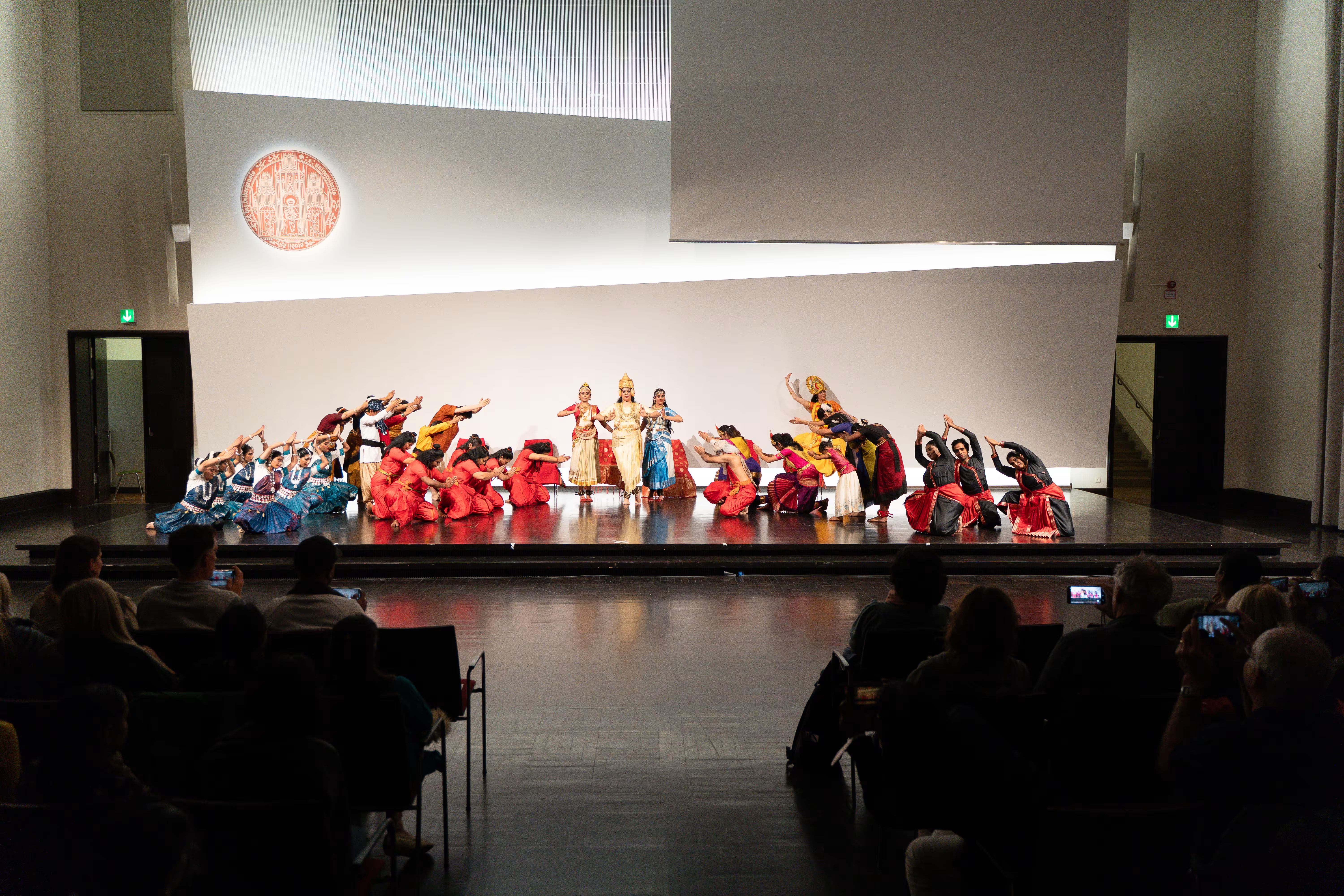 Kush Depala
Performance of the dance drama “Vegavatī” in the Neue Aula
Panel at ECSAS 2025
The 28th European Conference of South Asian Studies (ECSAS) took place in Heidelberg from October 1 to 4. Organized by project leader Ute Hüsken in her capacity as chair of the South Asian Institute at Heidelberg University, the conference brought together more than 780 participants from numerous countries. Held every two years, ECSAS is one of the most important conferences in the field of South Asian studies. The project was represented by the panel “New Directions in Māhātmya Studies,” organized by Jonas Buchholz, in which project members Aneesh Raghavan from Heidelberg and Paras Mehta from Pondicherry also participated.
Logo of ECSAS conference
Work Meeting (Pondicherry) and Field Research (Kanchipuram)
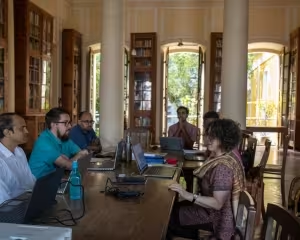
On February 17 and 18, 2025, an intensive work meeting of the team members of the research group “Hindu Temple Legends in South India” took place at the École française d'Extrême-Orient (EFEO), Pondicherry. The participants discussed various topics related to temples in Kanchipuram from the perspective of the respective texts they specialize in. The meeting in Pondicherry concluded with a two-day field trip to Kanchipuram to visit the shrines in and around the Kachapeswarar temple. Jonas Buchholz, Paras Mehta, T. Rajarethinam, Vigneshwaran Muralidaran, S. Ramesh and Aneesh Raghavan took part in the work meeting and field research.
Work meeting at the EFEO (Pondicherry)
Video portrait online
A video portrait of the project is now available on the YouTube channel of the Heidelberg Academy of Sciences and Humanities in a German/English and a Tamil version:
German/English video portrait (external link, YouTube)
Workshop on “Research Data in South Asian Studies”
On 7 and 8 November 2024, a workshop on “Research Data in South Asian Studies” organized by the Specialised Information Service South Asia (FID4SA) took place at the Heidelberg University Library. Several scholars participated in the workshop and discussed current topics related to research data. These included the definition of research data, data standards, infrastructural issues, long-term archiving of research data and the associated legal aspects. Frank Grieshaber and Liudmila Olalde presented the project's research data management plan for the “Hindu Temple Legends in South India” research center.
Academies' Day
On November 6, Prof. Ute Hüsken and Dr. Aneesh Raghavan took part in the Academies’ Day 2024, in Berlin. In accordance with the event’s theme “Healthy City”, they presented the Hindu Temple Legends in South India project with a special focus on sthalavṛkṣas (temple trees) and tīrthas (Sacred water bodies). Prof. Hüsken briefly spoke about the project to the press and the larger gathering. The project's stall was visited and appreciated by several delegates, which included the President of the Union of the German Academies of Sciences and Humanities.
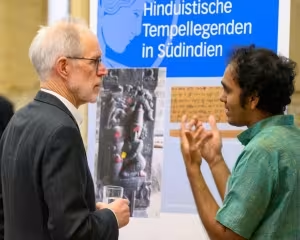 HAdW / HTL
Dr Aneesh Raghavan in conversation with a participant in the Academies' Day
Participation in the annual conference on South Asia in Madison (Wisconsin)
The 52nd Annual Conference on South Asia took place from October 30 to November 2, 2024 at the University of Madison (Wisconsin), USA. As part of the panel “South Asian Sacred Sites: Connections and Intersections”, members of the research center ‘Hindu Temple Legends in South India’ presented three papers. Dr. Aneesh Raghavan presented on the topic “Beyond the Palar: Investigating Three Temples Mentioned in the Kāncīmāhātmyam”. This was followed by a lecture by Dr. Jonas Buchholz entitled “Pāṭal-peṟṟa-stalams and Sthalapurāṇas in Kanchipuram”. Finally, Prof. Dr. Ute Hüsken gave a lecture on “Stepbrothers and Disowned Sisters: Connections Beyond the Texts”.
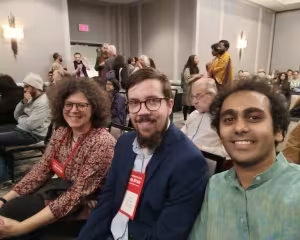 HTL
HTL
L to R: Ute Hüsken, Jonas Buchholz and Aneesh Raghavan
Open Monument Day
The Open Monument Day took place on 8 September 2024, during which the Heidelberg Academy of Sciences participated with an exhibition on the research units. Sowndarya Sriman and Malini Ambach attended the event on behalf of the Hindu Temple Legends research unit to talk to interested visitors about our research.
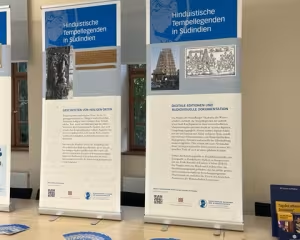 HAdW / HTL
HTL stand at Open Monument Day 2024
Workshop and conference in Heidelberg
April/ May 2024 saw two weeks of intensive project activities. To this end, the project team from Pondicherry (Dominic Goodall, S.A.S. Sarma, K. Nachimuthu, T. Rajarethinam, Vigneshwaran Muralidaran, Vishnupriya Srinivasan) traveled to Heidelberg. First, an internal project workshop took place from April 29 to May 3, during which the members of the two teams from Heidelberg and Pondicherry presented the status of their work and planned the next steps. This was followed by a meeting of the project committee on 6 May and a conference organized by the project at the Heidelberg Academy of Sciences and Humanities on 7 and 8 May. At the conference, project staff presented research topics arising from their ongoing work on the temple legends of Kanchipuram. This was supplemented by presentations on related topics by invited external participants. The timing in conjunction with the committee meeting enabled the committee members who had traveled to Heidelberg to participate in the conference and thus to interact more intensively with the project members.
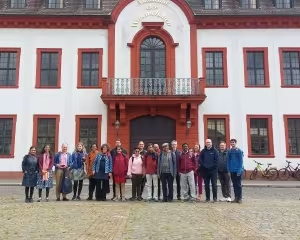 HAdW / HTL
Conference participants in front of the Heidelberg Academy of Sciences and Humanities
MoU with National Mission for Manuscripts
On March 14, 2024, Prof. Dr Ute Hüsken visited the National Mission for Manuscripts in New Delhi to prepare the signing of a Memorandum of Understanding (MoU) between the Heidelberg Academy of Sciences and Humanities and the National Manuscript Mission together with its director, Dr Anirban Dash. The MoU came into force on March 25 when it was signed by the President of the Academy, Prof. Dr Hans-Georg Kräusslich. The National Mission for Manuscripts has set itself the goal of tracking down and preserving India's vast treasure trove of manuscripts. To this end, it maintains a constantly growing online catalogue of manuscripts on its website. The MoU provides for cooperation between the research centre "Hindu Temple Legends in South India" and the National Mission for Manuscripts, which, among other things, enables the exchange of researchers and collaborative work on manuscripts.
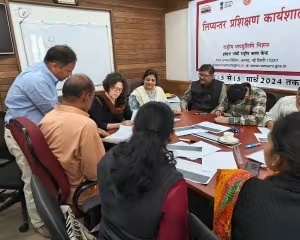
Visit of Prof. Ute Hüsken to the National Mission for Manuscripts
Digitization of historical prints
Following an agreement between the Heidelberg Academy of Sciences and Humanities and the French Institute of Pondicherry (IFP), the project team in Pondicherry (photographer M. Ramesh, coordinated by S.A.S. Sarma) completed the digitization of three valuable printed works from the IFP library in March 2024. Another print from the Cologne collection of Grantha and Telugu prints was kindly digitized by the University and City Library of Cologne already in October 2023 at the request of the research centre. The prints are historical editions of Sanskrit temple legends of Kanchipuram (Vaiṣṇava Kāñcīmāhātmya, Śaiva Kāñcīmāhātmya, Kāmākṣīvilāsa and Hastigirimāhātmya), which are currently being re-edited by the project researchers. The production of high-quality digital images ensures that these very rare prints (published in 1889, 1898 and 1907) are being preserved. In a further step, the digital images will be made available online together with transcriptions of the historical editions. This will make the texts, which have been difficult to access until now, provisionally available to the public until the new digital editions are completed.
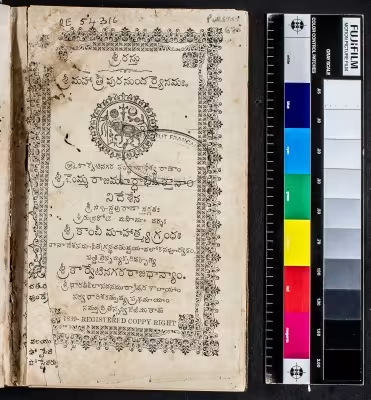 HTL / IFP
Title page of the Śaiva Kāñcīmāhātmya edition (1889)
Presentation as project of the month
The academy project "Hindu Temple Legends in South India" was selected by the Union of the German Academies of Sciences and Humanities as Project of the Month for March 2024. The presentation on the websites of the German Federal Ministry of Research and Education and the Union of the German Academies of Sciences and Humanities provides an insight into the work of the research unit:
Website of the German Federal Ministry of Research and Education
Project workshop in Heidelberg
From October 16 to 27, 2023, the research unit organised an internal project workshop on "Digital Humanities Methods." Researchers T. Rajarethinam, Vigneshwaran Muralidaran and Vishnupriya Srinivasan from the Pondicherry branch travelled to Heidelberg to work with the team there.
The methods to be implemented in the project in the field of Digital Humanities were discussed in an intensive exchange and a basis was established to drive forward the progressing and increasingly cross-linked work processes.
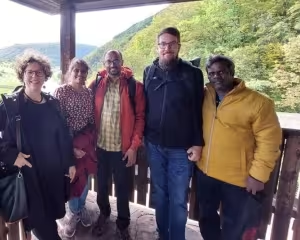 HAdW / HTL
Group picture of the team
Lecture by Prof. Dr. Ute Hüsken at Heidelberg Academy of Sciences and Humanities
On July 18, 2023 project leader Prof. Dr. Ute Hüsken gave a lecture titled “Wie Götter heiraten: Tempelrituale im südindischen Hinduismus” (How Gods Marry: Temple Rituals in South Indian Hinduism) as part of the lecture series “Wir forschen. Für Sie” at the Heidelberg Academy of Sciences and Humanities.
Using the example of the wedding of two gods, the special closeness of the world of humans and gods in the southern Indian temple city of Kanchipuram was highlighted. The lecture elaborated on how diverse the underlying narratives were transmitted through texts in Tamil and Sanskrit, temple architecture, and oral narratives. This provided a broader audience with an opportunity for exchange and insight into the work of the research project.
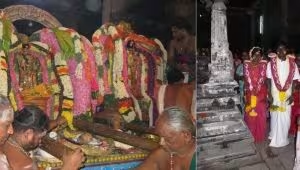 Ute Hüsken
Divine and human bridal couple in the Ekāmranātha temple
Consul General Michaela Küchler (German Consulate General Chennai) visits the academy project in Kanchipuram
On March 25, 2023, Consul General Michaela Küchler visited the academy project in Kanchipuram together with eleven delegates. They were welcomed by Prof. Dr. Ute Husken, Dr. Dominic Goodall and her team, who introduced them in two Shivaite temples to the goals and methods of the “Hindu Temple Legends in Kanchipuram” project. The group arrived early and first visited the Kailasanatha temple from the Pallava period (6th/7th century AD). The exquisite sculptures and inscriptions there provided ample opportunity to explain both the local Shivaite legends and the history of the temple. After a break, which Dr. Hüsken used to talk about contemporary South Indian temple culture, the delegation was gained a concrete insight into various facets of this important living Hindu ritual tradition in the large Ekambaranatha temple.
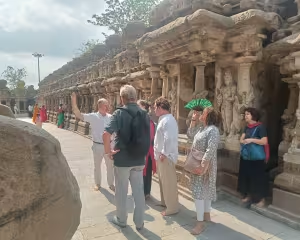 HAdW / Balaji
Dr. Goodall explains the iconographic program of the Kailasanatha temple
Workshop ‘Narratives on the Yathoktakari Perumal Temple’
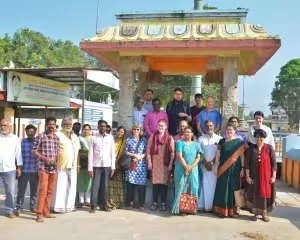
Between February 27 and March 3, 2023, the project ‘Hindu Temple Legends in South India’ organized a workshop at the project's Indian branch office at the École française d'Extrême-Orient (EFEO) in Pondicherry, followed by an excursion to Kanchipuram. The workshop was attended by the German and the Indian project team as well as by international scholars.
The workshop focused on the Yathoktakari Perumal Temple, one of the major Vishnu temples in Kanchipuram. The first three days of the workshop were dedicated to the collaborative reading and analysis of the different versions of the temple's origin story, which are trasmitted in the Kanchipuram's Sanskrit and Tamil temple legends. The next two days were spent visiting the Yathoktakari Perumal Temple and other relevant sites in and around Kanchipuram to examine how the textual narratives are represented on site. The workshop thus demonstrated the project's approach of creating a dialogue between various texts, as well as between the texts and the places they describe.
 HAdW
HAdW
Participants of the excursion
Volume Featured on New Books in Indian Religions Podcast
On January 19, 2023, the volume Temples, Texts, and Networks: South Indian Perspectives, edited by Malini Ambach, Jonas Buchholz, and Ute Hüsken, was featured on the podcast New Books in Indian Religions. Ute Hüsken and Jonas Buchholz appeared on the podcast and were interviewed by host Raj Balkaran about the volume, which was published by Heidelberg Asian Studies Publishing (HASP) in October 2022.
Interview in Academies Union Newsletter
An interview with Prof. Dr. Ute Hüsken and Dr. Jonas Buchholz appeared in the January 2023 newsletter of the Union of the German Academies of Sciences and Humanities. In the interview, Prof. Hüsken and Dr. Buchholz present the newly launched project ‘Hindu Temple Legends in South India’ and answer questions about the project's research agenda as well as about the cooperation with the Indian branch of the project.
Visit of the Indian Consul General
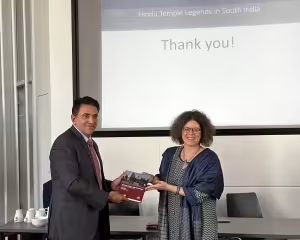
On November 2, 2022, the Consul General of India in Munich, Mohit Yadav, along with Kailash Bhatt, head of the cultural wing, visited the South Asia Institute in order to get acquainted with the new Academy project ‘Hindu Temple Legends in South India’. After a welcome address by the director of the South Asia Institute, Prof. Kama Maclean, the senior professor and former secretary of the Academy Prof. Axel Michaels introduced the Munich delegation to the Academies Programme. This was followed by a 45-minute presentation of the project by Dr. Jonas Buchholz and the project leader Prof. Ute Hüsken. The Consul General was impressed by the project and showed particular interest in its digital aspects as well as cooperations with Indian institutions and researchers.
 HAdW
HAdW
Consul General Mohit Yadav and Prof. Ute Hüsken
New Publication
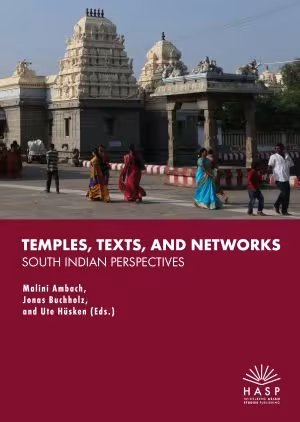
Ambach, Malini, Buchholz, Jonas, and Hüsken, Ute (eds.): Temples, Texts, and Networks: South Indian Perspectives, Heidelberg: Heidelberg Asian Studies Publishing, 2022. https://doi.org/10.11588/hasp.906
The volume Temples, Texts, and Networks: South Indian Perspectives, edited by Malini Ambach, Jonas Buchholz, and Ute Hüsken, was published by Heidelberg Asian Studies Publishing on October 20, 2022. The book is freely available online in PDF format. A hardcover edition can be purchased via stationary bookshops and online booksellers. Apart from the contributions by the project members, the volume contains constributions by international scholars dealing with temple legends as a textual genre and with networks between individual Hindu temples.
HASP (CC BY-NC-ND 4.0)
Inaugural Workshop in Pondicherry
From Octomber 10 to 14, 2022, the project ‘Hindu Temple Legends in South India’ organized an inaugural workshop at École française d'Extrême-Orient (EFEO) in Pondicherry, where the project's Indian branch office is located. Ute Hüsken, Jonas Buchholz, and Liudmila Olalde travelled to India to attend the workshop. The workshop served the purpose of bringing together the German and Indian teams and establishing workflows for the cooperation between the research unit in Heidelberg and the branch office in Pondicherry
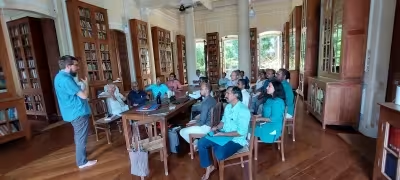
Meeting of the German and Indian teams at the EFEO Pondicherry