

Digital humanities
The Heidelberg Academy of Sciences and Humanities bundles all its activities and services in the field of digital humanities in its Science and Digital Infrastructure Department. These range from research, development, and consulting in the field of digital humanities (DH) to open science activities and IT infrastructure.
The HAdW is actively shaping the digital transformation and continuously expanding its IT infrastructure and digital capabilities in order to support and improve the quality of its research and administration. The HAdW sees digitization as a pioneer for innovation in science and research. The HAdW follows an open access and open science strategy and, together with its institutional partners, ensures the long-term archiving and availability of its research data.
HAdW digital 2030. Digitalization strategy
Preamble
The Heidelberg Academy of Sciences (HAdW) sees digitization as a catalyst for innovation in science and research. The HAdW is actively shaping the digital transformation and continuously expanding its expertise in the field of digital humanities and its IT infrastructure in order to make its research, science management, and administration fit for the future and to continuously improve their quality. In order to be able to operate sustainably in the national and international scientific landscape, it has identified six strategic guiding principles, for each of which it outlines the measures taken, outstanding requirements, and development opportunities and potential in this digitization strategy:
- Open Access and Open Science;
- Digital scholarly community;
- Strengthening digital structures: cooperation and personnel pooling in the field of digital humanities;
- Research-related digitization: Uniform digital corporate design and long-term archiving with strategic partners;
- Digitization of administration;
- Digital literacy: Continuing education and training.
As the science academy of the state of Baden-Württemberg, the HAdW is both a scholarly community and a non-university research institution. It provides its members in the philosophy and history class and the mathematics and natural sciences class, as well as its cross-class discussions across subject cultures and its working groups, with digital platforms and services to enable them to network as effectively as possible alongside analog forms of scientific discussion. The academy's research projects cover a wide range of topics, with its various funding programs tailored to different target groups (academy program; WIN program; state projects; third-party-funded projects):
The HAdW occupies a special position within humanities research in that it makes a central contribution to basic research in the humanities on cultural heritage. The editions, dictionaries, encyclopedias, and indexing projects developed by the research centers form a repository of knowledge that must be preserved and that is being successively expanded and networked through ongoing projects. The HAdW's academy projects are pioneers of digital research methods within the digital humanities. The projects generate high-quality and extensive digital research results and data collections. They thus contribute significantly to the development and application of innovative software-based methods for their indexing, analysis, and publication. Their research data in the field of cultural heritage is highly relevant for the so-called "minor subjects." This includes research data on material cultural assets such as prints, manuscripts, inscriptions, papyri, documents, and objects, as well as digital representations of intangible cultural assets.
With its digitization strategy, HAdW also provides its researchers, members, and employees with guidance on the digitization of research and the sustainability of research data, its publication, and its long-term archiving.
1. Free knowledge: Open Access and Open Science
Science and research at HAdW are largely funded by the state of Baden-Württemberg and the federal and state governments. Publicly subsidized research results should be made available to the public free of charge. Accordingly, HAdW follows an open access and open science strategy. Its research results are thus made freely and sustainably accessible to the scientific community and the general public. In the interests of traceability of research results, this includes primary data and digital tools as well as the scientific publications themselves. Every project is committed to the HAdW's sustainability concept. Research data management, data sustainability, long-term archiving, and open access publication formats must be considered when applying for new projects. The academy is committed to the FAIR principles (external link) of data findability, accessibility, interoperability, and reusability.
Publications and research data from the research centers are published under the Creative Commons license CC BY recommended by the German Research Foundation (DFG) – digitally and, where appropriate, also using a print-on-demand process – unless existing publishing contracts or other sources of funding prevent this. Since 2017, future publishing contracts for the HAdW series must include an exemption ("moving wall") after a maximum of two years, so that the majority of publications are already available in open access. As a rule, only simple rights of use may be granted when transferring rights to third parties (e.g., publishers).
2. Digital scholarly community
The HAdW is primarily—but not exclusively—an analog venue for scientific discussion and intellectual discourse. To improve digital networking and cross-disciplinary and cross-location networking among its members and classes, the Science and Digital Infrastructure Department sees itself as a service provider for digital measures and offerings: In 2020, a digital publication platform was set up for its full and corresponding members, which allows the internal, password-protected, and secure sharing of publications by its members that are either open access or not licensed accordingly, particularly in PDF format.
While the Academy's meetings have only been held digitally as video conferences since summer 2020 due to the pandemic, there are plans to continue with a hybrid format combining physical attendance and digital participation by members as soon as the situation and the coronavirus regulations in the state of Baden-Württemberg allow. This will ensure that members with limited mobility or those who are temporarily abroad on a research stay will also be able to participate in the meetings.
The various working groups that have formed within classes or across classes and are dedicated to current scientific discourse are offered a range of digital tools and services, which are described in more detail in section 4.3 (especially cloud services). Digital presentations of the working groups, their results, and their publications on the website can increase their visibility in the future and serve as a platform for discussion contributions or other publications.
Members have access to various book series for scientific publications: Heidelberg Academic Library (Alfred Kröner; open access after 12 months), publications of the Philosophy and History Class of the Heidelberg Academy of Sciences (Winter), and publications of the Mathematics and Natural Sciences Class ( Springer Spektrum). In the medium term, the intention is to make the publications in all of the above series available online in open access, with an agreed moving wall of no more than two years. In addition, based on an agreement with Heidelberg University Library , members can also publish monographs and anthologies in open access with Heidelberg University Publishing ( heiUP). In addition, the HAdW makes publications on its history, meeting reports, and completed series of its classes available in retro-digitized form via open access.
3. Strengthening digital structures
3.1. Digital networks: Partners
In the state of Baden-Württemberg: The HAdW brings together a large number of experts in the digital humanities, whose expertise is used to further develop the academy in terms of digital research environments, long-term archiving, and the reuse of data. The"Runder Tisch Digitalisierung BW"(BW RoundTableonDigitization) event format, established in 2018, aims to bring together partners in the state of Baden-Württemberg, as the HAdW is dependent on the support of strategically important partners, namely the state universities and especially their libraries and computer centers, which are already very productively and successfully involved in the form of collaborations, in order to implement a contemporary digitization strategy.
The University Library and the University Computer Center at Heidelberg University are particularly important partners. At the local level, HAdW is also involved in the Heidelberg Forum Digital Humanities. Through its Department of Science and Digital Infrastructure, it contributes its expertise in the field of digital humanities to the Research Council of Field of Focus 3, "Cultural Dynamics in Globalized Worlds," at Heidelberg University.
In the future, further cooperation agreements are to be concluded with the state's universities and university libraries, which will also regulate cooperation in the field of digital humanities. Other strategic partners at the state level may include the State IT Authority of Baden-Württemberg (BITBW), the Baden-Württemberg State University Network ( BelWü), the Baden-Württemberg Support and Development Project for Research Data Management ( bw2FDM), and the Working Group on Research Data Management in Baden-Württemberg (AK FDM).
National: At the level of the Union of German Academies of Sciences and Humanities and its sister academies, with which bilateral cooperation agreements are to be concluded in some cases in the medium term, the HAdW provides institutional members of the "eHumanities" working group, which offers a forum for the exchange of information, the cooperative development of joint solutions, and advice on issues of copyright, digital publication, and open access.
The HAdW is also part of AGATE: A European Gateway for the Academies of Sciences and Humanities, a research information system for European academy research operated by the Union of German Academies of Sciences and Humanities , which aims to improve the visibility and discoverability of research at European academies. All academy projects carried out since 1979 are listed here and assigned individual "AGATE identifiers." Digital publications and data sets are centrally indexed in a "virtual library" that serves as a meta-catalog.
In addition, since 2021, HAdW has been an institutional member of the newly founded National Research Data Infrastructure (NFDI) e.V. HAdW aims to participate in those consortia in which it can contribute with the relevant expertise of its research centers and projects: It is a co-applicant of the NFDI consortium The German Human Genome-Phenome Archive and a participating institution in the NFDI consortia Text+. Language- and Text-Based Research Data Infrastructure and 4Objects. Research Data Infrastructure for the Material Remains of Human History, which are currently in the application phase.
International: Beyond the national scientific landscape, research centers in the field of digital humanities cooperate with various international partners. In addition to individual projects and collaborations with libraries, museums, and other institutions, these include, for example, Analyse et Traitement Informatique de la Langue Française (ATILF), Archaeological Research Infrastructure for Archaeological Data Networking in Europe (ARIADNEplus, Horizon 2020 project), The Coalition for Archaeological Synthesis (CfAS), Cuneiform Digital Library Initiative (CDLI), Institut des Textes et Manuscrits Modernes (ITEM), International Digital Epigraphy Association (IDEA), National Archives Nepal, and Neotoma Paleoecology Database (Neotoma).
3.2. Internal structures, networking, and optimization through the creation of personnel pools in the digital humanities
The entire field of digitization and digital humanities is regarded as a strategic cross-cutting task, with its research-related areas falling under the remit of the Science and Digital Infrastructure Unit of the Administrative Office. The department sees itself as a service provider for scientists and members of the HAdW, coordinating and supporting them in all areas of digitization. This creates and further develops the best possible conditions for the digitization of their research and research data management, thereby promoting the quality of their research and the visibility of their research results.
The creation of the Science and Digital Infrastructure Department is the result of a restructuring process completed in 2019, which led to the consolidation of all HAdW activities in the areas of scientific coordination, digital activities, and young talent programs into one department. The previous Scientific Coordinator thus became the head of the department. In terms of staffing, the department consists of its management and employees in the areas of system administration, digital humanities and databases and contractual matters, library, data protection, and publication series.
In addition to quality and project management for academy projects (currently 17 in the Academies Program; eight in the WIN Program; four third-party funded), the division continues to coordinate all activities in the field of digital humanities, the implementation of the digitization strategy, and all other areas of science management, which, with the WIN program, also includes the field of young scientists (WIN College, Academy Conferences, Academy College). It is supported by two research assistants (partly allocated to the Academies Program).
In order to make even better use of the great intellectual potential of all academic staff working in research centers in the field of digital humanities, they will be more closely involved in the strategic academic management of the Academic Affairs and Digital Infrastructure Department in the medium term, while maintaining their links with their respective research centers. This restructuring of the scientific staff in the field of digital humanities, as well as student and scientific assistants, will contribute to the standardization of software structures and prevent any parallel developments. Due to the planned renovations of the Hofhaus by the Heidelberg University Building Authority , sufficient space will be created in the medium term to provide workplaces for additional staff beyond the current core team.
To promote internal communication, mutual exchange, joint projects, and synergy effects, a monthly HAdW digital meeting is held under the auspices of the Department of Science and Digital Infrastructure, in which all employees of the research centers in the field of digital humanities as well as external partners participate for guest lectures.
4. Research-related digitization
4.1. IT infrastructure
The entire area of hardware procurement is centralized in the Science and Digital Infrastructure Department. Procurement for standard devices is carried out in accordance with the administrative regulation on procurement via the Baden-Württemberg Logistics Center (LZBW), the central procurement office of the state of Baden-Württemberg, as well as via the BW-PC, BW-Notebook, and BW-Workstation framework agreements of the University of Freiburg on behalf of the state of Baden-Württemberg. Since 2021, standardized laptops, including docking stations and, where applicable, peripherals, have been used at the University of Freiburg. BW-Notebook, and BW-Workstation framework agreementsof the University of Freiburg on behalf of the state of Baden-Württemberg. Since 2021, standardized laptops, including docking stations and, where applicable, peripheral devices, have been procured to ensure mobile working options.
Within the framework of its IT infrastructure , HAdW works closely with the University of Heidelberg Computer Center (URZ) on the basis of a cooperation agreement concluded in 2018. This applies in particular to services in the areas of data networks, integration into the identity management system, email services, storage and backup services, web hosting, participation in tenders and framework agreements, support for maintenance and administration, and training and further education. For services that the URZ cannot provide, HAdW relies on external service providers.
In 2020, with the help of an IT service provider, the gradual virtualization of the entire server infrastructure was also begun . Servers that were still physically present and partly located in the research centers at the state's university sites were thus centralized and virtualized at the Heidelberg office. Thanks to this transformation from traditional infrastructure with physical instances to the future-proof use of cloud infrastructure , scientists can access IT resources via the internet from any location, particularly data servers and databases. In addition, it is possible to respond flexibly to the specific storage capacity and server performance requirements of individual research centers. Last but not least, this also reduces the workload for the department, as the service provider takes care of maintenance and software updates. In 2021, the virtualization of computers was also started , which on the one hand implies the advantages of remote maintenance and on the other hand gives employees the opportunity to use service laptops regardless of location with remote access to databases, data servers, and network drives.
Digitization requires fundamental IT and cybersecurity mechanisms, which are strategic tasks and part of HAdW's risk management. In this area, it works closely with an external IT service provider and the University of Heidelberg's computer center.
4.2. Research data and research data management
Responsibility for research data management ( RDM) lies with the heads of research departments or project managers. They may also appoint project-specific RDM officers. Within the HAdW, the Science and Digital Infrastructure Department and the Commission for Digital Humanities and Long-Term Archiving, which is to be established in 2022, advise their scientists. Furthermore, research projects adequately document their data management, software applications and developments, and workflows for data and publications. The HAdW defines research data as all sources, materials, and results that are collected, gathered, determined, generated, described, and/or analyzed in the context of a research project:
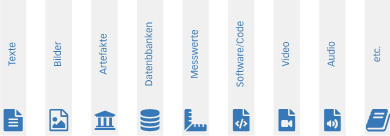
When advising applicants on project planning, great importance is attached to the digital aspects of planned projects. In order to provide the best possible support for the project-related area of digital humanities, the Science and Digital Infrastructure Department and its expertise must always be involved in the application phase, as must external partners such as the relevant university libraries in the state for questions of long-term archiving and availability. In addition to a digitization concept, applications must include a data management plan that covers all phases of the data life cycle, from project planning to data processing and analysis to publication and long-term archiving.
4.3. Software portfolio
In the area of Windows operating systems and Microsoft Office applications, HAdW currently participates in a framework agreement with the University Computer Center at Heidelberg University. For processing and managing research data, members and scientists have access to a software portfolio of various tools and services that work almost exclusively with open source solutions and are operated almost exclusively on their own servers. These are primarily used for research data management, i.e., all measures necessary for the organization and technical implementation of research data, such as collection, recording, processing, storage, quality assurance, archiving, and publication.
primary data server infrastructure | 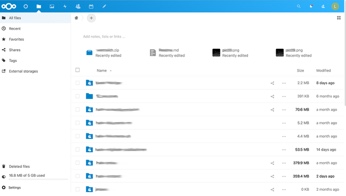
primary data cloud storage | 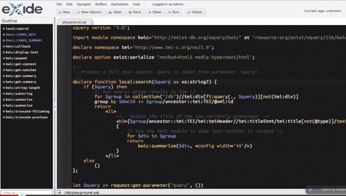
databases XML | 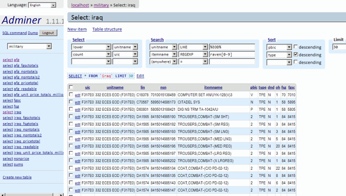
databases SQL |
collaboration Collabora Office | 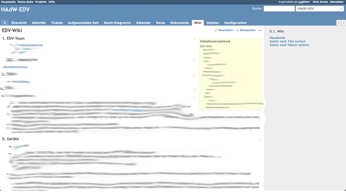
project management Redmine Project planning, wiki, discussion forum | 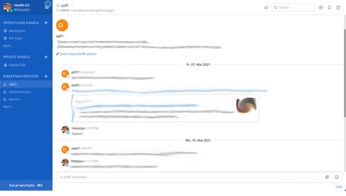
communication pimpernel Instant messaging service for individual and group chats | 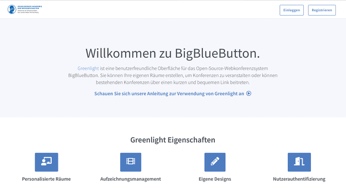
communication BigBlueButton video conferencing software |
4.4. HAdW digital: Open Access databases and publications
The scientists at HAdW and its members have access to a wide range of publication and presentation formats relating to the operation of digital platforms and long-term digital archiving. Together with other partners, in particular Heidelberg University Library, this guarantees the free and sustainable provision of documents and research results. Connections to other cooperation partners are being continuously expanded. In order to present data and generally bundle its digital offerings, HAdW will undergo a fundamental relaunch of the HAdW digital platform in 2021 so that it can make its publications available and present them in a way that is tailored to specific target groups and adapted to the respective subject cultures. HAdW digital will centralize and network existing and completed digital research data, publications, and presentation formats (www.hadw-bw.de/hadw-digital).
Open access databases of the Academy projects
HAdW currently has 22 databases that are available via open access (see Appendix 8.1 for details). Existing databases and their research data – digital editions, digital dictionaries, digital collections, and bibliographies – are generally provided via an IT infrastructure managed by HAdW, while HAdW works with partners to ensure the long-term archiving and availability of research data and publications. Strategic planning for this will be initiated at an early stage. With regard to the research data itself, it must be examined on a case-by-case basis which repositories – including those of a subject-specific nature – are to be selected after the end of the term.
Several aspects of long-term archiving of research data incur costs (in particular initial costs, procurement, operation, and maintenance). The costs for services related to the operation and maintenance of long-term archiving and availability of research data, some of which are annual and will rise sharply in the medium term, are currently covered by the HAdW partners' own contributions from their basic budgets. In the future, structural national solutions must be found in this area, in particular through networks such as the National Research Data Infrastructure (NFDI) e.V. (see above in chapter 3.1.).
Open Access series published by HAdW and its academy projects
Heidelberg University Library and HAdW have been working closely together in the field of digital humanities since 2016. The cooperation utilizes the powerful technical infrastructure and extensive experience of the University Library in setting up and operating digital platforms and in long-term digital archiving for HAdW projects in the field of digital editing and publishing. The research results are thus made available worldwide through networking and linking, with specific cataloging ensuring visibility in reference systems and search engines. Finally, the research results and documents are kept up to date in terms of data technology and thus remain available in the long term.
When making open access publications from the HAdW, its members, ongoing and completed projects, and retro-digitized publications available on the HAdW digital platform, the Heidelberg digitization workflow DWork developed by Heidelberg University Library is used in particular. This workflow allows PDF and image files, as well as digitized versions of printed publications and manuscripts, to be presented, archived, edited, annotated, and commented on. digitized versions of printed publications and manuscripts. The volumes can be accessed via a corresponding URL according to the pattern www.digi.hadw-bw.de/view/akronym. Stable citation links and the embedding of URNs (Uniform Resource Names), DOIs (Digital Object Identifiers), metadata, and IIIF manifests ensure the sustainability of the data in DWork.
To date, a total of eight series and two journals published by the HAdW (see Appendix 8.2 for details) as well as 16 series from current and completed HAdW research projects (see Appendix 8.3 for details) have been published in open access. Depending on previous publishing contracts, older publications by the HAdW and its research centers will gradually undergo retro-digitization so that they can be made available online in open access.
For open access publication of articles and working papers, researchers are encouraged to use free publication platforms such as Zenodo , which allow stable citation links in the form of DOIs. The HAdW has set up its own instance ('community') there to centralize the publications of its members and researchers in a directory.
4.5. Provision and publication of research data
The HAdW also has various services and tools at its disposal for providing research data of all kinds, particularly within the framework of its partnerships with other institutions: its own server infrastructure; services provided by Heidelberg University Library: heidICON and heiDATA; GitLab in cooperation with the Academy of Sciences and Literature | Mainz; RDF repository on the platform "LOD.ACADEMY: Linked Open Data and Graph Technologies in Academies of Sciences and Beyond," operated jointly by the HAdW and the Academy of Sciences and Literature | Mainz . The academy projects are to use subject-specific repositories for their research data.
In addition to its own presentation options on its website, HAdW provides its research projects with the opportunity to create their own project-related websites. Depending on the project, research data, databases, and/or other publications are made available here.
With regard to database data standards , the focus has so far been on XML and SQL. However, thanks to ongoing training and further education (see Chapter 6), the technical expertise of HAdW staff in the field of digital humanities also covers other future developments, such as graph technologies. The HAdW aligns itself with the subject-specific standards of the relevant academy projects and the guidelines of the German Research Foundation. It will also orient itself towards future developments within the Union of German Academies of Sciences and Humanities and the National Research Data Infrastructure (NFDI) e.V.
The academy projects aim to network and link the materials provided online in a subject-specific manner, enabling optimal dissemination and worldwide availability of important documents. Linked Open Data (LOD) – i.e., publicly available data that has been linked – describes the endeavor to publish data sets in a form that allows them to be linked to each other and be machine-readable ("Linked Open Web"), which places special demands on preparation, curation, and publication and requires standards for data exchange and networking that are not only human-readable (e.g., HTML; Java Script; CSS), but also for machines (XML; RDF). The HAdW calls on its research projects to create the conditions for LOD where appropriate in order to strengthen their interoperability and the networking of research data. To this end, the HAdW, together with the Academy of Sciences and Literature | Mainz, operates a triplestore on the platform "LOD. ACADEMY. Linked Open Data and Graph Technologies in Academies of Sciences and Beyond."
In addition, research institutions are advised to integrate standard data into their databases as standardized and curated collections, particularly regarding persons and geographical features, in a human- and machine-readable form using unique identifiers (e.g., GND reference number), which thus enable the enrichment, linking, and analysis of research data. This enables other researchers to find their own digital resources, provides structured and machine-readable access, and makes the data available in a broader context of the respective subject cultures and beyond. Standard data relate in particular to persons (e.g., GND of the German National Library), geographical features, or historical periods, symbols, architectural elements, materials, and physical forms.
5. Digitization of administration
Constant technological change also implies new design possibilities for modern science management at research institutions. Digitalization therefore also affects user orientation, administrative efficiency, and all internal processes and workflows.
In 2020, the necessary conditions for e-invoicing were already created in the HAdW accounting department. The HIS-FSV software is used in accounting for financial and material resource management. A database system based on SugarCRM, which is to go into operation in 2021/22, is customer relationship management software that is used in the office for digital and analog communication with members, employees, and partners. It replaces a personal data database that was previously used and developed in-house by HAdW.
To improve project management, a central ticket system for all types of IT requests from employees will also be introduced in 2021 in the areas of IT infrastructure and digital humanities within the responsible department, which will also allow requests to be prioritized. Database developments serve strategic science management, ensuring data protection-compliant administration and project management of scientific academy projects. The intranet for employees will be fundamentally revised in 2021/22. As a 'digital manual', it offers forms, guidelines, and documentation of work processes for download. In the future, forms of all kinds will either be digitally fillable in PDF format or available as HTML forms that can be sent directly to the office via a secure HTTPS connection.
In 2022, a new document management system will be introduced at the office, which will allow individual restrictions, access rights, user roles, and workflows to be defined and will guarantee secure and long-term archiving.
In the future, digital application portals will be introduced on the website, which will not only allow for the secure transmission of project applications in the various funding instruments available to the HAdW and nominations for the HAdW awards, but also enable digital and thus simpler further processing of the data in accordance with the guidelines of the General Data Protection Regulation. In the long term, the introduction of digital personnel files will simplify administrative procedures and optimize processes. While employees' working hours have previously been recorded using time sheets documented by them, it is currently being examined whether these can be managed in the medium term using an electronic time recording system.
6. Digital skills: Continuing education and training
HAdW employees are constantly expanding their skills in order to continuously develop their digital competencies in the ever-changing field of digital humanities. This continuing education and training in the digital field is a strategic priority for HAdW. The Department of Science and Digital Infrastructure advises employees and provides them with information about various continuing education formats and offerings. HAdW works closely with the University of Heidelberg's computer center and the Heidelberg Forum Digital Humanities in this regard.
7. For a future-proof Digital Academy 2030
Thanks to its financial resources from basic funding and project funding for its WIN program from the state of Baden-Württemberg, as well as from the federal and state-funded Academies Program, HAdW has considerable scope for maneuver, enabling it to shape its digital activities in a future-proof and innovative manner.
The HAdW is continuously expanding its digital knowledge repository . Its digital nature enables cutting-edge research in Baden-Württemberg and contributes to the innovative preservation of cultural heritage. In line with the idea of open science, the HAdW publishes open access as a matter of principle. Its members also see themselves as part of a digital scholarly community . The HAdW is constantly strengthening its digital structures at all levels in order to participate in new developments and create the best conditions for its scientists. It is committed to the long-term archiving and long-term availability of research data and ensures its sustainable provision in cooperation with strong partners. It is continuously expanding its network in the state of Baden-Württemberg, both nationally and internationally. The continuous strengthening of its employees' digital skills is a core element of its digitization strategy.
The measures already implemented, the strategies described, and the development opportunities and potential outlined in this digitization strategy contribute to a future-proof Digital Academy 2030.
digitalization strategy
Decided by the Academy's plenary session on January 28, 2017.
Preamble
The Heidelberg Academy of Sciences (HAdW) attaches great importance to the digital visibility of its research, organization, and events, as well as to the widest possible digital accessibility and long-term digital archiving of research results. It therefore pursues an open access and open science strategy for its research projects, whereby publicly subsidized research results are made available to the public free of charge wherever this is appropriate and legally permissible. This strategy is not directed against printed books, which the Academy continues to promote.
To implement these principles, the HAdW pursues five objectives:
1. Website, homepage
It presents itself and each of its research projects on its websites in a largely uniform format and in accordance with the HAdW's corporate design concept. All websites are available in German and English; in some cases, versions in other languages may also be available. It informs its members (and other groups of people, where applicable) about events at the academy on the HAdW homepage and via a newsletter. The newsletter is published twice a year, in print form upon request, and also serves as the basis for the yearbook. It offers the opportunity to set up discussion groups.
2. Open Access
All HAdW projects and research centers undertake to publish their results in digital form and make them available to users free of charge. If the results are presented in printed form, a waiting period of up to two years is provided for in justified cases, unless there are serious publishing or library-related reasons to the contrary. In cooperation with the university libraries of the state of Baden-Württemberg, it makes publications from its research centers available free of charge under the Creative Commons license "CC BY" recommended by the German Research Foundation, both digitally and, in appropriate cases, through print-on-demand, unless existing publishing contracts prevent this or other sources of funding exist. For future publishing contracts with the Academy's series, an exemption ("moving wall") of no more than two years must be agreed upon.
3. Long-term archiving
Within the limits of its financial resources, it also ensures the digital and free-of-charge long-term archiving of its publications (e.g., yearbooks) and research data and guarantees the accessibility of the data for the duration of the projects. This also includes the scanning of older research materials and retro-digitization. This digital archiving does not replace the responsibility for the storage and maintenance of the original materials.
4. Digital methods and databases
It supports the research centers in their respective digitization concepts and coordinates the development of databases and websites according to standards that are as compatible as possible. The research centers are therefore required to coordinate digital projects with the HAdW's IT department. They are also obliged to contribute financially to the development, maintenance, and operation of the digital infrastructure.
5. Networking and cooperation
It is endeavoring to link the various databases, for example through a joint search engine. Cooperation with other academies within the Union of Academies and the digitization concepts of the state universities is also being considered.
The term "open science " encompasses strategies and procedures that aim to consistently leverage the opportunities offered by digitization in order to make all components of the scientific process openly accessible, traceable, and reusable via the Internet.
The HAdW follows an open access and open science strategy. Every scientific institution aims to make research results accessible to the scientific community and the general public. In terms of the traceability of research results, this includes primary data and digital tools as well as the scientific publications themselves. Not only must all this data be processed and made available, but every project undertaken by the academy is committed to the HAdW's sustainability concept, meaning that research data management, data sustainability, long-term archiving, and open access publication formats must be considered when applying for new projects. In the spirit of open science, the academy is committed to the FAIR principles of findability, accessibility, interoperability, and reusability of data.
Publications and research data from the research centers are published under the Creative Commons license "CC BY" recommended by the German Research Foundation (DFG) – digitally and, where appropriate, also using a print-on-demand process – unless existing publishing contracts prevent this or other sources of funding exist.
HAdW digital: Open Access

»Free online databases(internal link)
» HAdW publications available online free of charge(internal link)
» Research center publications available online free of charge(internal link)
» Terms of use for data and digital copies from the HAdW(internal link)
Together with the Academy of Sciences and Literature | Mainz(external link), the HAdW operates the portal LOD.ACADEMY. Linked Open Data and Graph Technologies in Academies of Sciences and Beyond(external link) for cooperation in the field of Linked Open Data and graph technologies.
About the portal
LOD.ACADEMY aims to bring together different methodological concepts, research data, software tools, web services, best practice examples, and learning materials from linked open data and graph technologies that are used in basic research in the humanities and social sciences within various European academy projects. LOD.ACADEMY is thus a collaborative digital platform where academies, research projects, and scientists can exchange knowledge and join forces.
Tools and Services
XTriples
eXGraphs
SPEEDy
GRACE
RDF Vocabulary & Data Hub
Linguistic Linked Open Data (LLOD)
Conferences & Workshops
Publications & Learning Material
Research projects
Together with the Academy of Sciences and Literature | Mainz(external link), the HAdW operates the portal LOD.ACADEMY. Linked Open Data and Graph Technologies in Academies of Sciences and Beyond(external link) for cooperation in the field of Linked Open Data and graph technologies.
About the portal
LOD.ACADEMY aims to bring together different methodological concepts, research data, software tools, web services, best practice examples, and learning materials from linked open data and graph technologies that are used in basic research in the humanities and social sciences within various European academy projects. LOD.ACADEMY is thus a collaborative digital platform where academies, research projects, and scientists can exchange knowledge and join forces.
Tools and Services
XTriples
eXGraphs
SPEEDy
GRACE
RDF Vocabulary & Data Hub
Linguistic Linked Open Data (LLOD)
Conferences & Workshops
Publications & Learning Material
Research projects
For the digital transformation in science and research to succeed, interdisciplinary and interinstitutional cooperation must ensure exchange between individual projects and make their knowledge widely available. The Heidelberg Academy of Sciences therefore attaches great importance to lively exchange with institutions and project partners committed to the digitization of research and the digital availability of research data.
The HAdW has extensive networks in this area and is in close contact with other science academies. It partners with computer centers and libraries and cooperates with various (inter)national projects on digitization in science and research.
Round table on digitalization strategy
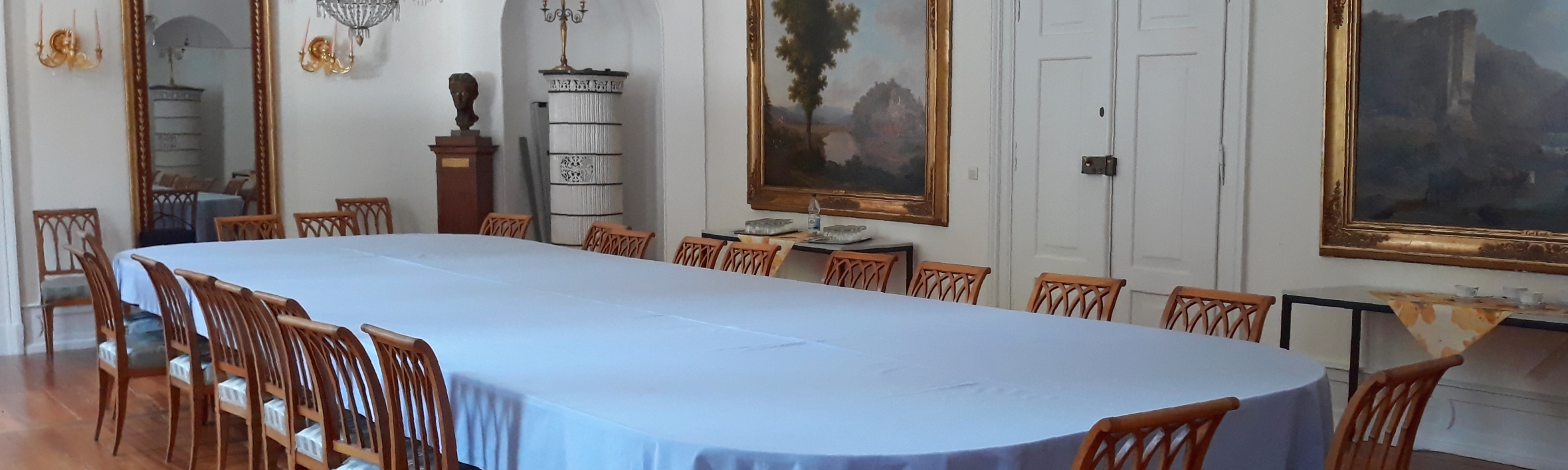
On July 13, 2018 , the Heidelberg Academy hosted an initial roundtable discussion on the topic of "digital long-term archiving." The purpose of this discussion was to explore the possibilities for the practical implementation of long-term archiving of research data.
As the science academy of the state of Baden-Württemberg, the HAdW sponsors a wide variety oflong-term research projects(internal link) at a total of three university locations (Freiburg, Heidelberg, Tübingen). These research projects, which mainly focus on the fields of dictionaries, editions, and the development of material corpora, have large data sets that are constantly growing. Digital working environments, often in the form of databases, are frequently used to support the work. These digital working environments and tools are tailored to the needs of the research group and the subject of the research. The Academy thus brings together a large number of experts in the digital humanities, whose expertise can be used to better position the Academy as such in relation to issues of digital research environments, long-term archiving (LTA), and the reuse of data.
However, in order to implement a modern digitization strategy, the HAdW also needs the support of strategically important partners, namely the state universities and, in particular, their libraries and computer centers, which in some cases are already very productive and successful in the form of collaborations. The purpose of this discussion round is to explore the possibilities for HAdW to implement its digitization strategy in practice, particularly long-term archiving (LTA) and, above all, long-term availability (LTA) of data.
During the event, both the academy projects and the libraries and computer centers at the locations where HAdW projects are based had the opportunity to engage in targeted discussions on the topic of long-term availability, with a focus on the following topics:
- Presentation of the digital working environments of the HAdW research centers (FS): Which research center uses which system? What interfaces are there? Where is the data stored? Is there a backup (and where)? Which data formats (standards) are used?
- How do the FS envision support from the HAdW with regard to (functional) long-term archiving?
- What opportunities do institutions offer? Where are the points of contact? What could the FS also use? What are the prerequisites for cooperation between HAdW/FS and the relevant institutions?
- What does the HAdW need to do? Could the HAdW act as an intermediary between projects and computer centers/university libraries?
- Where are there opportunities for establishing joint projects?
program
| 11:00 a.m. to 11:20 a.m. | Welcome and introduction to the workshop objectives | Th. Holstein A. Michaels |
| 11:20 a.m. to 1:30 p.m. | Presentation of the academy projects | Moderator: W. Raible |
| 11:25 | HAdW databases(PDF)
| A. Dafferner |
| 11:40 | German Legal Dictionary (DRW)(PDF) | A. Bedenbender |
| 11:47 | The role of culture in early expansions of humans (ROCEEH)(PDF) | Z. Kanaeva |
| 11:53 | The Temple as a Canon of Egyptian Religious Literature(PDF) | J. Tattko |
| 12:00 | Correspondence between theologians in the southwestern part of the empire in the early modern period(PDF) | D. Degen/J. Libor |
| 12:07 | Buddhist stone inscriptions in northern China(PDF) | W. Meier |
| 12:14 | Commentary on Fragments of Greek Comedy (KomFrag)(PDF) | S. Chronopoulos |
| 12:21 | Religious and legal historical sources of pre-modern Nepal(PDF) | C. Zotter |
| 12:28 | Heidelberg Epigraphic Database (EDH)(PDF) | F. Grieshaber |
| 12:35 | Etymological Dictionary of Old French (DEAF)(PDF) | S. Tittel |
| 12:42 p.m. to 1:30 p.m. | debate | |
1:30 p.m. to 2:00 p.m. | Small snack | |
2:00 p.m. to 3:15 p.m. | Prospects in the fields of digital humanities and LZA from the perspective of institutions | Moderator: B. Ommer |
| 2:00 p.m. | Keynote speech: Perspectives for a digital HAdW | B. Ommer |
| 2:15 p.m. | Electronic publishing and LZA at Heidelberg University Library | M. Effinger L. Maylein |
| 2:25 p.m. | LZA at Heidelberg University: Status and Challenges(PDF) | V. Heuveline |
| 2:35 p.m. | UB/eScience Tübingen: FDAT and digital archiving(PDF) | O. Brandt S. Kaminski |
| 2:45 p.m. | Research Data Management Group, University of Freiburg(PDF) | D. von Suchodoletz |
| 2:55 p.m. | ClarinD: Digital research infrastructure in the humanities(PDF) | E. Hinrichs |
| 3:05 p.m. | (Project) All's well that ends well? Usability – Availability – Archiving(PDF) | M. Arnold |
3:15 p.m. to 3:40 p.m. | tea break | |
3:40 p.m. to 5:00 p.m. | Discussion focusing on points of contact between projects and institutions | Moderator: D. Svoboda-Baas |
Participants (internal link)
academic union
Position paper of the Union of Academies on the creation of a national research infrastructure(PDF)
Leopoldina, acatech, Union of Academies (eds.): Privacy in the Age of Digitalization. 2018: Halle (Saale). (Statement(PDF); Summary(PDF))
handouts
Forschungsdaten.info(external link): German-language information portal on research data management (RDM)
Cooperation with other science academies
AG eHumanities of the Union of German Academies of Sciencesand Humanities (external link)
NFDI Working Group of the Union of German Academies of Sciencesand Humanities (external link)
Dictionary portal(external link)
AGATE portal(external link): Research information system of the science academies
LOD.ACADEMY(external link): Platform for Linked Open Data (LOD) in collaboration with the Academy of Sciences and Literature | Mainz(external link)
Partners
Heidelberg University Library(external link)
University Computer Center of Heidelberg University(external link)
Heidelberg Forum Digital Humanities, Heidelberg University(external link)
Digital cultural heritage(external link)
National Research Data Infrastructure (NFDI)
National Research Data Infrastructure (NFDI) e.V.(external link)
NFDI Consortium "Text+. Language- and Text-Based Research Data Infrastructure" (external link)
NFDI Consortium "4Objects. Research Data Infrastructure for the Material Remains of Human History"(external link)
Repositories and infrastructure measures
re3data.org. (external link) Registry of Research Data Repositories
CLARIN-D. (external link) Common Language Resources and Technology Infrastructure
DARIAH-DE. (external link) Digital Research Infrastructure for the Arts and Humanities