The Role of Culture in Early Expansions of Humans (ROCEEH)
The Project
Human evolution is understood as a process of cultural expansions that began over three million years ago with the manufacture of stone tools. This innovation enabled expanded and modular tool use and established a cultural realm characterized by more intense social and material interactions, environmental relationships, and a growing need for meaning. This development unfolds through interconnected forms of expansion: the widening of cultural performances and the expansion of the resource base. New technologies unlock additional resources but simultaneously generate new needs and interactions between humans and the environment, thereby creating a complex network of cultural forms of expression.
The research project examines these processes from a systemic perspective, covering the period from three million to 20,000 years ago in Africa and Eurasia. It is based on the multidisciplinary ROAD database—featuring GIS capabilities—which integrates archaeological, fossil, and environmental data. The findings are consolidated into a digital atlas of human-environment evolution and analyzed through an interdisciplinary approach.
Discover ROAD
An Introduction to the Project
Short portrait of "ROCEEH" in german language (YouTube) (external link)
"Find of the year" - two bird figurines found in World Heritage Site of Hohle Fels
Once again, a team of archaeologists from the University of Tübingen, led by Prof. Nicholas Conard, discovered two figurines made of mammoth ivory in the Hohle Fels cave—a UNESCO World Heritage Site—in the Swabian Alb.
These are two thumbnail-sized depictions of birds. They were recovered from the lower layers of the Paleolithic Aurignacian culture and are dated to approximately 40,000 years ago.
The level of detail with which the two animals were crafted is striking. Furthermore, the depiction of different behaviors distinguishes these two figurines from the majority of Ice Age animal figurines, which tend to be depicted in static poses.
On July 29, 2026, the two birds were presented as the “Find of the Year” in Blaubeuren. They will remain on display through April 4, 2027, at the Museum für Urgeschichte und Eiszeitkunst (urmu) in Blaubeuren as part of the exhibition “Federleicht und Forschungsschwer - Entdecke die Miniaturvögel der Eiszeitkunst”.
You can read the full press release here.
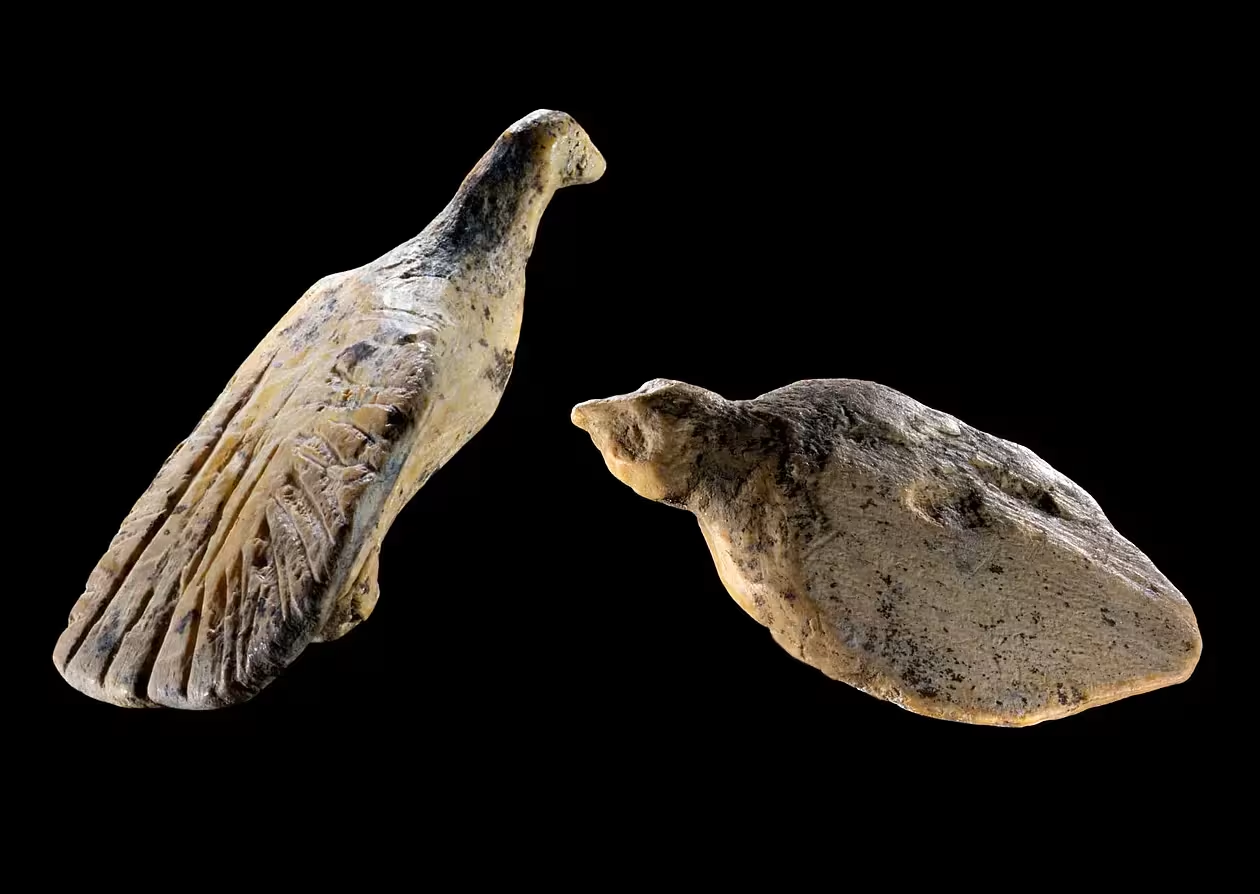 Photo: Ralf Ehmann/University of Tübingen, Grafik: urmu
Two bird figurines carved from ivory found at the site of Hohle Fels Cave, approximately 40,000 years old.
Conferences/Workshops
100+35 years of Homo erectus: Dmanisi and beyond
10-13 September 2026, Tbilisi, Georgia
135 years after the first discovery of Homo erectus, the time is ripe to reassess what we know – and what we have yet to uncover – about one of the most significant species in human evolution.
This conference is jointly organized by the Georgian National Museum, the Stone Age Institute, Earth Sciences Department of the University of Florence, Academia Europaea Tbilisi, and the ROCEEH Research Centre.
Lectures will be presented by invited speakers. We appreciate poster contributions to present and discuss your Homo erectus-related research within this international circle of colleagues.
The deadline for abstract submission, updates, and registration form are available here: https://homo-erectus.netlify.app
 Georgian National Museum
Newsletter
Our new Newsletter 27/2026 is online:
The main topic of our 27th newsletter is about Neanderthals: A large-scale metaanalysis
shows that the use of mineral pigments was much more widespread
and intentional than once thought, with evidence for both symbolic behavior
and practical uses like adhesives, skin protection, and hide treatment. Another
study combines DNA and archaeology to suggest that the last Neanderthals
were descended mainly from one ancestral population that likely survived in
southwestern France, and then expanded across Europe as their genetic diversity
declined. We also introduce two new projects in Armenia: the first
examines how ancient humans used plants during the Paleolithic, while
the second aims to determine if the makers of the Middle Paleolithic
stone tools at Yerevan-1 Cave were Neanderthals. The inaugural “Lessons from
the Past” conference shows how archaeology can inform modern policy by
linking past evidence to today’s sustainability, inequality, migration, and health
challenges. In March, 2026, ROCEEH had a strong showing at the CAA meeting
in Vienna, with workshops, sessions, and student talks demonstrating how
the database ROAD and its GIS tools are widely used for archaeological and
paleoenvironmental research.
If you are interested in former issues of our newsletter, take a look at Zenodo.
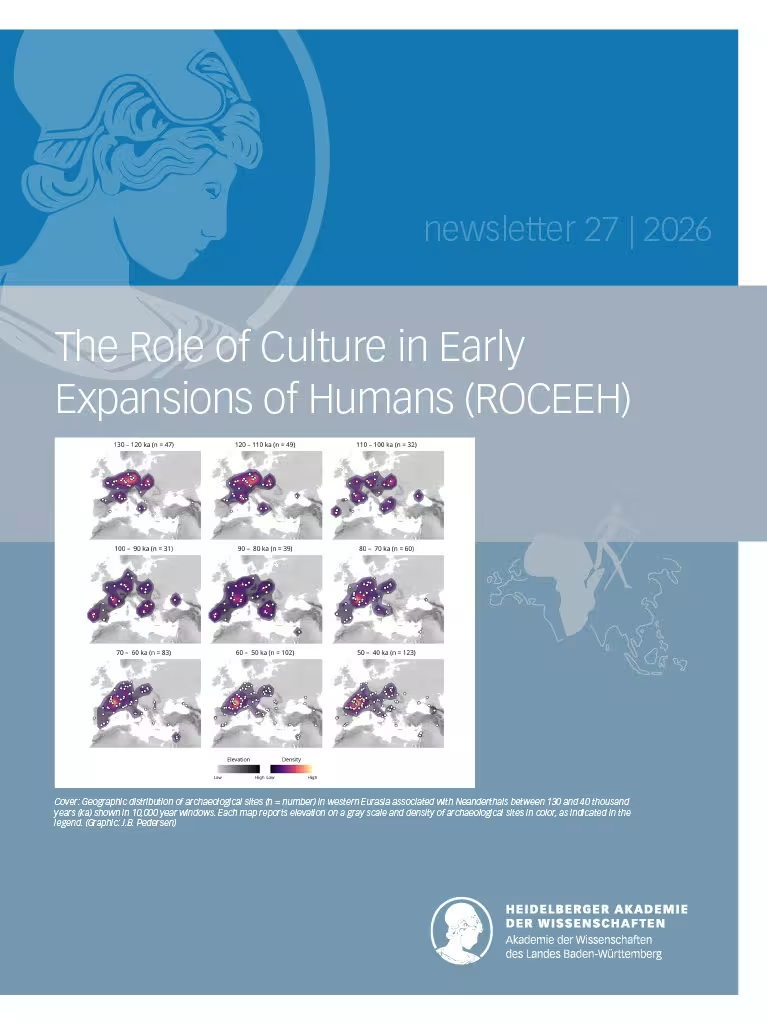 ROCEEH
New Publications
Ifrim, C., Haidle, M., Schlaudt, O. & Wink, M. (2026): Evolution”, 391–427. In: Meier et al. (Eds): Umwelt interdisziplinär. Grundlagen – Konzepte – Handlungsfelder. Heidelberg: Heidelberg University Publishing. DOI: 10.17885/heiup.1378.c19343.
C. Zanolli, D. M. Alba, T. Caley, et al., (2026): The Early Homo Conundrum: Challenges and Potential Solutions. Evolutionary Anthropology: Issues, News, and Reviews 35: e70043. DOI: 10.1002/evan.70043.
Krüger, S., Hertler, C., Bruch, A.A., & Schrenk, F. (2026): Seasonal resource availability and dietary selection in baboons: Implications for early hominin dietary inference. Quaternary Environments and Humans 4(3), 100112, DOI: 10.1016/j.qeh.2026.100112
Reschke, J.-O., Cucart-Mora, C., Lomborg, K., Hertler C., Saqalli, M., Grove, M., Moncel, M.-H. (2026): Subsistence Strategies in Agent-Based Models of Foraging Hominins: State of the Art and Challenges. Journal of Computer Applications in Archaeology. DOI: 10.5334/jcaa.211.
Bromage, T.G., Denys, C., De Jesus, C.L. et al. (2025 - online first): Palaeometabolomes yield biological and ecological profiles at early human sites. Nature. DOI: 10.1038/s41586-025-09843-w
Kandel, A.W., Gasparyan, B., Adigyozalyan, A. & Haidle, M.N. (2026): Reverse engineering of sewing with needle-and-thread: an interpretation of complementary technology at Aghitu-3 Cave, Armenia. In book: Zur Geschichte der Kleidung in der Steinzeit / A Stone Age History of Clothing: Mitteldeutscher Archäologentag vom 26. bis 28. September 2024 in Halle (Saale). Publisher: Propylaeum (Heidelberg). DOI: 10.11588/propylaeum.1678.c24357
The ROCEEH Project
Human evolution is a story of cultural developments and expansions. More than three million years ago, early humans began producing stone tools with cutting edges, thereby extending the scope of tool use observed in animals. One consequence of this milestone was the adoption of a new functionality—tools for making tools—which fostered the modular use of multiple implements. Three interacting factors created a cultural realm that forms the basis of how we engage with the world today: the intensification and differentiation of material and social engagement, the interaction with the environment, and the heightened need to find meaning.
The history of human cultural development unfolds through three interdependent forms of expansion. The first two comprise the expansion of cultural performances—expressed in the intertwined transformation of body, mind, and behavior—and the associated expansion of the resource space. For instance, while the use of a tool opens up access to new resources, this new performance simultaneously creates new needs, possibilities, and limitations for both humans and their environment. The network of relationships and interactions with environmental factors (whether conspecifics, raw materials, artifacts, or other agents) has expanded enormously over the course of human evolution, resulting in a vast array of cultural expressions across a wide spectrum of environments.
The project aims to develop a systemic understanding of human evolution that explores various forms of expansion and integrates the interactions between them. It spans the period from three million to 20,000 years ago and covers the entire geographical area of Africa and Eurasia. Particular emphasis is placed on the development of human capacities for cultural action, as well as the underlying factors and actual manifestations of these capacities.The core of the project is ROAD(ROCEEH Out of Africa Database), a multidisciplinary, web-based database featuring GIS capabilities. ROAD integrates geographical data on sites with information regarding the stratigraphic classification of archaeological layers and the archaeology itself. Furthermore, data on the human fossil record, as well as on climate, vegetation, and fauna, are collected to model past environments. In addition to literature reviews, the database is populated with data derived from collection-based research, archaeological excavations, and environmental-historical fieldwork conducted in Africa, Asia, and Europe. The findings are incorporated into a digital atlas of human-environment evolution based on Geographic Information Systems (GIS).
This research unit, which has been active since 2008 and is scheduled to run for 20 years, is an interdisciplinary project situated at the intersection of the cultural and natural sciences. Its wide-ranging international research activities are conducted collaboratively by a team of researchers from the fields of archaeology, paleoanthropology, paleobiology, and geography—alongside database specialists—across two sites: the Senckenberg Research Institute in Frankfurt am Main and the University of Tübingen.
ROCEEH discovers, contextualizes, and preserves humanity's cultural heritage. The research unit investigates human history during the aforementioned period by developing cultural concepts that enable the study of how human culture evolved. ROCEEH addresses questions concerning what we understand by "becoming human." This approach is highlighted through fieldwork at relevant sites aimed at documenting the distinctive patterns of early cultural change. ROCEEH makes the past of our cultural heritage accessible by compiling data on archaeological sites and their associated fossil assemblages. These systematically collected data are archived in the ROCEEH Out of Africa Database (ROAD), providing a systematic overview of archaeological sites, including details on their geography, dating, stratigraphy, cultural remains, paleoanthropology, paleoecology, and bibliography.
Transition from Neanderthals to modern humans
One focal point of ROCEEH is to study the changes in human behavior that occurred during the time that modern humans first expanded out of Africa and encountered Neanderthals in Eurasia. Several research projects cover this pivotal time, as technological behaviors which dominated for almost two hundred thousand years were broadly replaced by new ways of doing things that were associated with the arrival of modern humans. Not only do we observe dramatic changes in stone tools, we also see new types of behaviors. These expansions of hominin performances show an increased use of new materials—especially ivory, antler, bone and shell—to make organic tools such as points and needles as well as symbolic artifacts related to the expansion of art and music. A key region for studying the transition from late Neanderthals to early anatomically modern humans is the Swabian Jura in southwestern Germany with its famous cave sites, six of which were assigned UNESCO World Cultural Heritage status in 2017.
The search for symbolic behavior
ROCEEH explores the expansion of cultural capacities associated with the origin of symbolic behavior, including expressions of art and music. Many of its own research projects provide evidence for cognitive complexity in early modern humans, for example, through carved figurines, flutes and personal ornaments made of worked ivory, antler and bone from the Swabian Jura of Germany and perforated shells from the Levant and Caucasus. These artifacts give us ideas about how the makers of these innovative objects viewed personal and group identity.
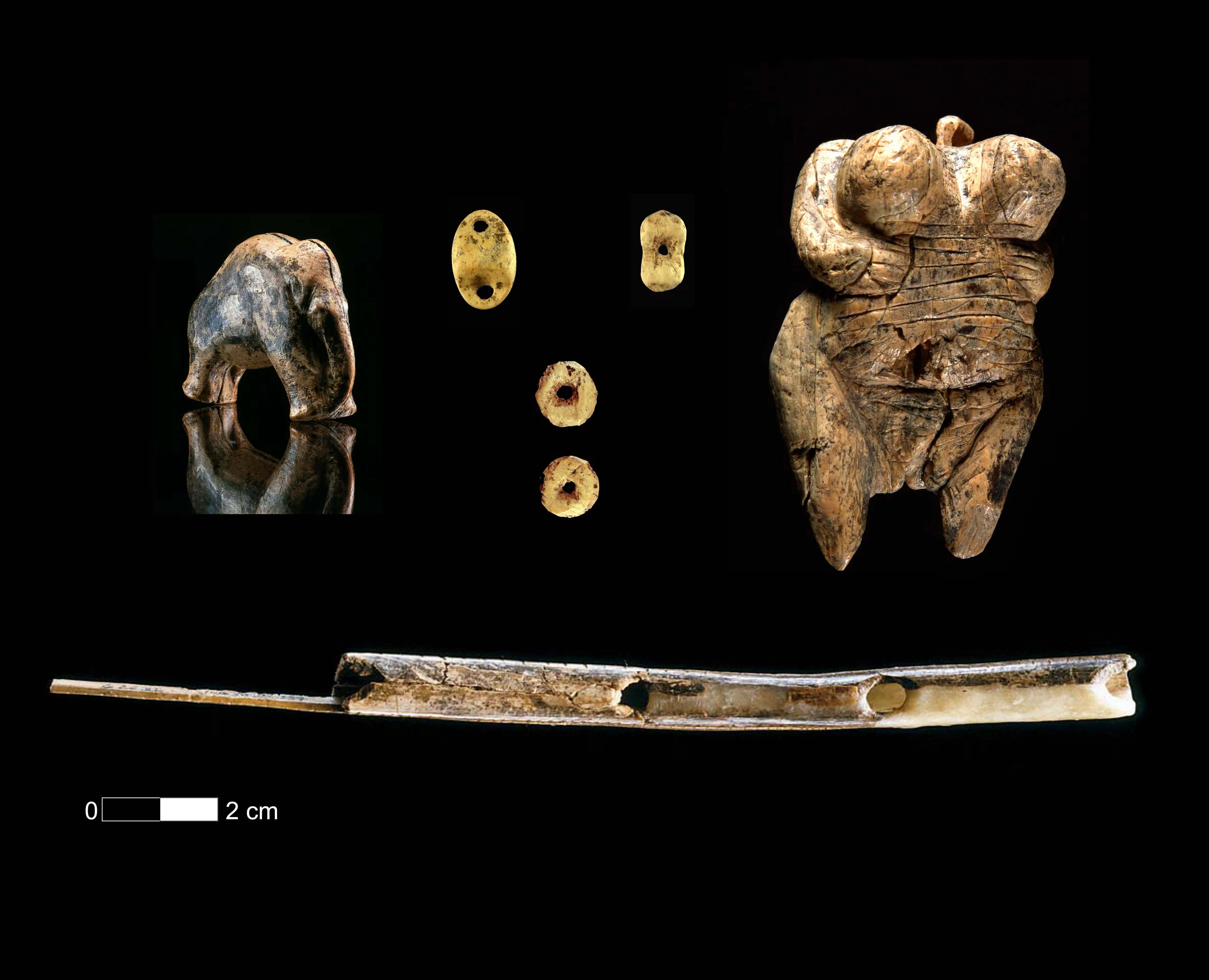 Uni Tübingen
Art, musical instruments and personal ornaments are found at several sites of the Swabian Jura in southwestern Germany
Environmental studies and landscape reconstruction
Many of ROCEEH’s research projects delve into the relationship between humans and their environment. Some of these projects examine how early humans explored their habitats and found different natural resources to sustain themselves. Other projects study the effects that changing climate had on the environment to help reconstruct the interaction between the lifeways and habitats of these people. Using an integrated approach, we address many aspects of past landscapes including paleofauna, paleovegetation and geomorphology. We investigate these aspects applying methods such as faunal analysis, palynology, non-invasive geophysical techniques, GIS and remote sensing.
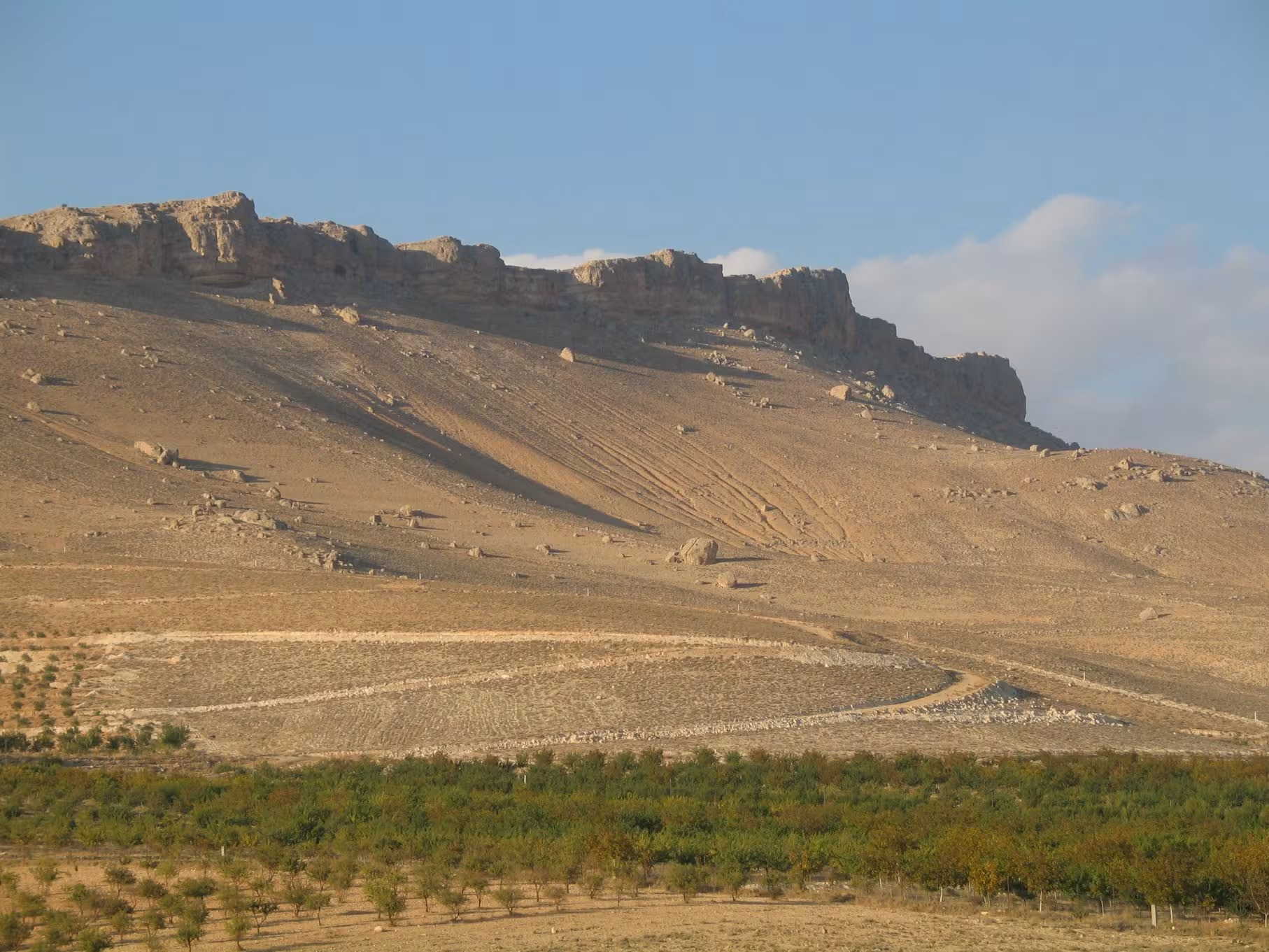 Uni Tübingen
A prominent cliff line transects the Paleolithic survey of the region near Ma'aloula (Syria), north of Damascus
Modeling and quantitative analyses
With ROAD as one of the most comprehensive databases on prehistory, ROCEEH has developed expertise in a range of modeling and simulation methods. These include classical statistical approaches, data mining and machine learning techniques, as well as spatial, temporal, and agent-based modeling. Such methods make it possible to adequately describe and discover the dynamics and flexibility of early human behavior and environments.
Coordination
Research Unit Frankfurt/Main
Head
Staff
PhD students
- Susanne Krüger (Paläobiologie)
- Jan-Olaf Reschke (Paläobiologie)
- Quy T.K. Tran (Archäobiologie)
Lisa Schiersch (Paläobotanik)
Research Unit Tübingen
Head
Staff
- Dipl. Inf. Zara Kanaeva
- Dr. Andrew W. Kandel
- Dr. Jesper Borre Pedersen
- Dr. Christian Sommer
- Dr. Amélie Challier
PhD students
- Xiangmei Kong (Frühgeschichte)
- Firas Jabbour (Frühgeschichte)
- Bárbara Rodríguez Álvarez (Paleokognition)
- Svenja Schray (Frühgeschichte)
Members of the project advisory committee
- Prof. Dr. Zvi Ben-Avraham (Tel Aviv)
- Prof. Dr. Manfred Ehlers (Osnabrück)
- Dr. Marian Vanhaeren (Bordeaux)
- Prof. Dr. Thomas Holstein (Heidelberg), Vorsitzender
- Prof. Dr. Lothar Ledderose (Heidelberg)
- Prof. Dr. Irmgard Männlein-Robert (Tübingen)
- Prof. Dr. Claudia Maienborn (Tübingen)
- Prof. Dr. Joseph Maran (Heidelberg), stellv. Vorsitzender
- Prof. Dr. Jürgen Richter (Köln)
- Prof. Dr. Wulf Schiefenhövel (Andechs)
- Prof. Dr. Marie Soressi (Leiden)
Prof. Dr. Mark Stoneking (Leipzig)
 ROCEEH
ROCEEH partners
(in alphabetical order)
- CfAS – Coalition of Archaeological Synthesis
- Cultural Evolution Virtual Research Network (Dept. of Philosophy, California State University, Fullerton, USA)
- European Archaeology Portal ARIADNE
- HEPiSEA Human Evolution and Paleontology in insular Southeast Asia (Bandung Institute of Technology, Indonesia)
- iNEAL - Integrating Neandertal Legacy: From Past to present
- MAHSA - Mapping Archaeological Heritage in South Asia
- NECLIME
- Neotoma Paleoecology Database
- tDAR - The Digital Archaeological Record
- TROPHIc - a project of CENIEH (Centro Nacional de Investigación sobre la Evolución Humana, Burgos Spanien)



Alumni
Dr. Yul Altolaguirre Zancajo
Paläobotanik, Frankfurt
Thesis title (2022): “High-resolution palynological analysis of the Early Pleistocene regional environment before, during and after the first expansion of early Homo into Southern Spain” (Publication)
Dr. Felix Bachofer
Geography, Tübingen
Thesis title (2016): "Remote Sensing in Landscape Reconstruction Applications - Paleo-Landscape Research in a Semiarid Environment in Northern Tanzania" (Publication)
Dr. Gregor Bader
Archaeology, Tübingen
Thesis title (2017): "On the variability of Middle Stone Age lithic technology during MIS3 in KwaZulu-Natal, South Africa" (Publication)
Dr. Knut Bretzke
Archaeology, Tübingen
Thesis title: "Diachronic studies of Paleolithic landuse in western Syria"
Dr. Armando Falcucci
Archaeology, Tübingen
Thesis title (2019): "A critical assessment of the Aurignacian: Insights from Fumane Cave in northern Italy" (Publication)
Dr. Riczar Fuentes
Archaeology, Tübingen
Thesis title (2020): "Detecting microscopic aspects of Late Pleistocene to Early/Mid Holocene lithic technology in Island Southeast Asia: Perspectives from North and Central Sulawesi" (Publication)
Dr. Duilio Garofoli
Paleocognition, Tübingen
Thesis title (2015): "Neanderthal cognitive equivalence: epistemological problems and a critical analysis from radical embodiment"(Publication)
Dr. Liane Giemsch
Archaeology, Tübingen
Thesis title (2015): "Makuyuni. Fundstellen des Acheuléen am Lake Manyara, Tansania. Ein Beitrag zur Erforschung der mittelpleistozänen Kultur in Ostafrika" (Publication)
Dr. Ericson Hölzchen
Paleobiology, Frankfurt
Thesis title (2021): "Concept 'Out of Africa' by means of Agent-based Modeling (ABM)"
Dr. Trine Kellberg Nielsen
University of Aarhus, Denmark, external research project in the Archaeology department, University of Tübingen
Thesis title (2016): “Northern Neanderthals – A systematic assessment of pre-modern human colonisation of South Scandinavia"
Dr. Regine Klein
Paleocognition, Tübingen
Thesis title (2021): "Innovationen im Middle Stone Age Südafrikas: Die Analyse von Knochenartefakten und Heat treatment unter einer handlungsorientierten Perspektive."(Publication)
Dr. Davor Löffler
Paleocognition, Tübingen
Thesis title (2019): "Rekursion zivilisatorischer Kapazitäten als Entwicklungsmuster in der Zivilisationsgeschichte. Untersuchung der Möglichkeit einer Verknüpfung des paläoanthropologischen Modells der Erweiterung kultureller Kapazitäten mit Arno Bammés Theorie axialer Zäsuren“ publiziert als "Löffler, Davor. Generative Realitäten I: Die Technologische Zivilisation als neue Achsenzeit und Zivilisationsstufe. Eine Anthropologie des 21. Jahrhunderts. Weilerswist: Velbrück Wissenschaft 2019, 784 Seiten" (Publication)
Dr. Geraldine Quénéhervé
Geography, Tübingen
Thesis title (2018): "Assessment of Landscape Processes, Forms and Features in the Lake Manyara Region, East African Rift Valley" (Publication)
Dr. Steffen Scharrer
Paleobotany, Frankfurt
Thesis title (2013): "Frühpleistozäne Vegetationsentwicklung im Südlichen Kaukasus: pollenanalytische Untersuchungen an Seesedimenten im Vorotan-Becken (Armenien)" (Publication)
Dr. Viola Schmid
Archaeology, Tübingen
Thesis title (2019): "The C-A layers of Sibudu Cave (KwaZulu-Natal, South Africa) in the light of the MSA lithic technologies in MIS 5" (Publication)
Dr. Rebekka Volmer
Paleobiology, Frankfurt
Thesis title (2012): „Struktur und gemeinsame Nutzung von Nahrungsressourcen in fossilen Carnivoren-Gilden“ (Publication)
Dr. Manuel Will
Archaeology, Tübingen
Thesis title (2016): "Lithic technology and behavioral variability during the Middle Stone Age of southern Africa: implications for the evolution and dispersal of early modern humans" (Publication)
Dr. Reza Zakerinejad
Geography, Tübingen
Thesis title (2016): "Integrated Assessment of Gully Erosion Processes, Using Multispectral Remote Sensing, Stochastic Modelling, and GIS-based Morphotectonic Analysis; A Case Study in the Southwest of Iran" (Publication)
The ROCEEH Out of Africa Database
ROAD provides a synopsis of prehistoric sites and cultures, opening up the deep past of humankind to further exploration. ROAD allows its users to compare, combine, analyze and visualize information about archaeological and paleoanthropological sites.
The volume of data published about human evolution and allied scientific disciplines has increased exponentially during the past 25 years. To make this information more accessible, ROCEEH developed a database called “ROAD” and created applications for its use. ROAD facilitates the study of human evolution by synthesizing evidence gathered mainly from published information from African and Eurasian sites dated between three million and 20,000 years ago.
ROAD Content
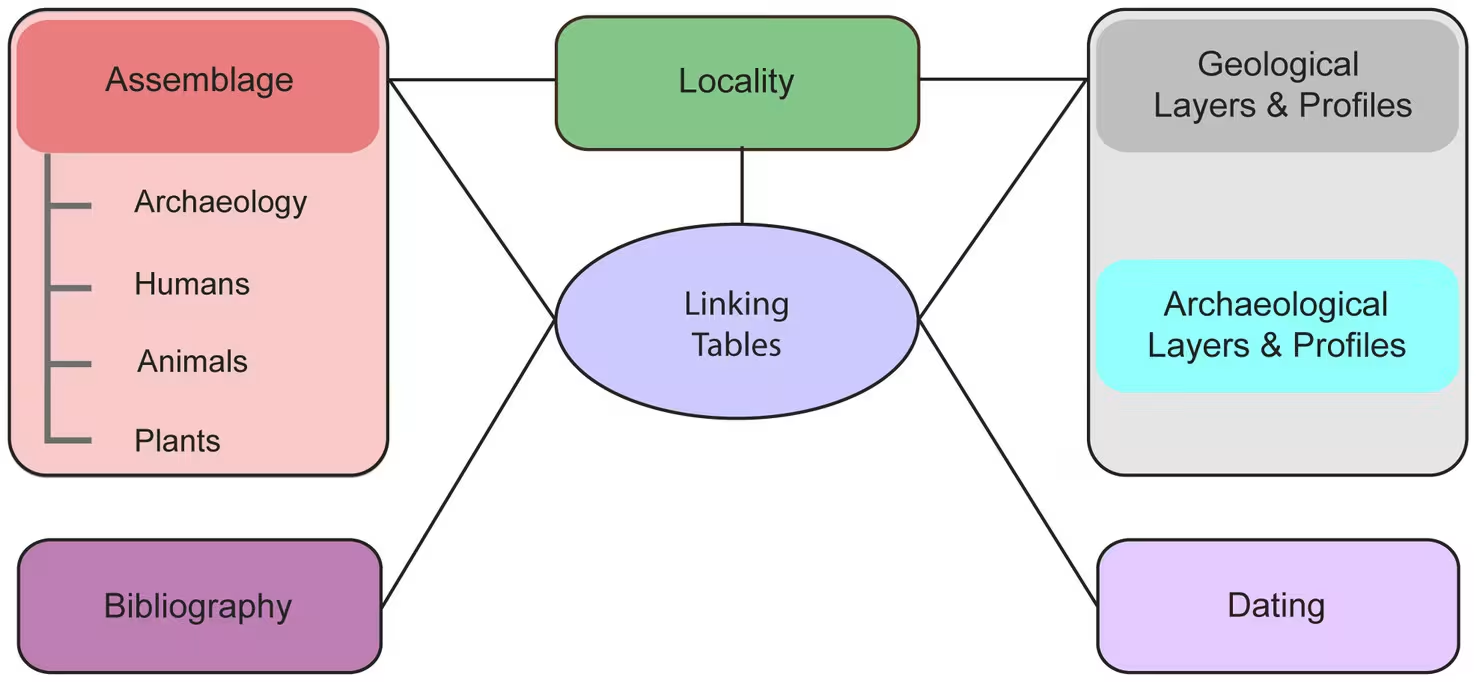
ROAD is a web-based relational database combining archaeological, paleoanthropological, paleontological, paleobotanical, geographical and bibliographical information in a logical and well-structured manner.
Localities and assemblages: Includes spatial information about localities (sites) and details about the assemblages (collections of finds) they contain. The assemblages may stem from archaeological, paleoanthropological, paleontological and paleobotanical investigations.
Layers, profiles and dating information: Combines stratigraphic information and age determinations of geological layers and profiles, archaeological layers and profiles, and assemblages of different types of finds. This theme considers both absolute (radiometric) and relative dating methods to estimate the minimum and maximum age of each layer.
Hominin behavior: Comprises archaeological data about stone artifacts; tools made of organic materials such as bone, ivory or shell; symbolic artifacts such as art, musical instruments or ornaments; miscellaneous finds including ocher; and non-portable finds known as features.
Human remains: Records data on hominin fossils, anatomy, sex, and age of the individual. Varying taxonomies are collected in separate tables, a method which allows us to associate more than one taxonomic interpretation to hominin specimens and/or a group of human fossils.
Environment and ecology: Compiles data about the fauna and flora associated with cultural remains and hominin finds. Further information can be derived from these data, for instance, climate, vegetation, biomes and ecology.
Data sources: Cites bibliographic information linking publications to localities, layers, ages, and assemblages. Other references can be added, for example, the names and institutions of researchers who store data in ROAD which are not yet published.
 ROCEEH
A schematic depiction of the logical structure of ROAD
Documentation
The database is released under the CC BY-SA 4.0 license and is further documented in the following resources:
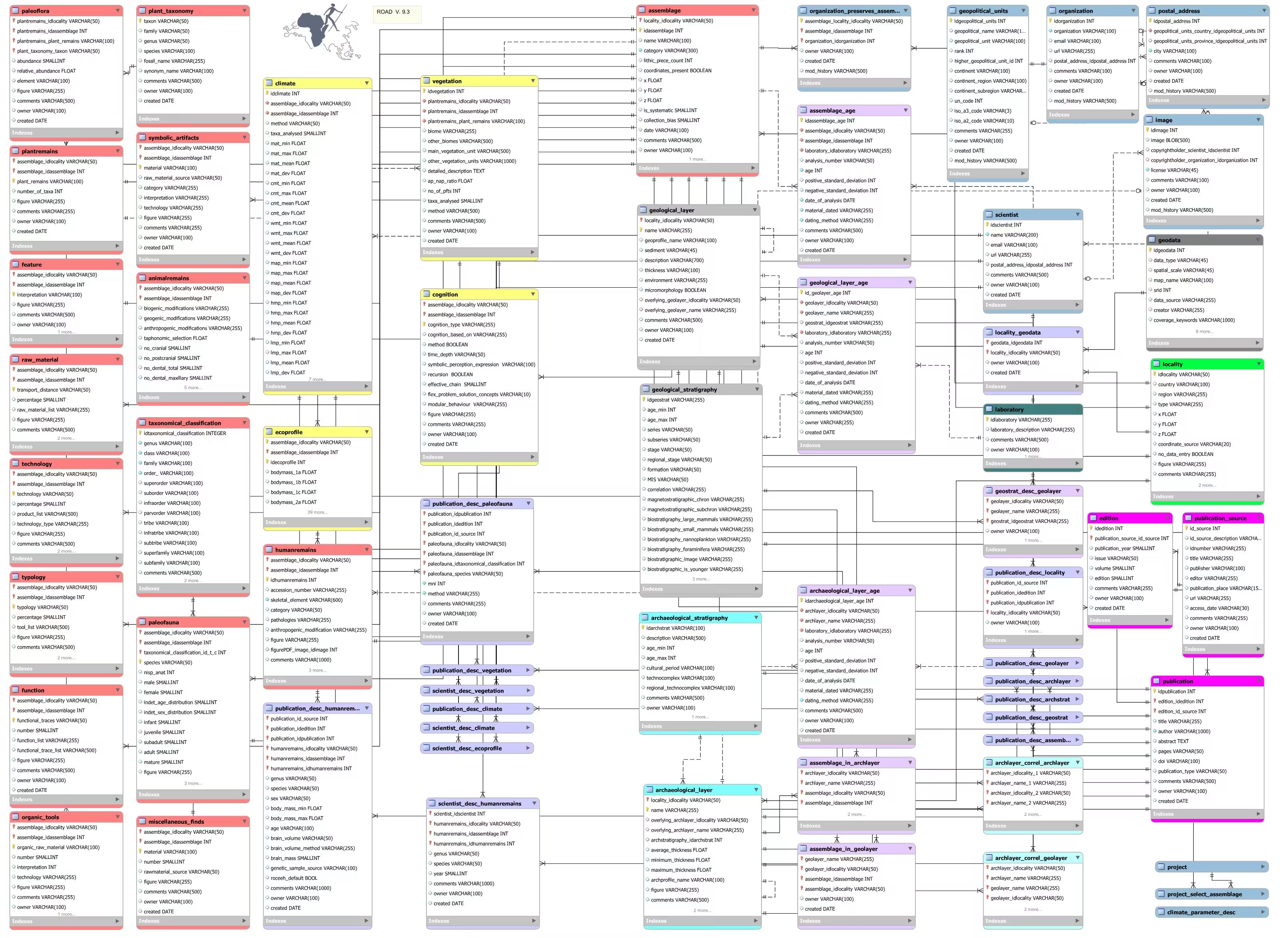
Citable Article: Kandel, A. W., Sommer, C., Kanaeva, Z., Bolus, M., Bruch, A. A., Groth, C., Haidle, M. N., Hertler, C., Heß, J., Malina, M., Märker, M., Hochschild, V., Mosbrugger, V., Schrenk, F., & Conard, N. J. (2023). The ROCEEH Out of Africa Database (ROAD): A large-scale research database serves as an indispensable tool for human evolutionary studies. PLOS ONE, 18(8), e0289513.
 ROCEEH
ROAD entity relationship diagram
How to access ROAD
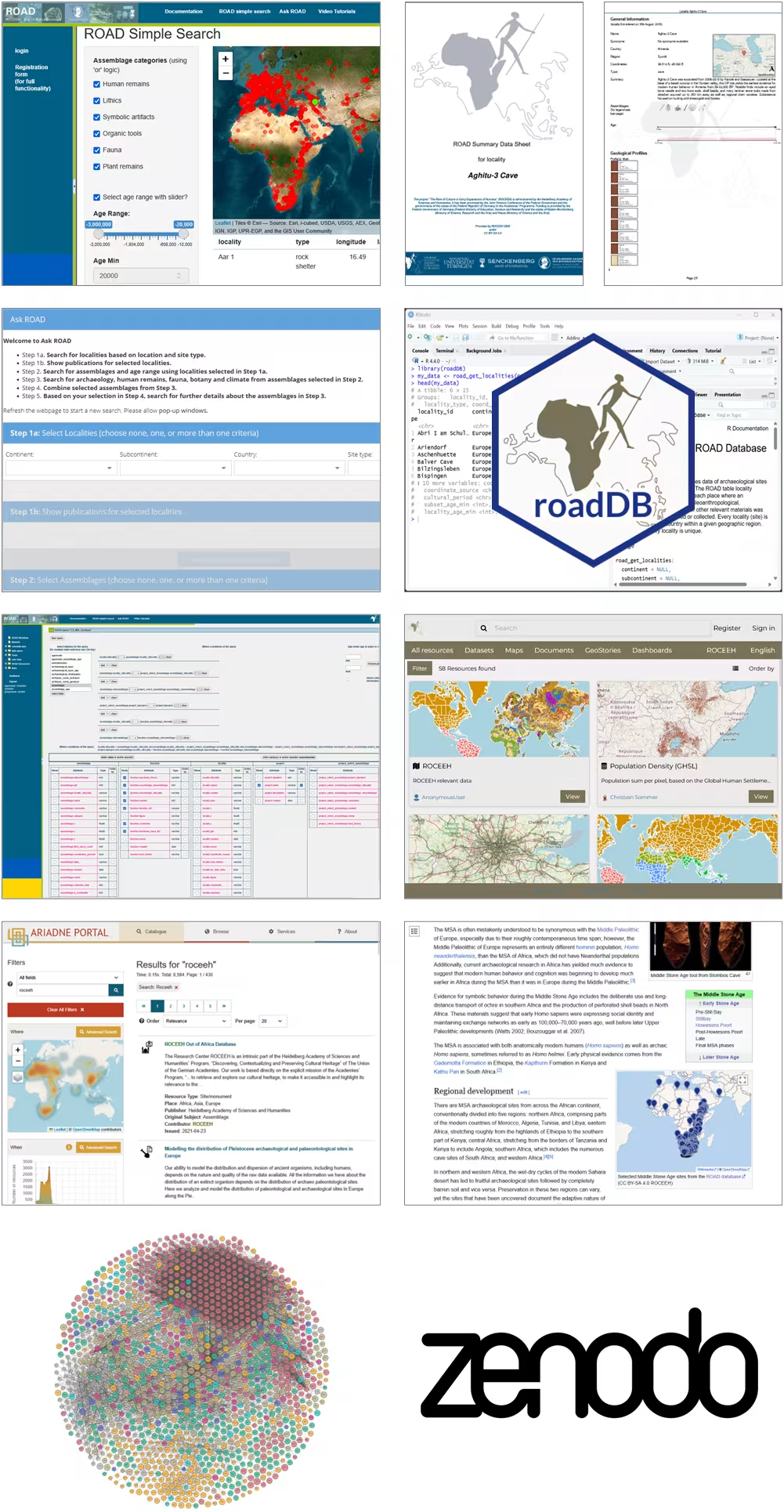
Simple Search
ROAD’s Simple Search tool provides a straightforward overview of its contents. Using dashboard functionalities, you can filter, select, and display spatio-temporal data and broad categories, offering quick answers to the questions of When, Where, and What. However, there is much more detail to be discovered with the database’s other tools.
Access: Open | Target group: Everyone | Link
Summary Data Sheets
Summary data sheets provide all the information about individual sites. They include a site summary, archaeological and geological profiles, details on finds, and the literature referenced in ROAD. The reports are structured in user-friendly PDFs with graphical representations and formatted tables—ideal for accessing all the information at a glance.
Access: Open | Target group: Everyone | Link: Available through Simple Search
AskROAD
Ask ROAD is the preferred choice if you require tabular data in interoperable formats like TXT, CSV, JSON or XML. A form guides you through a series of selection criteria to customize your results. This tool offers user-friendly access to the Frequently Asked Queries without the necessity to formultae SQL.
Access: Open | Target group: Data analysts | Link
roadDB
This package enables seamless integration in the statistical software R. You can access ROAD contents through dedicated R functions and retrieve the results as interoperable data frames. The package is particularly valuable for quantitative research, as it supports reproducible workflows and integrates smoothly with a wide range of external R packages.
Access: Open | Target group: Data analysts | CRAN | Github | Tutorial
Query Tool & ROADWeb
The Query Tool grants the most comprehensive access to ROAD contents, including all database tables and the ability to formulate complex SQL queries. As effective use of this functionality requires detailed knowledge of the database structure and schema, access is restricted to registered users.
ROAD content can also be explored through ROADWeb, an online GIS platform that combines ROAD data with auxiliary geospatial datasets, background maps, and interactive visualization and analysis tools.
Access: Restricted | Login | Register | Target group: Advanced users | Link: Available through Simple Search
Geodata Warehouse
This data portal offers geospatial datasets for online visualization, download, and integration via interoperable web services. It hosts research outputs from the ROCEEH team alongside openly accessible auxiliary data.
Access: Open | Target group: GIS analysts | Link
Linked Open Data
The ROAD implementation in the Semantic Web is designed for database developers and advanced users. It facilitates the linking of ROAD content with resources from the Linked Open Data cloud and with user-defined semantic data structures. Data can also be accessed and queried through the ROAD SPARQL endpoint.
Access: Open | Target group: Database developers | URI: https://www.roceeh.uni-tuebingen.de/road/
ARIADNE Infrastructure
The Ariadne Portal is a data aggregator for archaeological data of all periods. It compiles data from various sources in a unified user interface with spatial, temporal and categorical search options. ROAD is the largest provider for prehistoric data and ROAD contents were standardized using the Getty AAT and PeriodO.
Access: Open | Target group: Everyone | Link
Wikipedia
On Wikipedia, you can explore interactive maps covering selected topics such as cultural periods, early human species, artifact types, and other archaeological features. While the datasets are representative rather than comprehensive, they have been reviewed and validated by domain specialists.
Access: Open | Target group: Everyone | Link
Zenodo
Many ROAD resources are sustainably archived on Zenodo, including annual database dumps in multiple formats, descriptive documentation, and research outputs. All archived materials can be accessed through the “ROCEEH Community.”
Access: Open | Target group: Everyone | Link
 ROCEEH
The multiple access points to ROAD
Here you will find an overview of the conferences and symposia organized by ROCEEH since the research unit was established.
2025
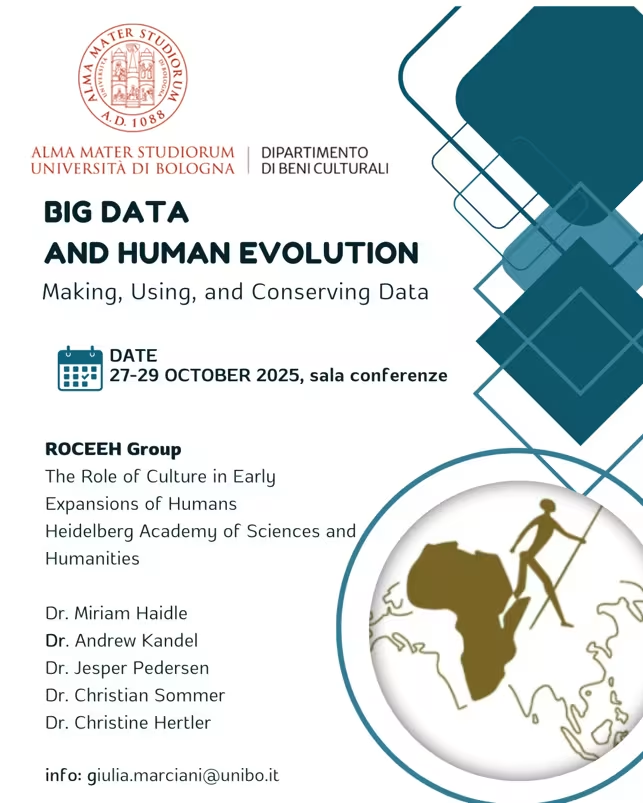
Workshop "Big Data and Human Evolution"
27-29 October, 2025, Bones Lab, Bologna University, Italy
organized by M.N. Haidle, A.W. Kandel, C. Sommer und J.B. Pedersen
The workshop Big Data and Human Evolution: Making, Using, and Conserving Data, organized jointly with BONES Lab in Ravenna, explored the theoretical and practical aspects of creating, managing, and preserving large-scale databases for human evolution research. Participants examined challenges in data integration, sustainability, and interdisciplinary collaboration, while engaging with emerging data-science methods such as data mining, machine learning, and artificial intelligence. Through hands-on training with the ROCEEH Out of Africa Database (ROAD), attendees applied data-management and analytical techniques to address research questions and fostered new collaborations across disciplines.
 ROCEEH
2025
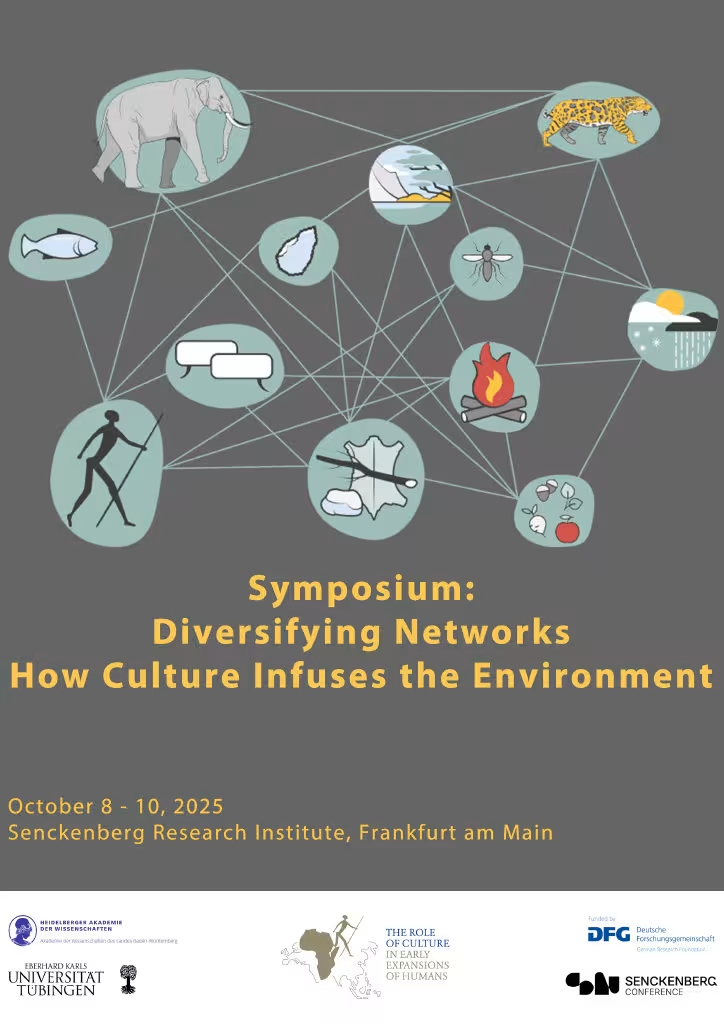
Symposium: Diversifying Networks. How Culture Infuses the Environment
8-10 October, 2025, Senckenberg Research Institute and Natural History Museum Frankfurt/Main
organized by ROCEEH
Hominins acted as exceptional shapers of their ecosystems over the course of evolution by expanding their use of resources through technological, social, and cultural innovations, transforming ecological niches, and creating new conditions for evolutionary processes both within their own species and for synanthropic species. The ROCEEH symposium aims to systematically investigate the interactions between cultural achievements and the environment in order to develop a diachronic understanding of the dynamic, diversifying networks that have shaped human evolution.
 ROCEEH
2023
ROCEEH Conference 'Ritual in Human Evolution - Interdisciplinary Perspectives'
4-6 October, 2023, Tübingen
organized by R. Dapschauskas, S. Wolf, N.J. Conard, M.N. Haidle, and M. Keysan
Since the 19th century, the phenomenon of “ritual” has been studied from an interdisciplinary perspective, with cognitive science approaches in particular providing significant insights into its psychological foundations in recent decades. However, questions concerning its evolutionary origins, as well as the integration of Paleolithic archaeological evidence, have so far been insufficiently addressed. The conference therefore aims to consolidate the current state of research on the evolution of ritual through a deliberately interdisciplinary exchange and to develop new perspectives, particularly with regard to behavioral comparisons, archaeological evidence, and the relationship between ritual and Paleolithic art.
 ROCEEH
2022
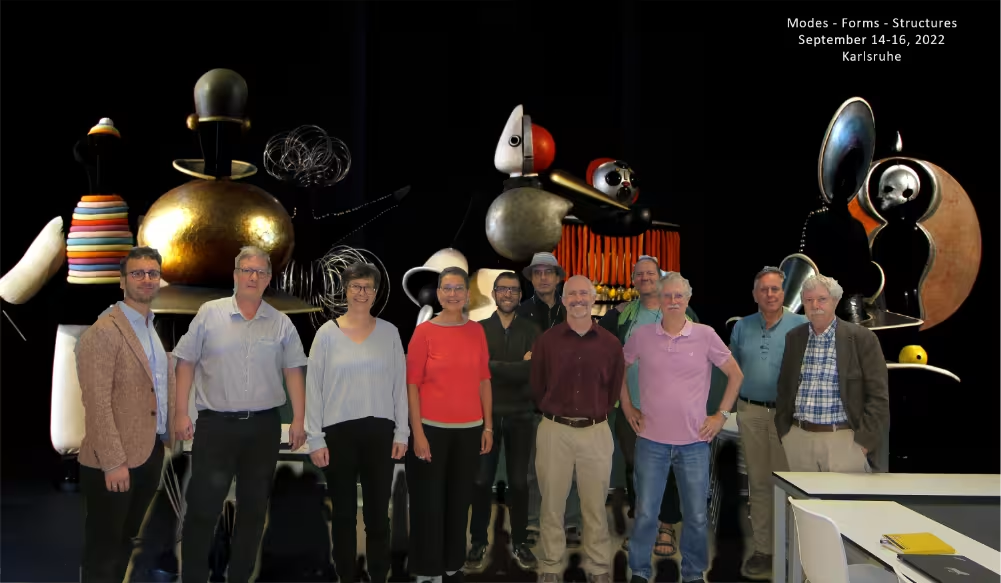
Conference 'Modes - Forms - Structures'
9-11 March, 2022, Karlsruhe
organized by Mathias Gutmann (KIT, Karlsruhe), Marco Tamborini (TU Darmstadt) and Christine Hertler (ROCEEH)
 ROCEEH
2020
ROCEEH Conference 'Human Origins - Digital Future'
27.-31. Juli 2020 online
The ROCEEH Conference “Human Origins—Digital Future” presented and discussed integrative aspects and approaches to the development, use, and future securing of large scientific databases, especially within the context of anthropological research. The primary research question asks how databases with their innovative information technology can be used to gain new knowledge by retrieving and extracting archaeological, paleoanthropological, paleobiological, and paleogeographic information.
With this conference, we addressed core issues of digitialization, including possibilities and problems of large, multi-layered databases. Although digital tools are widely applied in scientific projects, questions of linkage, targeted expansion, evaluation, and sustainable safeguarding of databases remain unresolved. New approaches including innovative methods of data mining and machine learning as well as deep learning and artificial intelligence were addressed.
Book: Kandel, Andrew, Miriam Noël Haidle & Christian Sommer (eds.) 2022. Human origins – digital future. An international conference about the future of archaeological and paleoanthropological databases. Heidelberg, Propylaeum.
 ROCEEH
2018
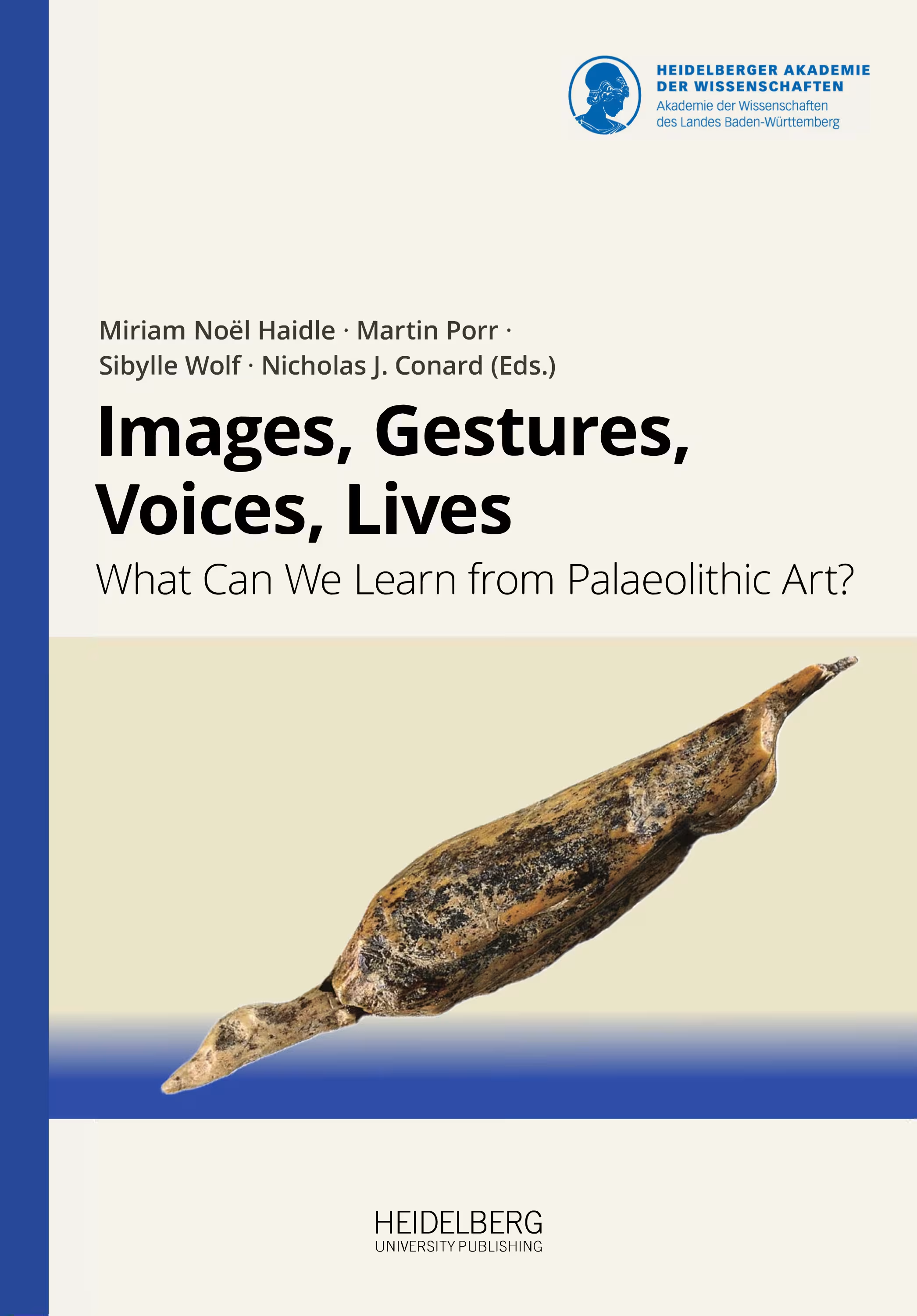
International Senckenberg Conference: Images, gestures, voices, lives. What can we learn from Palaeolithic art?
30 May - 2 June, 2018, Tübingen
The conference was funded by DFG Deutsche Forschungsgemeinschaft and Senckenberg Society for Nature Research.
Book: Haidle, Miriam Noël et al. (Hrsg.): Images, Gestures, Voices, Lives. What Can We Learn from Paleolithic Art?, Heidelberg: Heidelberg University Publishing, 2025 (ROCEEH Communications, Band 2).
 HeiUp
HeiUp
2017
KULT-UR-MENSCH – Concepts of Culture for Research on Becoming Human
23-25 November, 2017, Heidelberg Academy of Sciences, Heidelberg
organized by Miriam Haidle, Christine Hertler and the ROCEEH-Team
This status conference refected upon key cultural concepts from an interdisciplinary perspective with the aim of developing further perspectives for the project.
 ROCEEH
2016
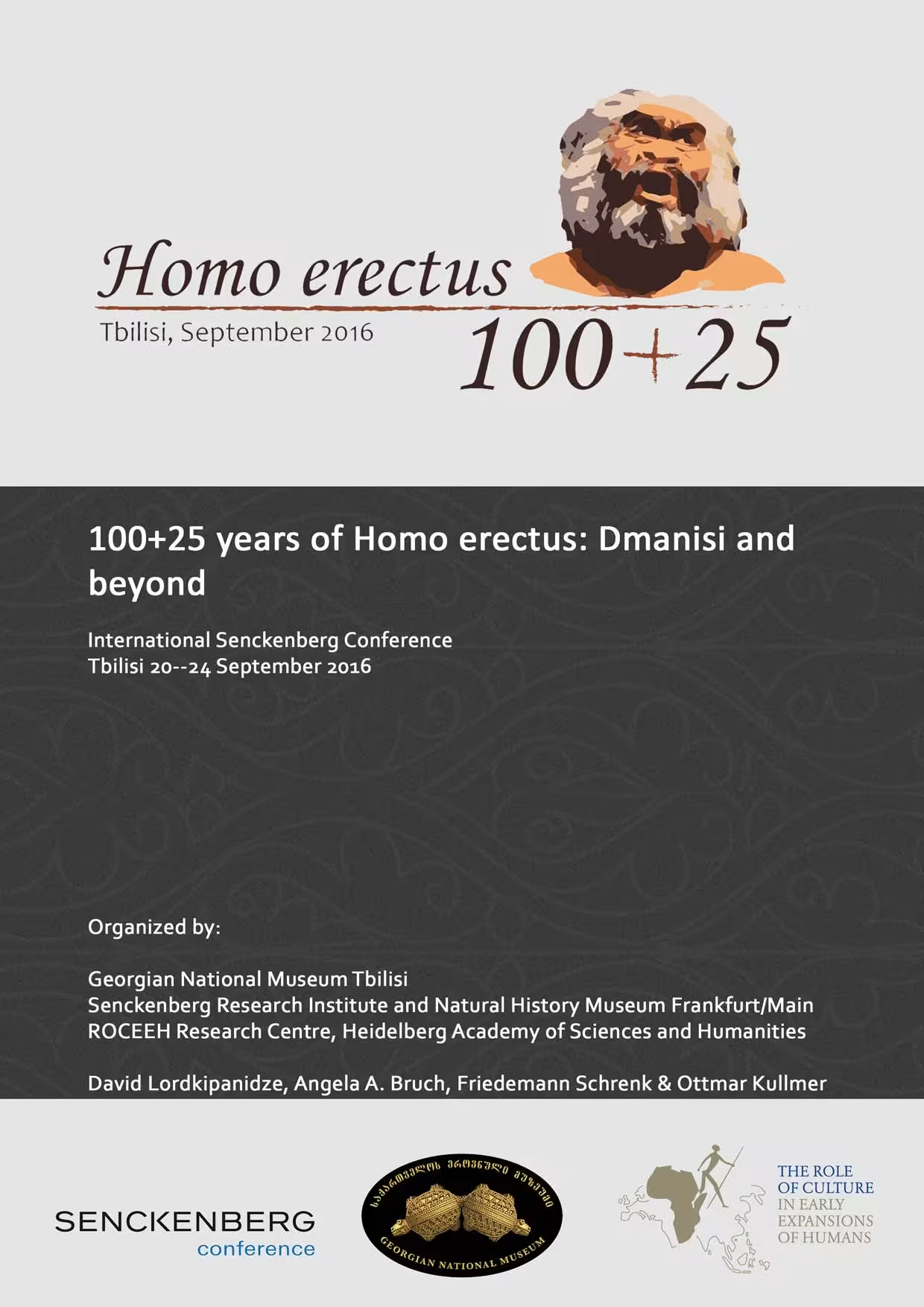
100+25 years of Homo erectus: Dmanisi and beyond
International Senckenberg Conference
20-24 September 2016, Tbilisi, Georgia,
organized by
Georgian National Museum
Senckenberg Research Institute and Natural History Museum Frankfurt/Main
Research Center ROCEEH, Heidelberg Academy of Sciences
The 2016 Senckenberg Conference in Tbilisi put early evolutionary stages of the genus Homo into an evolutionary and environmental perspective, and discussed the role of the Caucasus in early hominin development.
 ROCEEH
2015
International ROCEEH Conference on Human Expansions
13-17 July 2015, Senckenberg Biodiversity and Climate Research Centre Frankfurt
2011
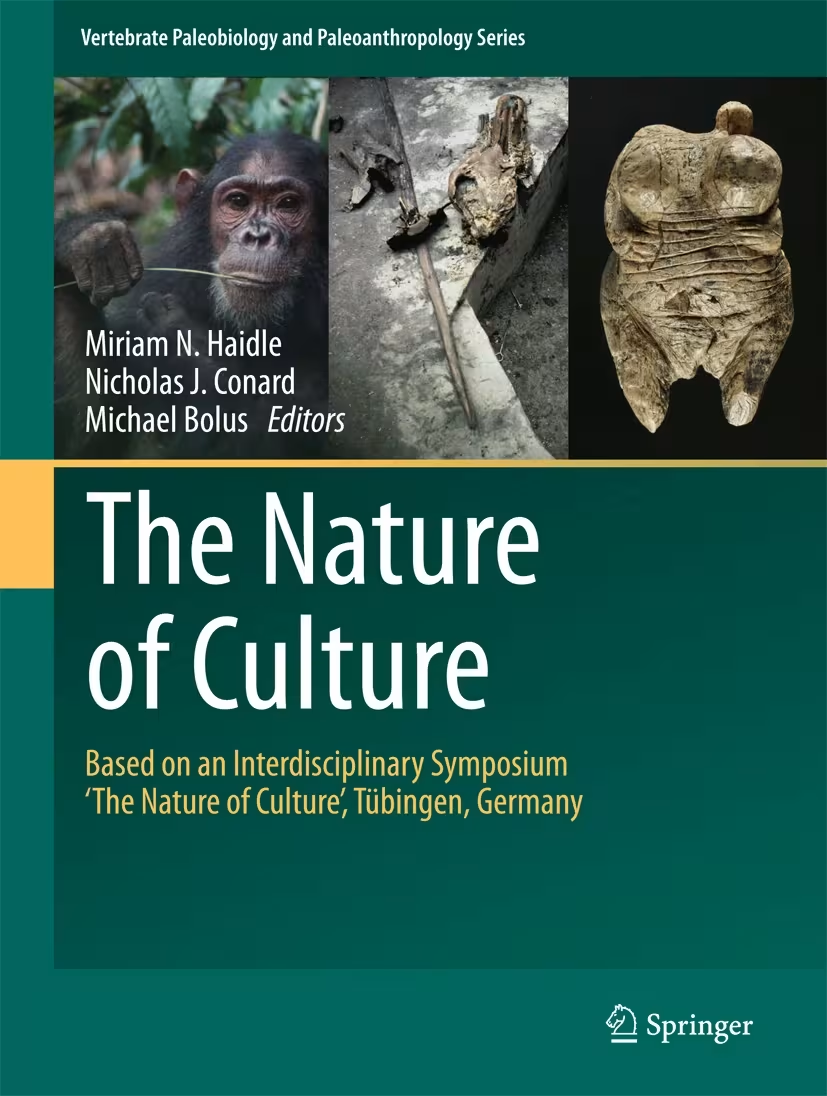
Symposium "The Nature of Culture"
15-18 June 2011, Tübingen
Book: Miriam N. Haidle, Nicholas J. Conard, Michael Bolus (eds)(2016): The Nature of Culture. Based on an Interdisciplinary Symposium ‘The Nature of Culture’, Tübingen, Germany. Springer Dordrecht. DOI: 10.1007/978-94-017-7426-0
 ROCEEH
2009
Joint Symposium of ROCEEH and BiK-F "Human Expansions and Global Change in the Pleistocene - Problems and Methods"
16-19 November 2009, Senckenberg Forschungsinstitut und Naturmuseum Frankfurt/Main
including ROCEEH Workshops: Reconstructing Environments: Quantitative Methods and Infrastructure for the Assessment of Early Human Expansions
2008
Inaugural workshop for a new Research Center ROCEEH
21-22 April 2008, Heidelberg